Somewhere in Wyoming

20110705-064027.jpg

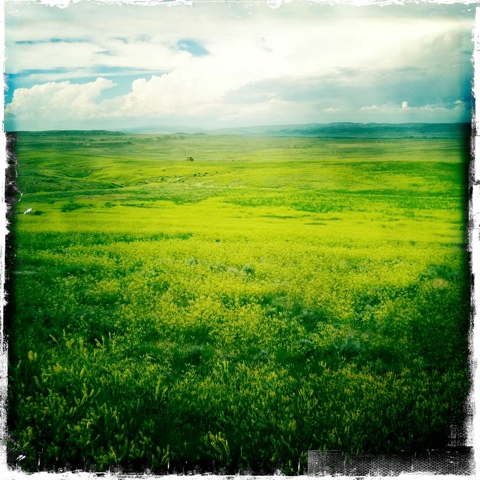
After spending the morning in South Dakota, we decided to zip across Wyoming to check out the scenery on the way to Colorado. I don’t believe I’ve seen so much sky before. I also haven’t seen a field this beautiful. Driving south on Hwy. 85 you could see a glimpse of wildflowers in the distance. We found a turn off immediately. There was a barbed gate at the turn off with a sign inviting people to walk in and take a look at the vistas and valley below. We dismantled the gate and snapped away. Thank you Wyoming!

The Badlands

20110703-064716.jpg

Today husband and I drove from Devils Lake to Theodore Roosevelt National Park and toured both the north and south units. I have tons of pictures of peaks and canyons, but I choose this as my picture of the day because of the layers and line to the Little Missouri River.

Devils Lake, N.D.

20110702-093730.jpg

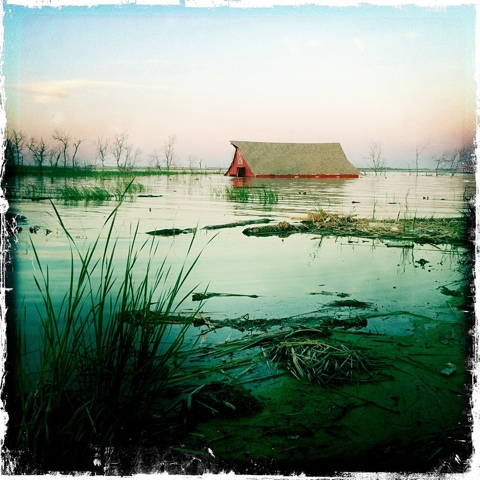
Day one of the 2011 great American road trip puts me in Devils Lake, N.D. The flooding in North Dakota has been devastating this year, and this barn was a roadside reminder that the water isn’t going down anytime soon.

Crystal Cove State Park

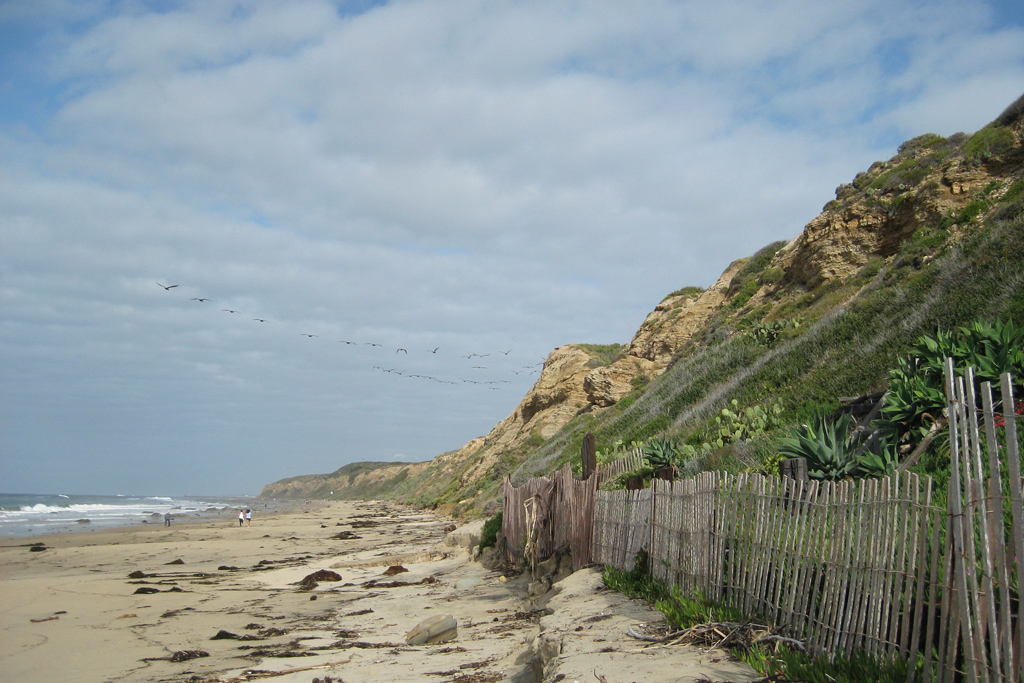
Crystal Cove State Park is an unlikely place just off Pacific Coast Highway in the Newport Beach area. You can either walk the beach or stay above the ocean on the cliffs above, looking down from several vantage points. In either place you can take in the natural beauty of the California coastline, just minutes from elite shopping and high-end housing.

I was intrigued by the park after hearing that abandoned cottages peppered the beach. While the historic area is known primarily as the location where the movie, “Beaches” was filmed, I went for another kind of history. In the 1920s Japanese farmers leased land from The Irvine Company, which still owns the same land today. The farmers sold their produce on the side of the road in the surrounding area. However, with the dawn of World War II, the Japanese were packed up and shipped to internment camps. Their cottages still remain on Crystal Cove Beach, worn by sun, wind and sea.

One of the abandoned cottages once occupied by Japanese farmers.

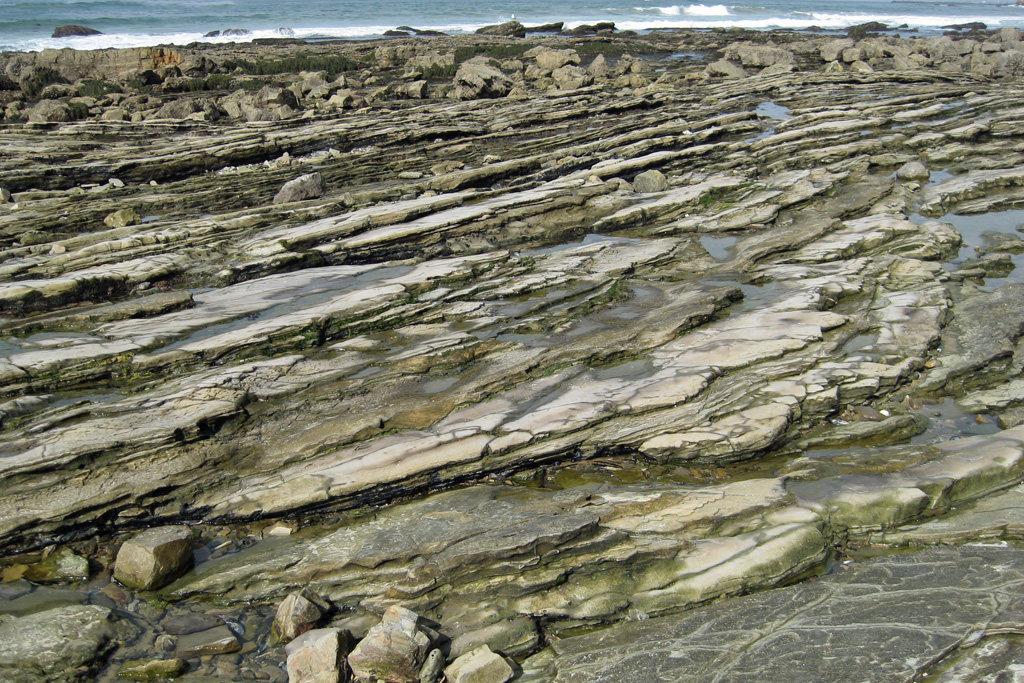
Some of the beach is rocky, offering visitors a chance to climb closer to the surf – with caution.

Walking path above the coastline.

You can truly walk for miles.

Check out the Crystal Cove State Park brochure if you would like to learn more.

Hot Air Balloon Affair

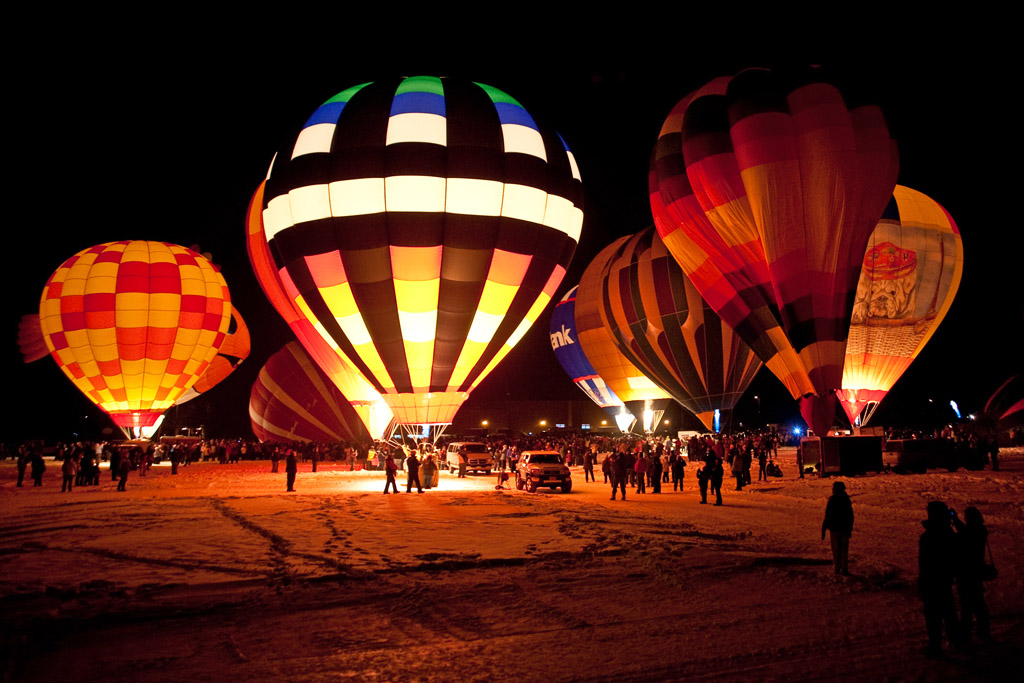
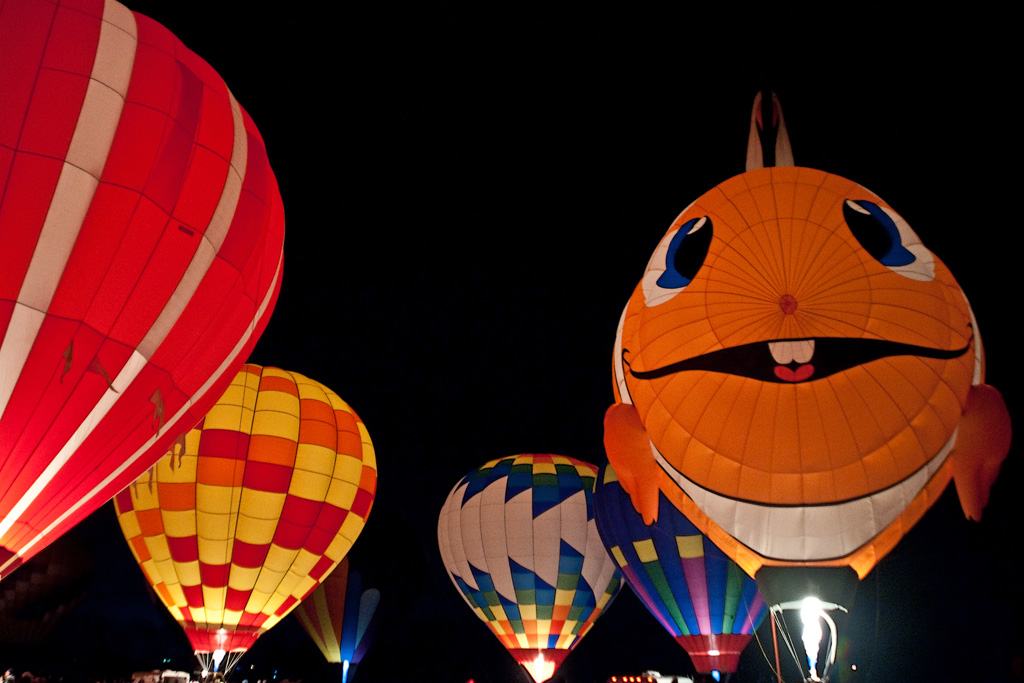
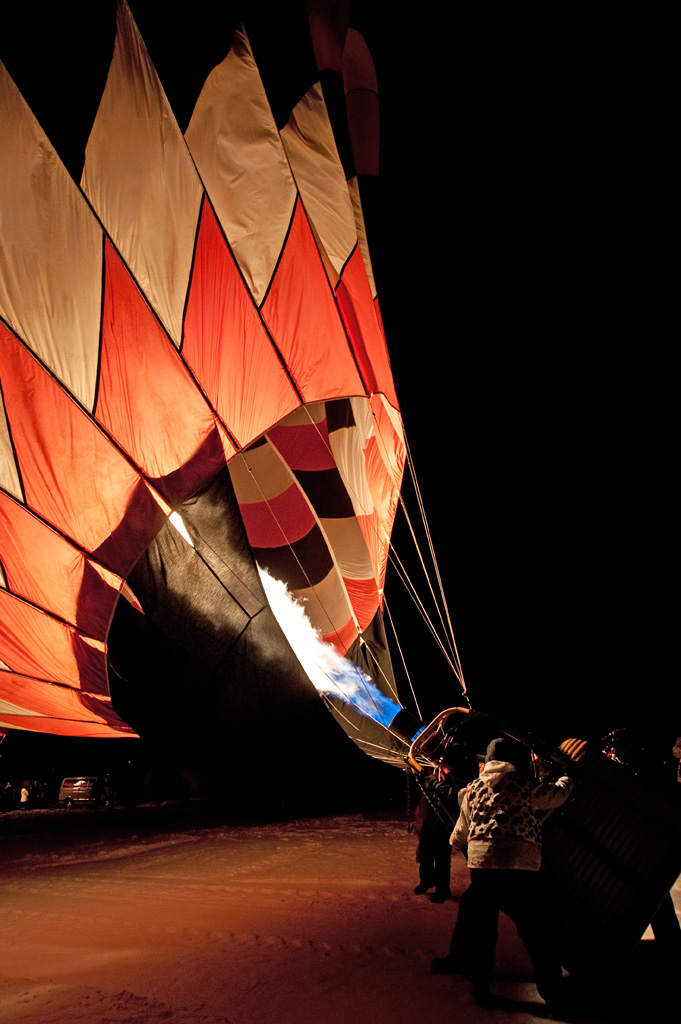
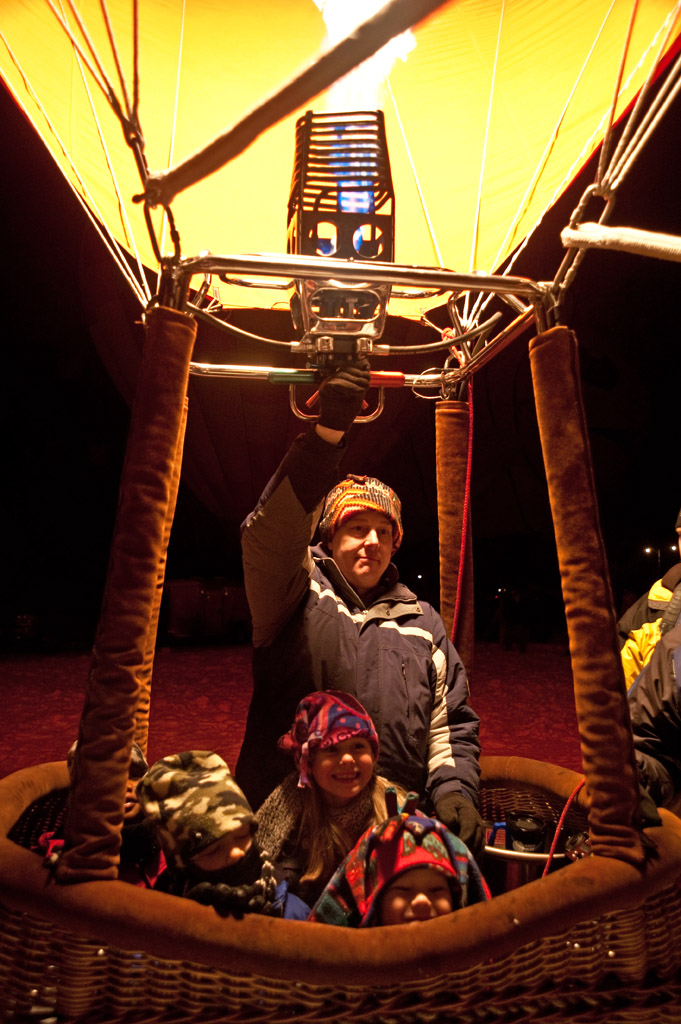
Keeping with my theme of “things to do in the North when it’s cold outside,” I couldn’t let winter slip by without mentioning the Hudson Hot Air Affair, a celebration of hot air ballooning in Hudson, Wisconsin. Held in early February, the event brings ballooners from Minnesota, Wisconsin, Iowa, the Dakotas, Illinois and Nebraska. Thousands of spectators flock to the event for family activities, a pancake breakfast, a silent auction, and to an open field to watch the balloons launch into the winter sky each morning. One of the more popular events is “Moon Glow,” when balloonists fire up their balloons in the twilight hours, which is what I caught this weekend.

Saint Paul Winter Carnival

The story of how the Saint Paul Winter Carnival in Minnesota came to be depends on your source.

One story says the Saint Paul Winter Carnival was started to celebrate the city’s boom from 39,000 residents in 1880 to 120,000 residents just six years later, in 1886.

The most popular story claims the business leaders of Saint Paul wanted to disprove a New York newspaper reporter who had described their beloved city as “another Siberia, unfit for human habitation in the winter.” This is my favorite version because if true, Saint Paul  created one of the most all-out unique experiences for Minnesotans to snub the reporter’s claims. Today Winter Carnival is a combination of winter sports, mystic lore and odd contests that make the event something close to winter mardi gras.

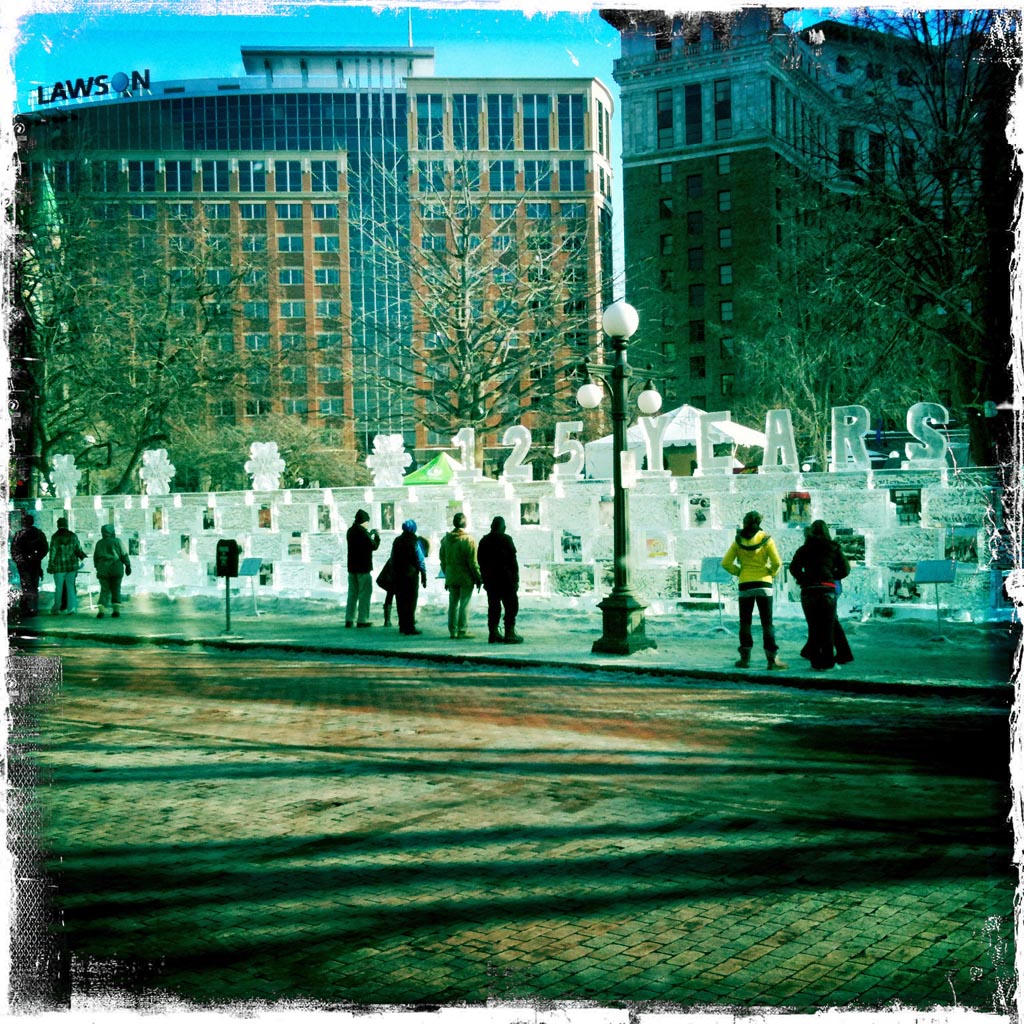
Celebrating 125 years, the Saint Paul Winter Carnival kicked off over a beautiful, crisp weekend. I went out with my iPhone set to the Hiptamatic app to capture the ice sculptures, parade and experience downtown Saint Paul on a winter’s day, just as the founders intended.

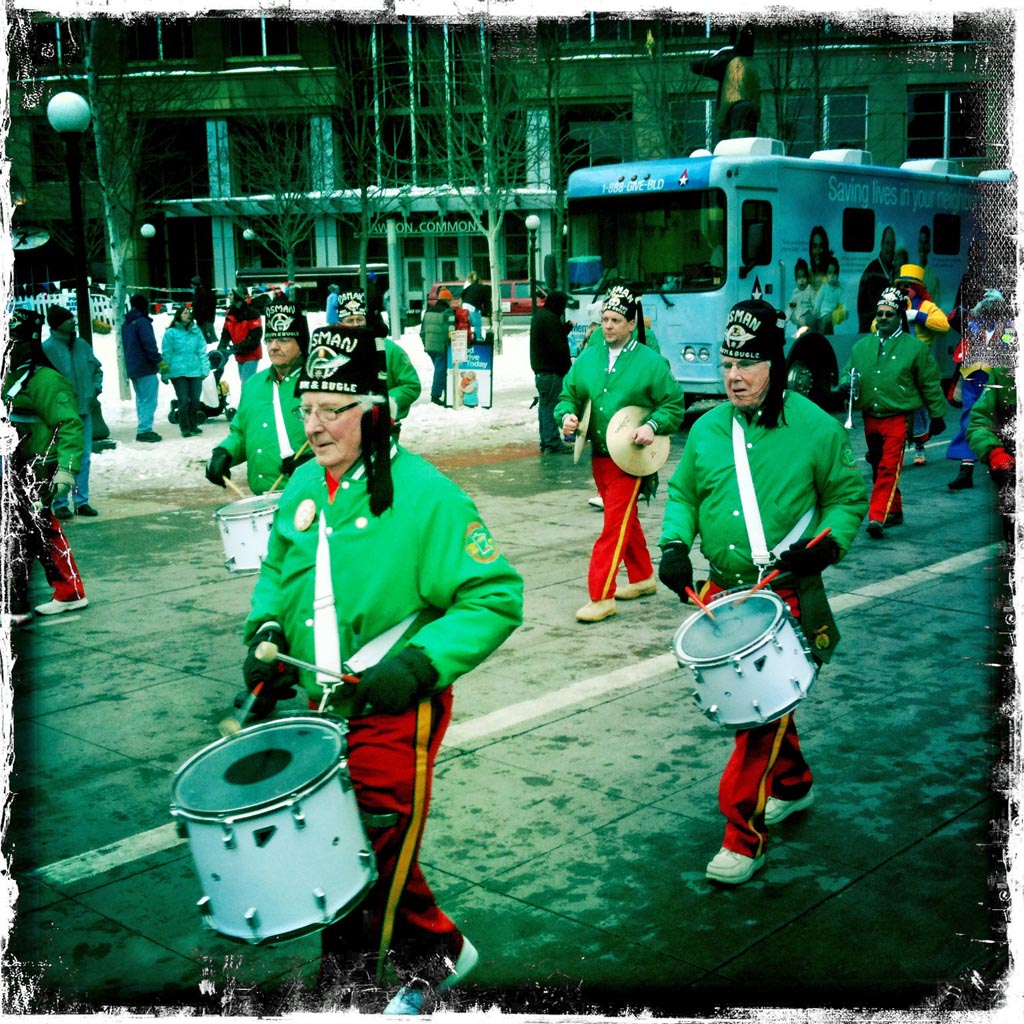
The Drum and Bugle Corps of Osman Shrine has been a force in the Saint Paul community since 1921.

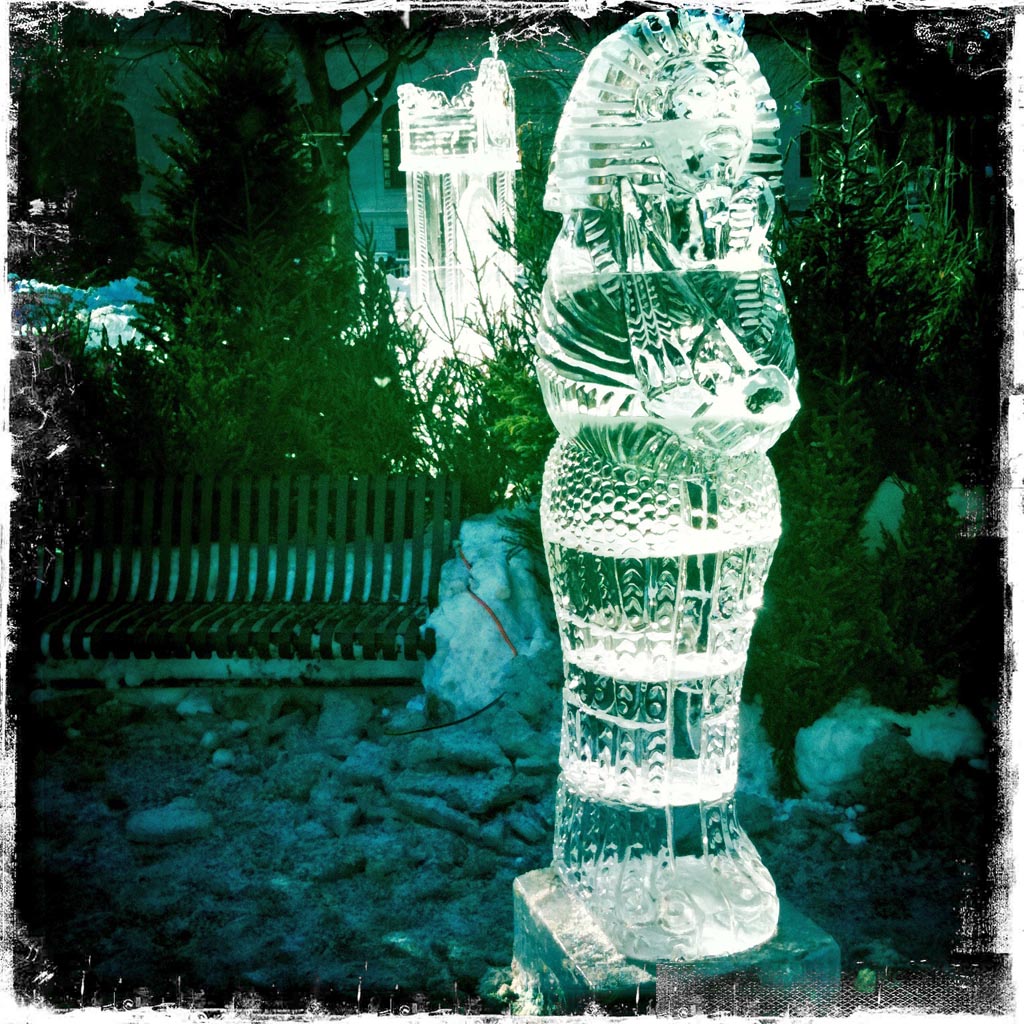
Egyptian sarcophagus ice carving is a crowd favorite.

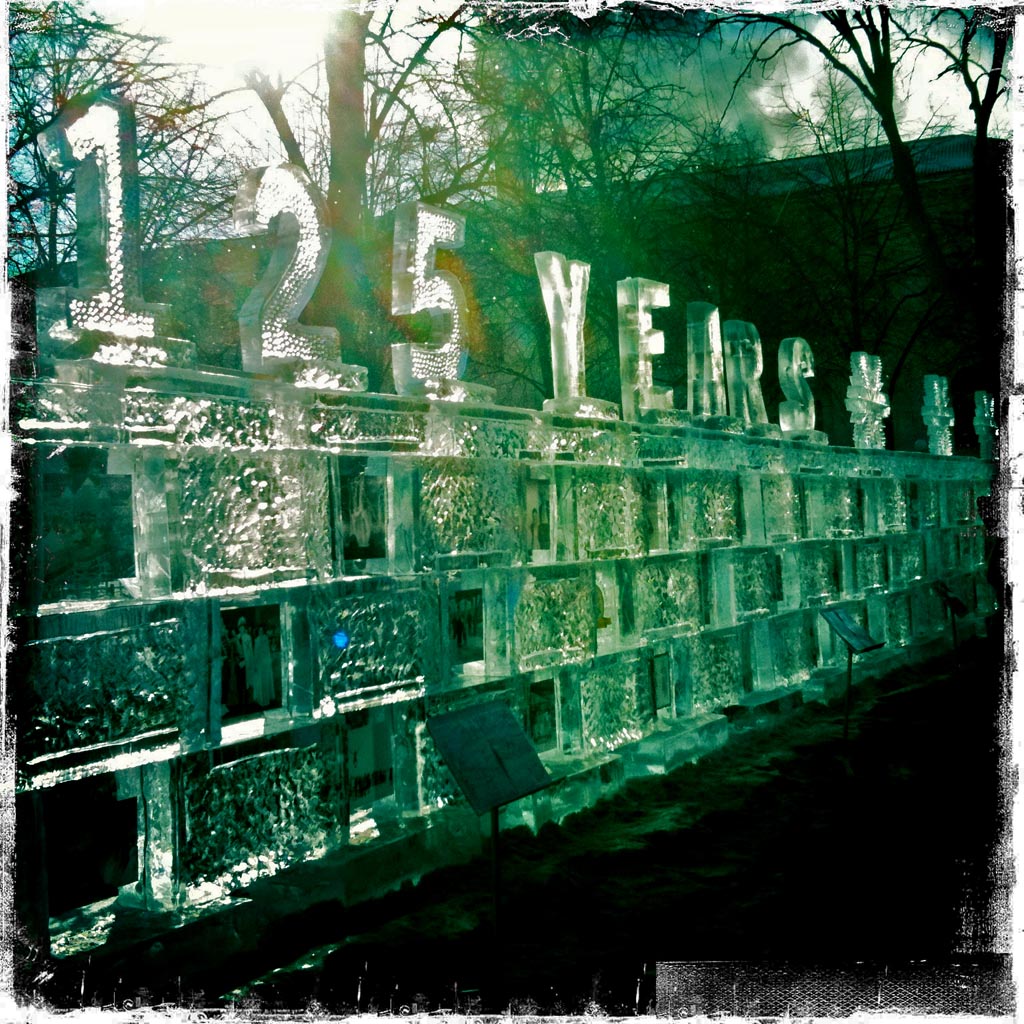
125 year celebration wall of ice with photographs from past year events embedded into the sculpture.

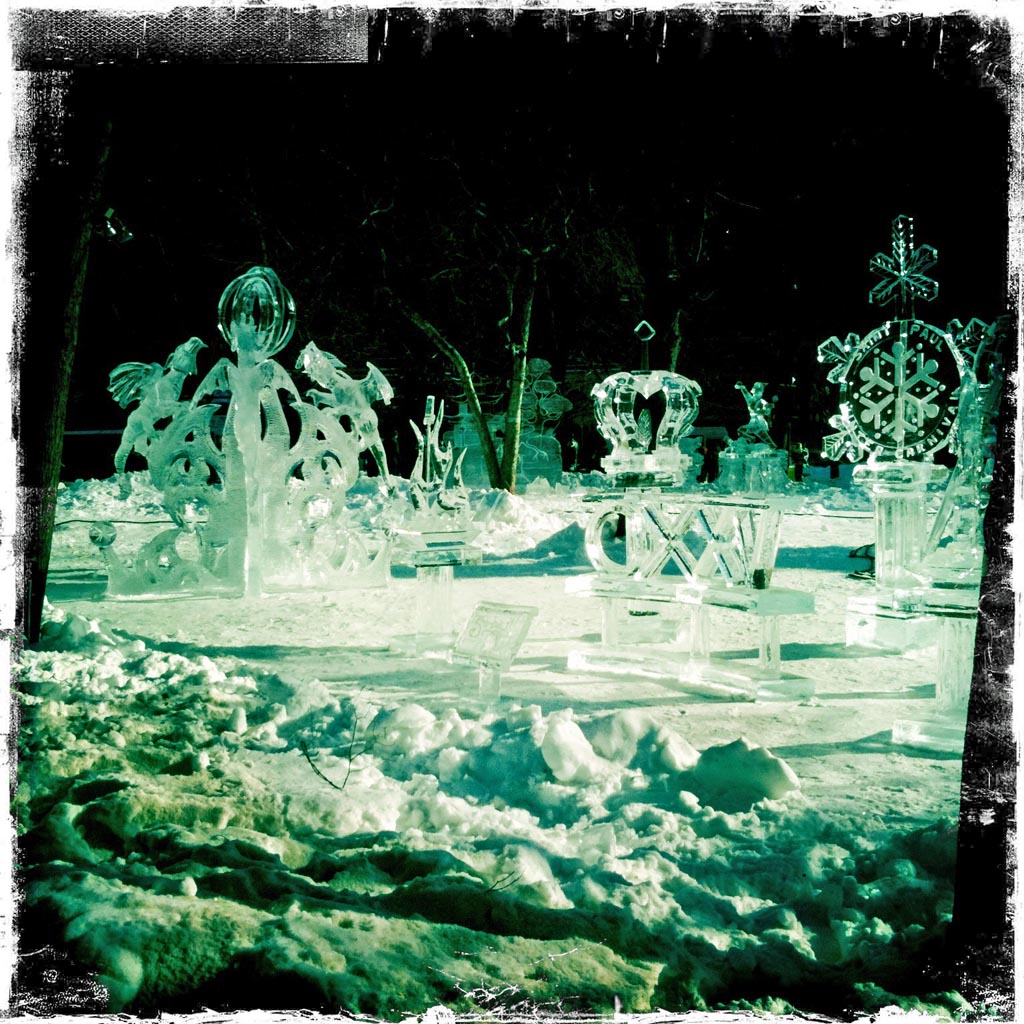
Ice carving is serious business, and you can even watch the sculptures take share, right on the grounds in Rice Park.

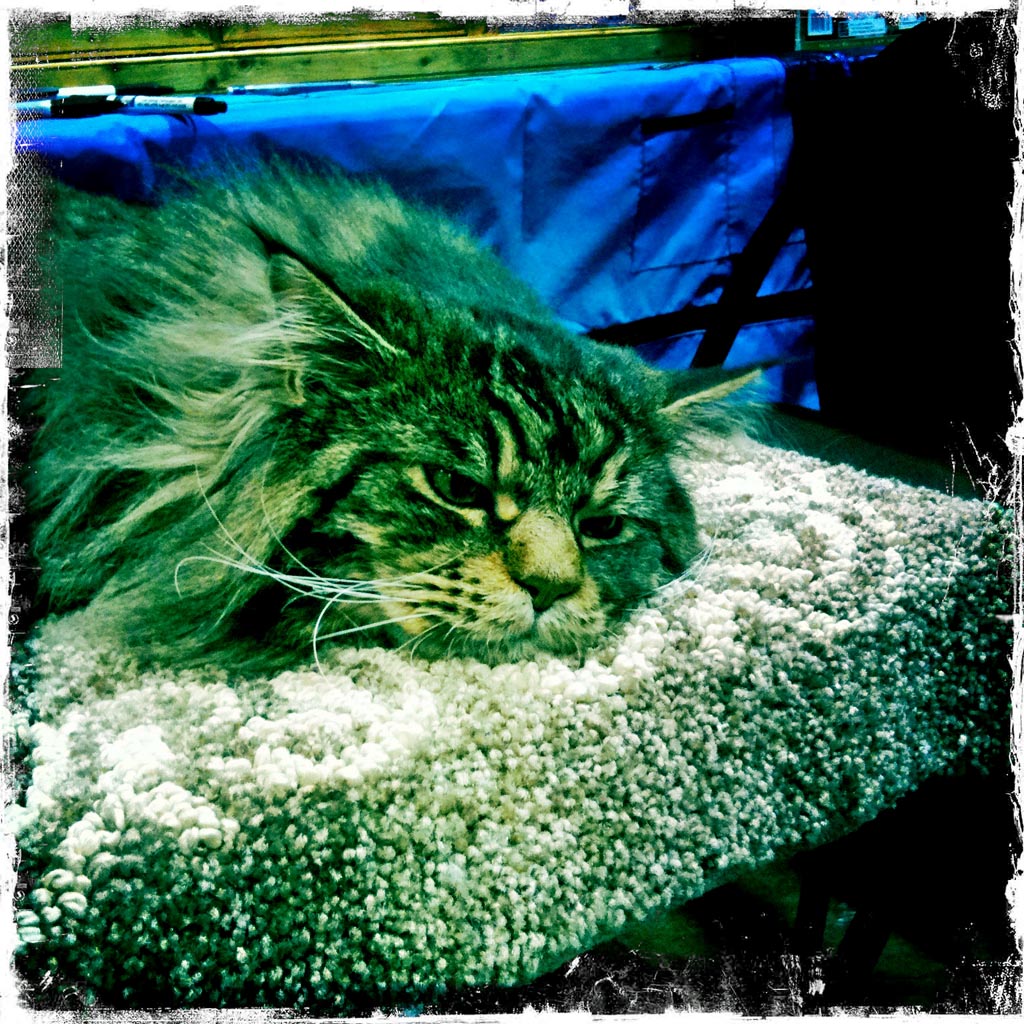
Ever been to a cat show? Me neither. But it’s par for the course at the Winter Carnival. This guy was pooped and ready to go home for the day.

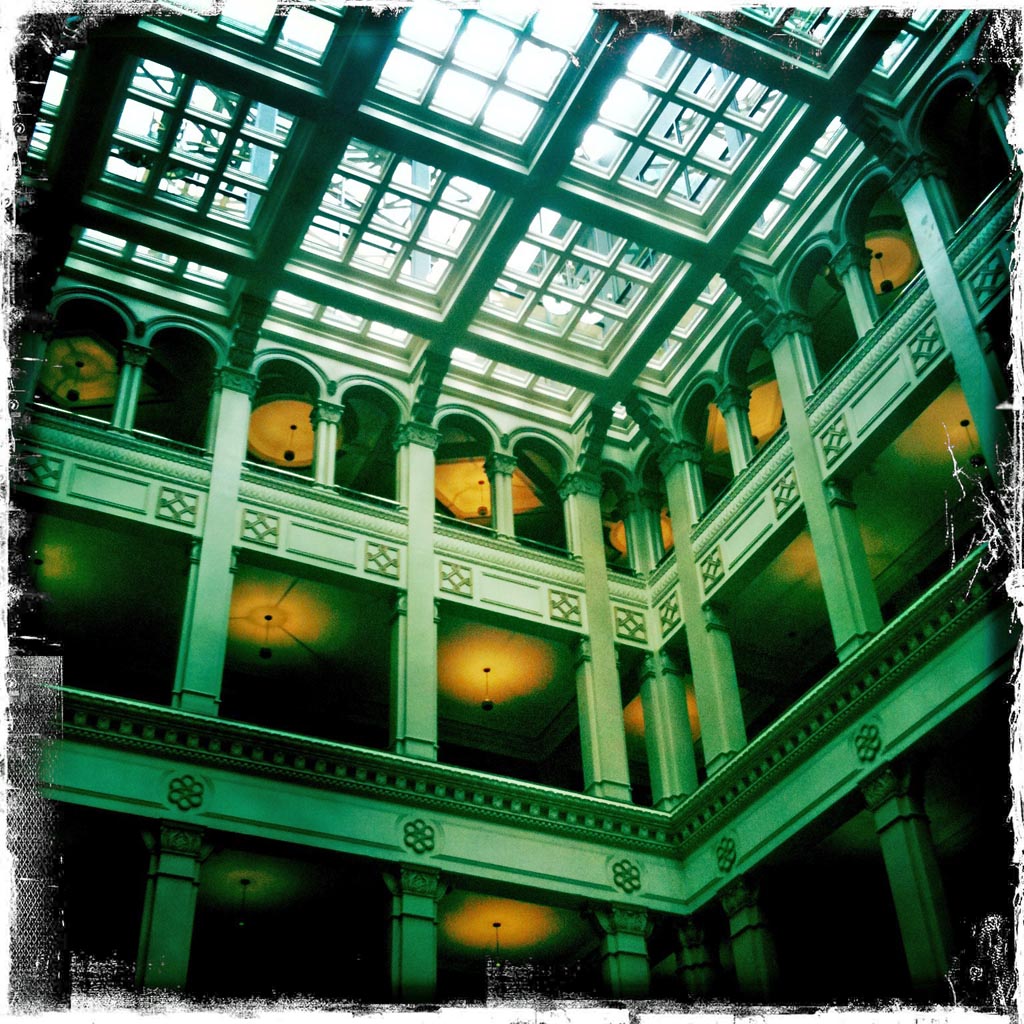
Built in 1902, Landmark Center was the federal courthouse and post office in Saint Paul. Today she’s a lovely restored building with office space, a book store and cafe. She’s also a warm respite when the outside elements have numbed your toes during the Carnival.

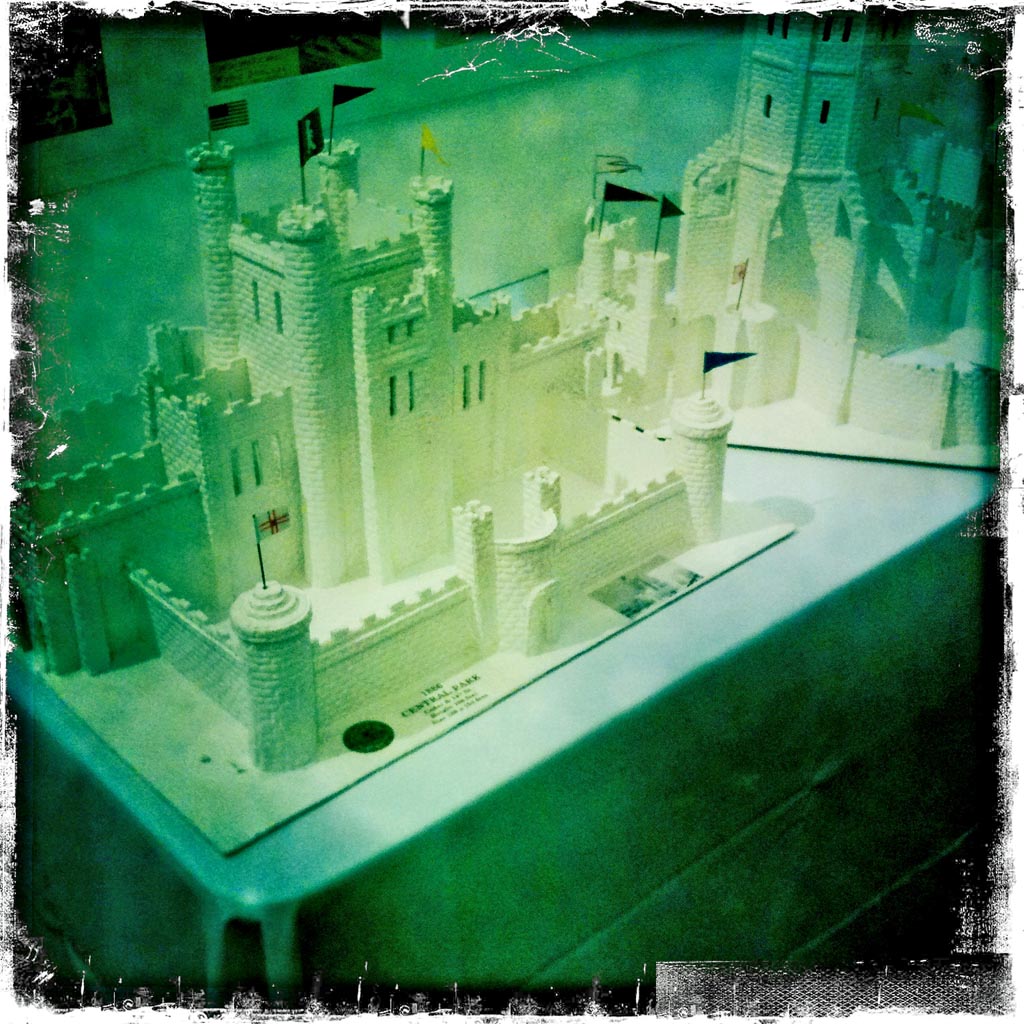
While warming up with hot cocoa in Landmark Center, check out the ice castle display. Ice castles were once a main attraction of the Carnival, and model replicas with advertising from the era are fun to look at. The last castle built was erected for the 2004 Winter Carnival.

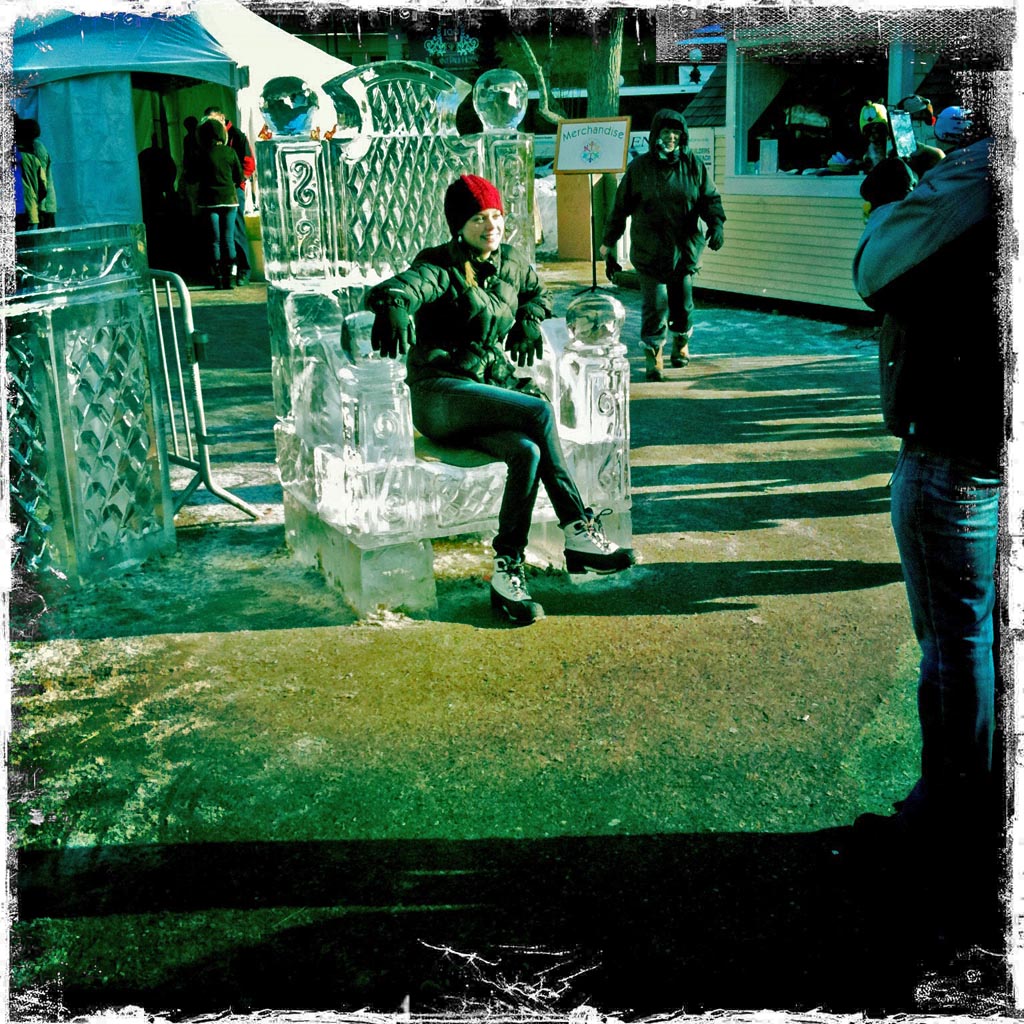
Ice thrones are a popular photo op.

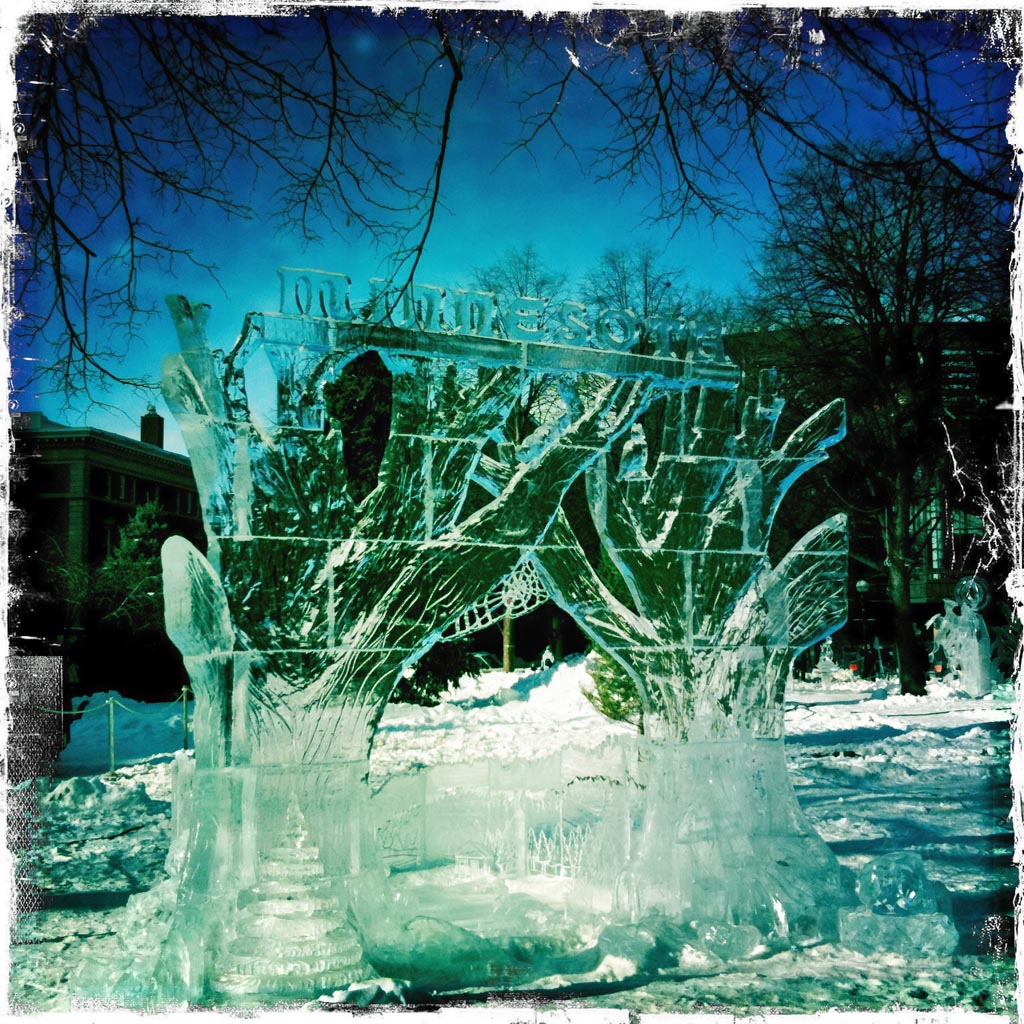
Such detailed work on this Minnesota trees ice sculpture.

Saint Paul’s version of Central Park, there is an skating rink placed across the street from the Saint Paul Hotel every winter.

The Winter Carnival runs through February 6. Find out more about the legend and lore of the Carnival or events happening around the city.

US Pond Hockey Championships

In January there are two major events in Minneapolis and St. Paul that are uniquely Minnesotan – the US Pond Hockey Championships and the Saint Paul Winter Carnival. The first is a celebration of Minnesota’s favorite sport, and the second is a celebration of winter. Both are outdoor events, which makes non-natives think Minnesotans are slightly crazy. But, we have six months of snow on average, so we might as well make the most of it.

The US Pond Hockey Championships attracts teams from over 30 states and a half dozen countries. The premise is simple – playing pick-up hockey outdoors like you did when you were a kid. Or as the event describes it, “The way hockey was meant to be played.” Teams range from an open field to over 40, over 50, women’s, rink rat and boot hockey levels.

I went out this year, as I have for several years now, and the wind was bitter. The temperature was hanging at 1 degree, and I would guess the windchill was about -15. I didn’t want to take my camera out in the cold, so I recorded a few games in Hipstamatic on my iPhone. Wasn’t I cold? A little. But seeing people play with that much passion for the game kept me warm.

Next weekend is the start of Winter Carnival, and I hope to capture more pictures of winter on my iPhone. Until then, don’t forget to wear your Cuddl Duds!

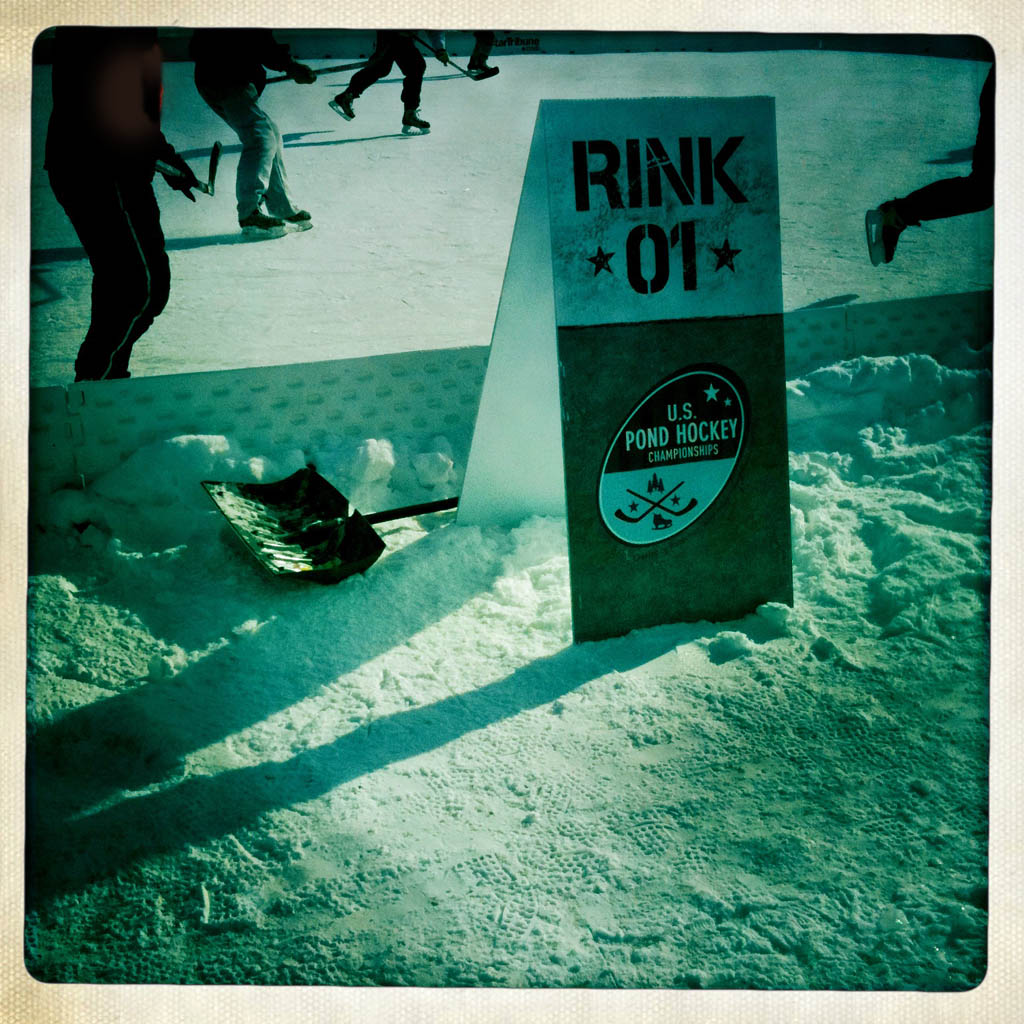
Rink 1 of 25

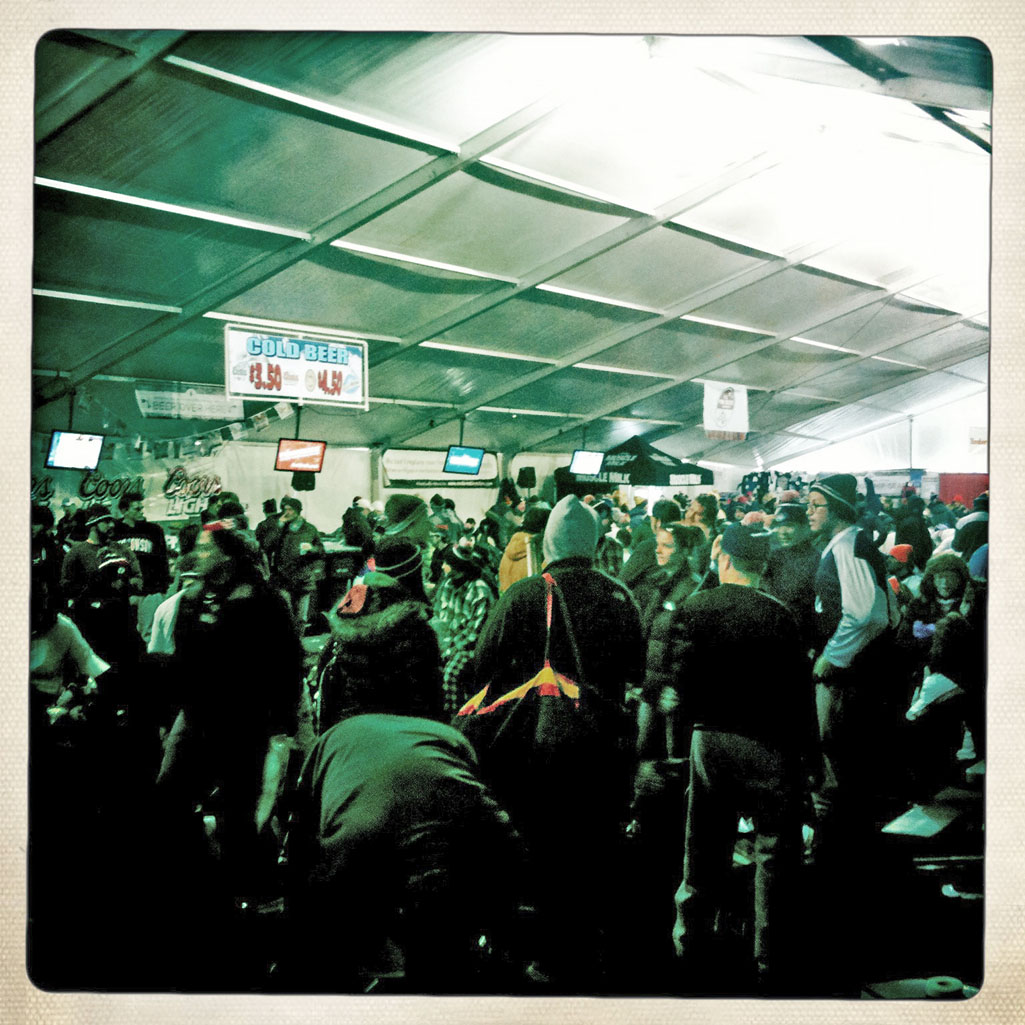
Warming tent

Goal!

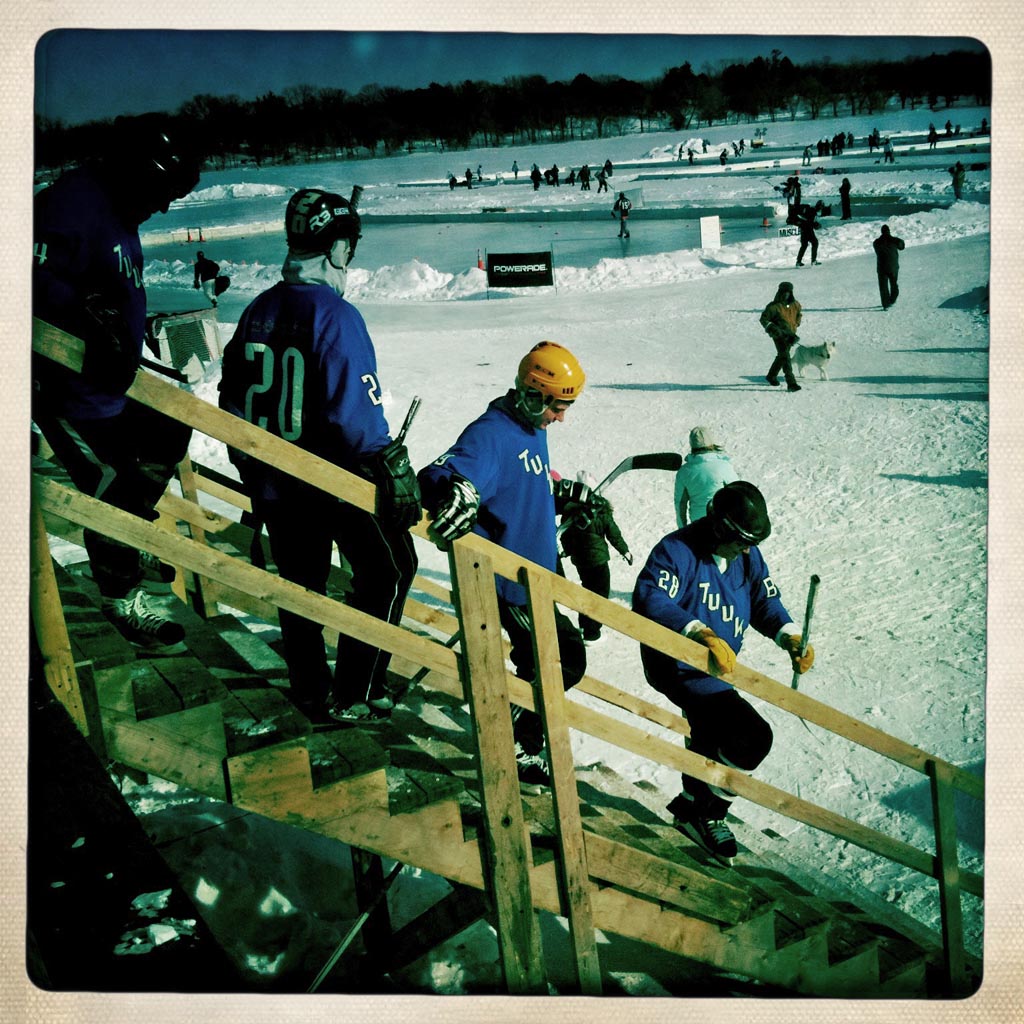
Balancing down the steps from the warming tent to rinks set up on Lake Nokomis.

Facing the wind. Brrr.

Fight for the puck.


Favorite pubs in Dublin

A friend recently announced on Facebook he is heading to Dublin in a few weeks. There were a lot of virtual thumbs ups and “have a Guinness for me!” comments that flooded his wall. It seems people get excited about Ireland, no matter what their lineage. I promised I would send details about some of the pubs we had found while in the city.

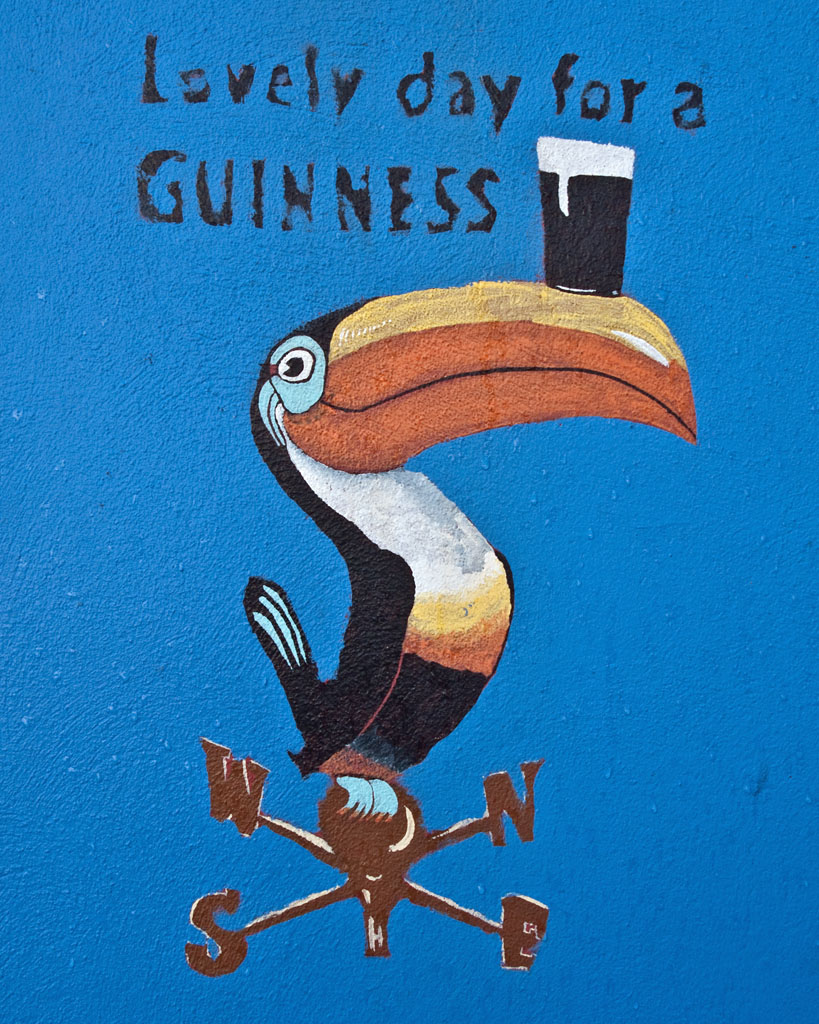
As I dove into pictures from my trip to help aid the memory banks, I posed the question to Husband. “What were the best pubs in Dublin?” His response – “There were no bad pubs in Dublin.” True. Every pub in Dublin has a little something different to offer, including a unique experience.

What was originally going to be a direct Facebook message to my dear friend with a list of our favorite pubs, turned into a full blog post. So Richard, this is for you. Sláinte!

The Celt

The Celt Pub at 81 Talbot Street Dublin 1 has the traditional interior ambience of rural Ireland just blocks from Connolly Station, which is a main hub for both buses and trains. This small pub hosts live music seven days a week in a tiny corner that sits across from the bar. The Celt is situated in a popular area of hostels and inexpensive B&Bs, so the crowd (and sometimes musicians) are either wandering youth, looking to experience Ireland at her finest, or laborers getting off work, complete with sweat and dirty boots.
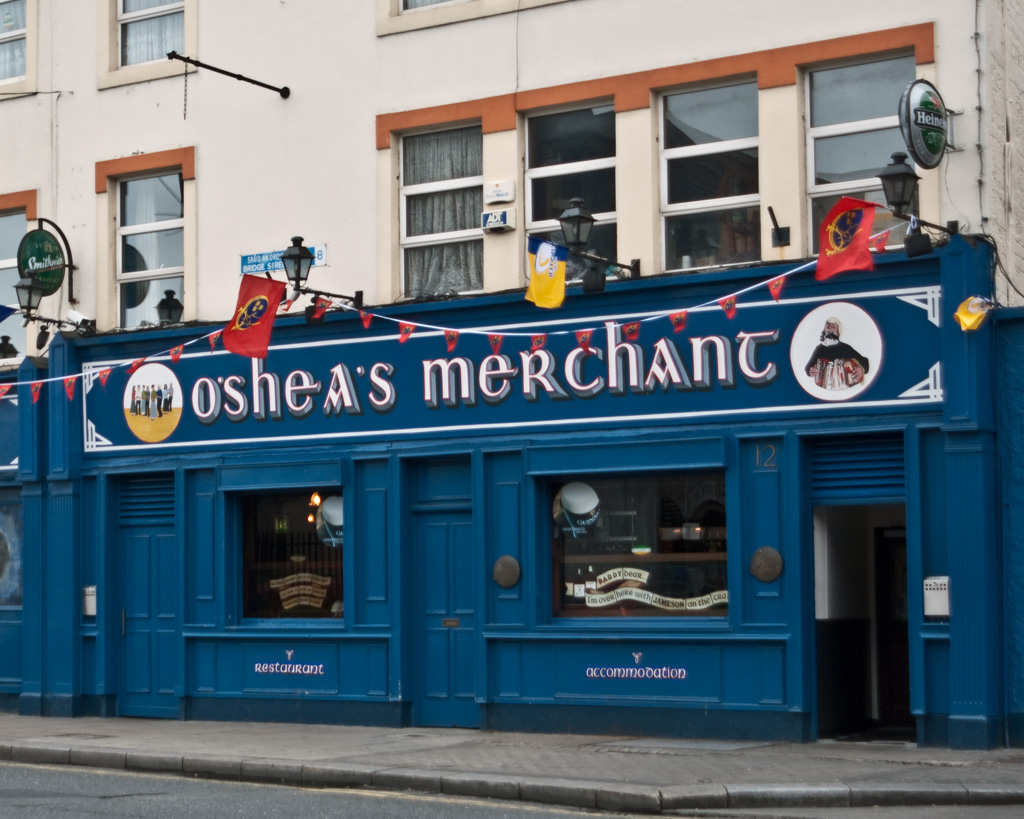
O’Shea’s Merchant

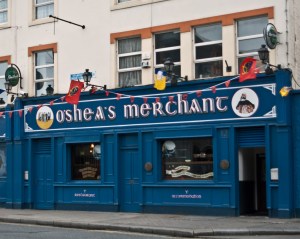
O’Shea’s Merchant at 12 Lower Bridge Street in South Dublin is across the street from the famous Brazen Head pub. The Brazen Head, while the epitome of Irish pub cool on the inside, did not make my list because the tourists outnumber the Irish. While I recommend seeing the Brazen Head, spend time in O’Shea’s Merchant. Traditional Irish music is the name of the game, and spontaneous dancing by patrons averaging around the age of 60 is a common sight.
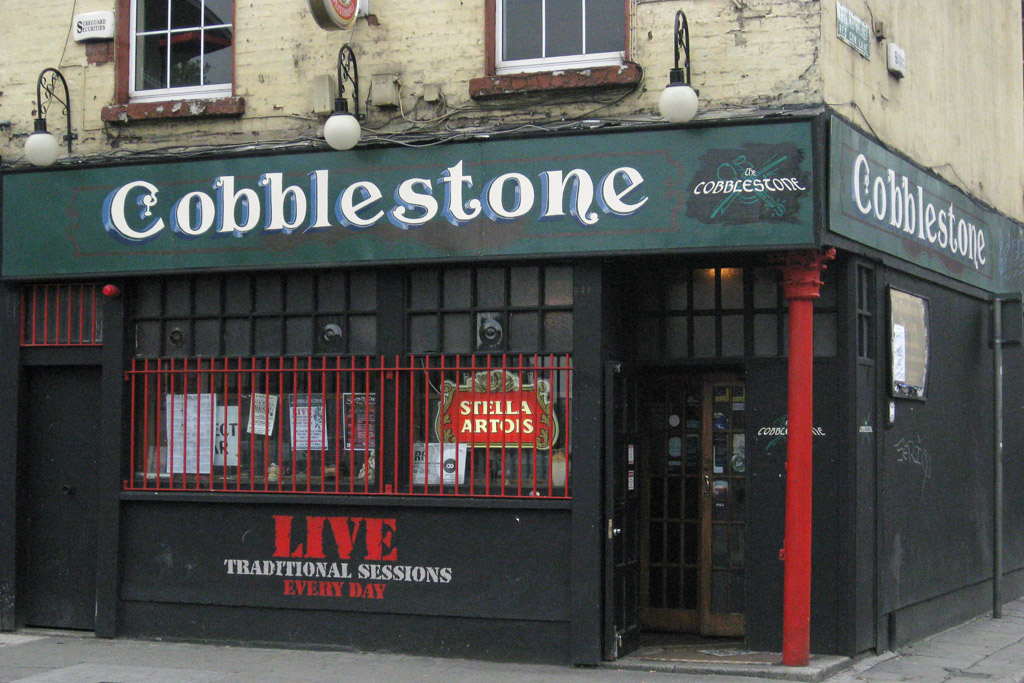
Cobblestone

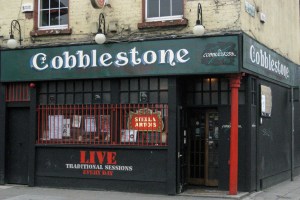
This pub is in a working class neighborhood of Dublin, just around the corner from the Jameson and Powers Distilleries at 77 North King Street, Dublin 7. The Backroom hosts local musicians from folk, country and roots genres. Seek out a bluegrass session to see how the Irish spin something that is distinctly American. No matter what night you are at the Cobblestone, you’re guaranteed plenty of foot stomping.

If you are looking for a different beer experience other than Guinness, Smithwicks, Harp or Murphy’s, Ireland does have a few microbreweries. For a taste of how the Irish interpret brews other than dark porter, there is a microbrewery worth a try:

The Powerhouse Brewing Company

This brewing company has five establishments, and we visited the one in the Temple Bar neighborhood, skipping the more touristy Temple Bar Pub. Located at 16-18 Parliament Street in Temple Bar, the three-story brewhouse has nine mirco beers on tap and one seasonal. Crowded and popular with the younger set, it is still easy to belly-up to a copper kettle drum (right there as decoration in the bar) and sample a flight of your favorite styles. Messrs Maguire is another brewhouse that a true beer geek might want to try, but it didn’t get as high of ratings as Porterhouse during our visit. You can find Messrs Maguire at the foot of the O’Connell Bridge, Burgh Quay, Dublin 2.

And finally, the pubs that didn’t make my list but are worth noting ~

Brazen Head: It was established in 1198. It has dirt floors. Those two facts alone help you look past the Italian and Japanese tourists sitting next to you.

The Church Bar: This is truly a bar in a former church. Elegant and grand, with the pipe organ still in place in the choir loft overhead, the beer selection is poor, and some might consider it sacrilegious to drink in a former place of worship. But its a spectacle to behold.

The Temple Bar: Probably the most recognized pub in Dublin, stop in just to say you had a Guinness there. Or take a picture and say you had a Guinness there. No one will know.
Finding home. Again.

Every so often I wander from Minnesota to northeast Kansas, the corner where I was born and raised. I’m convinced Kansas will forever be known as the Land of Oz – flat, dusty and full of farms with Auntie Em making pie in the kitchen. While the farms and dust are reality, the typography of northeast Kansas is anything but flat. Gentle rolling hills of golden pastures are sprinkled with windmills and grazing horses.

A former co-worker and friend has been blogging about the concept of “home” at Stories She Tells. Her personal self discoveries about moving from state to state continuously as a child are thought-provoking for me. Each of her blog posts make me contemplate about what I consider “home” to be, now as an adult.

I left Kansas for college at 18 and have only been a resident over long weekend visits. There is both strangeness and familiarity when you return to an area you haven’t visited in a long while. Over the Christmas holiday I went to my parents house with the premise of Stories She Tells in my head. The barn where I did chores nearly every morning is very familiar. The downtown streets I walked every day after school? Strange.

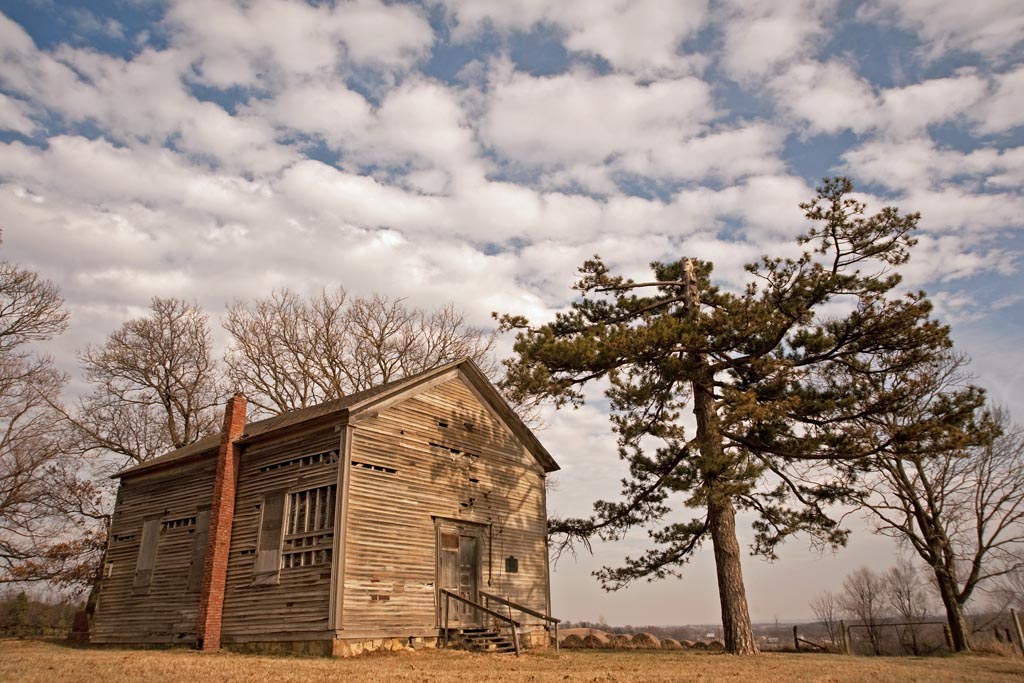
One of the familiar places I like to visit is Little Stranger Church, a clapboard structure one mile up the gravel road from where I grew up. Built in 1867, it has severely decayed over the years, although I firmly believe the hand of God Himself has prevented a tornado from taking it away. It has a scattering of families in the cemetery grounds, some who lost all of their children the same year from typhoid fever or influenza.

Little Stranger Church is a place of peace. I also believe it’s a culmination of what Kansas really is. Kansas is worn, battered by wind, peppered with history and filled with common people who live to be 95 or die as children. Kansas is a neutral tone, never offensive, but wise beyond her years. Living in a fast-paced, big city can sometimes put you on auto pilot, and going back to a familiar yet strange place is grounding. My home is in the big city. But I would wager that not many city kids appreciate natural prairie grass and clapboard churches like I do.