Minnesota music

Seattle = Grunge. Greenwich Village = Folk. Memphis = Blues. Minnesota = music’s best kept secret.

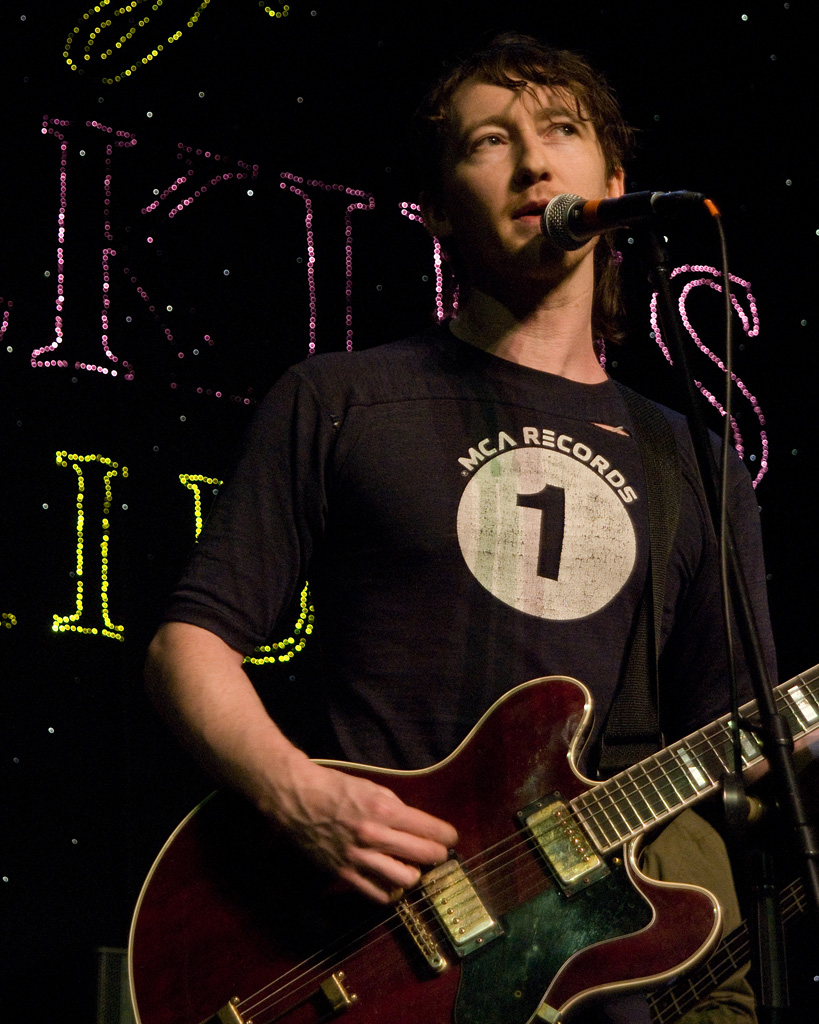
Home to The Trashmen, Judy Garland, Bob Dylan, Prince, The Replacements, Soul Asylum, Semisonic, The Jayhawks, Atmosphere and a host of hip-hop artists on the Rhymesayers label, Minnesota has produced stars from virtually every era of popular music.

Rich in diversity, visitors can typically find a variety of music playing around town any night of the week. With a quick search, I found 118 different bands, trios, solo acts and the like playing on Friday night in the Minneapolis – Saint Paul area. If you are in town and want to experience a booming music scene, consider my personal favorites:

First Avenue – The creme de la creme of all Twin Cities clubs, First Ave. is the CBGB of Minneapolis. With pitch black walls on the inside, the crowd ranges from tattoos and piercings to hoodies and hightops depending on the night. Large bathrooms are upstairs in addition to the First Ave. Twitter stream which runs continuously on large screens by the second level bars. Bonus: First Ave. admission means you can also check out 7th Street Entry.

7th Street Entry – The baby sibling attached to First Ave., 7th Street Entry is the starting place for bands. A few make it, most don’t, but you get to hear a range of incredible music in a space no larger than your living room. If late night clubbing isn’t your style, 7th Street offers many all-ages or 18+ early shows that put you in bed before 10:00 p.m. Tip: pack earplugs. The size of 7th Street means ringing ears the next day if you don’t care for your hearing.

Turf Club – This club is like your favorite pair of worn shoes. You should give them a good shine, but it would take away the character. A shotgun club with a lower level lounge decorated in Minnesota kitsch, The Turf is where the local musicians hang out if they don’t have a gig. Reasonable cover at the door keeps the place usually packed. It’s also the club that local bands use for trying new material out on smaller, more intimate crowds.

The Cabooze – Hosting tribute shows and bands traveling post-outdoor festival season, The Cabooze in Minneapolis is most notable for its interior space. A large dance floor, tables and chairs, plus a comfy sitting lounge overlooking the stage make The Cabooze a great place to see music or mingle with friends.
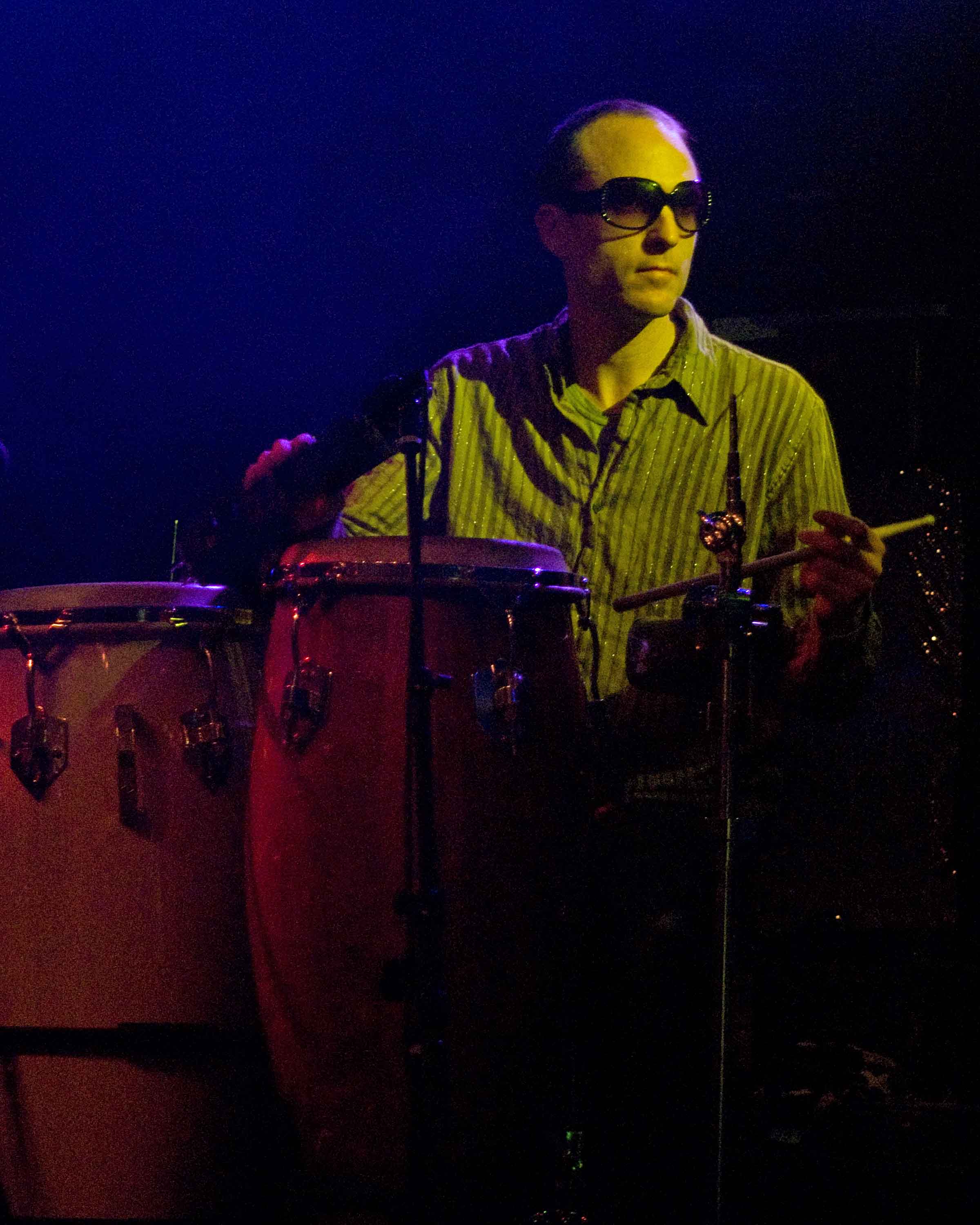
The Artists’ Quarter – Located in the basement of the Hamm Building in downtown Saint Paul, The Artists’ Quarter feels like a speakeasy. National acts, local legends and B3 Organ Night make this club a place you’ll want to hang out. Downtown professionals, music professors and students from McNally Smith College of Music are standards in the crowd. In town over the holidays? The Artists’ Quarter is one of the best New Years Eve parties in Saint Paul.

Dubliner Pub – Closest thing to a pub in Dingle, Ireland, the Dubliner features foot-stomping Irish music six-nights a week in a no frills bar. And they pull your glass of Guinness correctly. Best part? There’s never a cover.

The Dakota Jazz Club – This club serves dinner with your jazz. It’s polished and perfect if you want to dress-up and do the town to see some of the best jazz musicians on tour today.

Kitty Cat Klub – On the East Bank of the University of Minnesota in Dinkytown, there is a lounge club like no other called The Kitty Cat. Velvet sofas, lampshades and oriental rugs set the scene for solid music that is typically free on the weekdays, or if you go early enough for food on the weekends.

Lee’s Liquor Lounge – This is my favorite spot to see honky-tonk. Johnny Cash just sounds better in Lee’s. And the dance floor is always full of regulars who make-out or square dance-out the evening in front of the band. The old guy behind the bar is Louie, the owner, and he runs a tight ship. Be sure to check out his impressive collection of Elvis memorabilia hanging throughout the place.

Mayslack’s Bar – Nice-sized stage with a small dance floor, Mayslack’s is a great old building with solid music. If you go, try the roast beef sandwich.

Nye’s Polonaise Room – Voted the Best Bar in America by Esquire magazine in 2006, Nye’s is a mix of polish sausage, country blues, a polka band and a piano bar. The vinyl booths and orange/red 1960s decor are the icing on the cake.

For a full listing of music in the Twin Cities, look for the City Pages on free newsstands or visit www.citypages.com.

Read my take on Soundset, one of the largest hip hop festivals in the Midwest, hosted in Minneapolis by Rhymesayers.

Have more than one night to spend in Minneapolis-Saint Paul? Check out The New York Times city recommendations.
Unexpected pleasures in Bruges

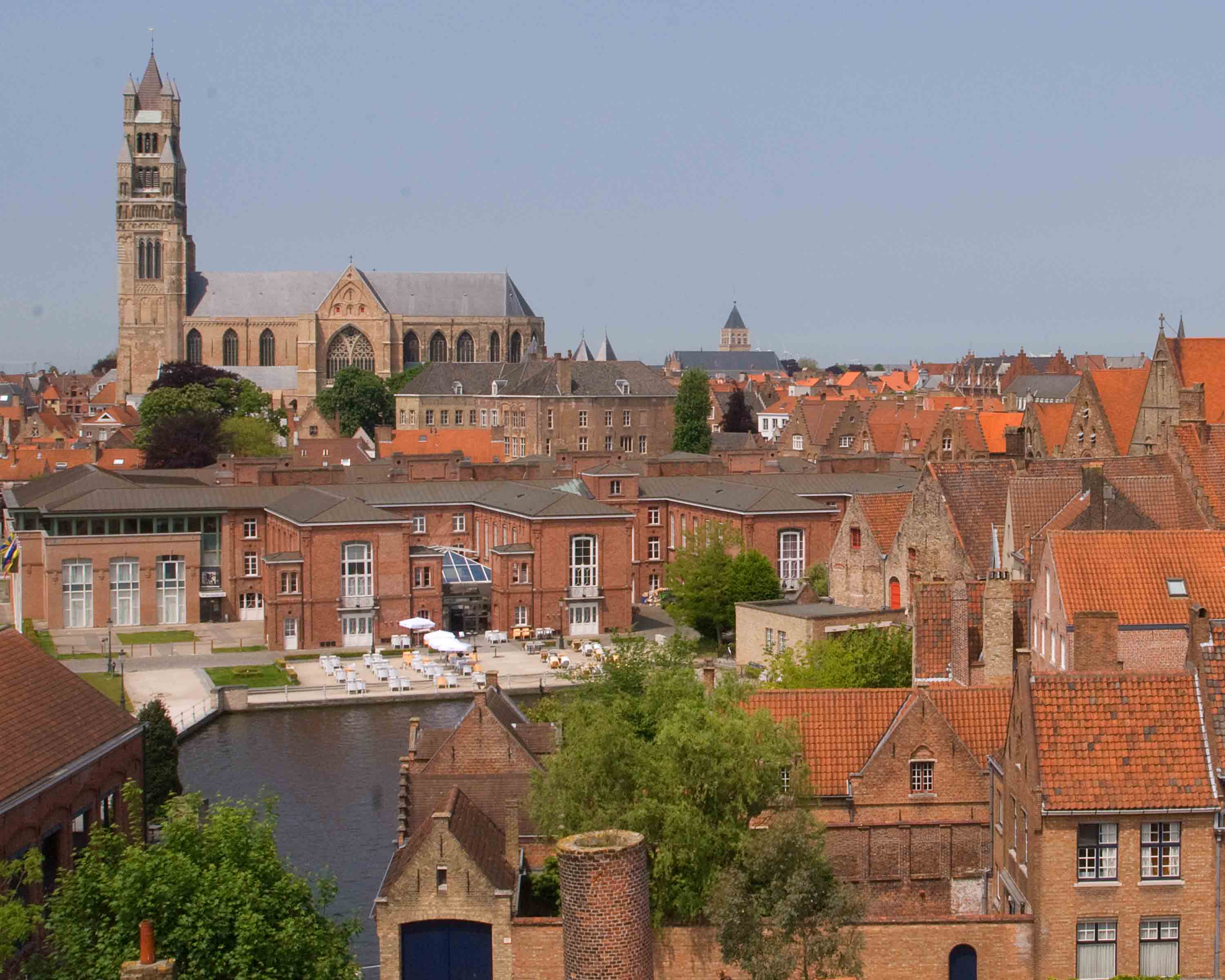
Standing on the rooftop of De Halve Maan Brewery in Bruges, Belgium, you have a complete 360 degree view of town. It was on this rooftop husband and I noticed a church steeple in the distance. After two days in Bruges we thought we had seen every church. However, the spire we spied was in a neighborhood not yet explored. Tour over, beer sampled, we walked toward the steeple we had seen in the distance.

After walking through several quiet neighborhoods, St. Salvator’s Cathedral appeared in a busy shopping district before us. Upon entering, the interior reconstruction and repairs were very evident, but it didn’t take away from the beauty of the cathedral. As with most churches in Belgium, art was hanging in every free space. That had been one of the surprises of Belgium. Many churches we visited on our trip had been converted to art museums or were no longer in use and just historical buildings draped in artwork. But St. Salvator’s was still a congregation.

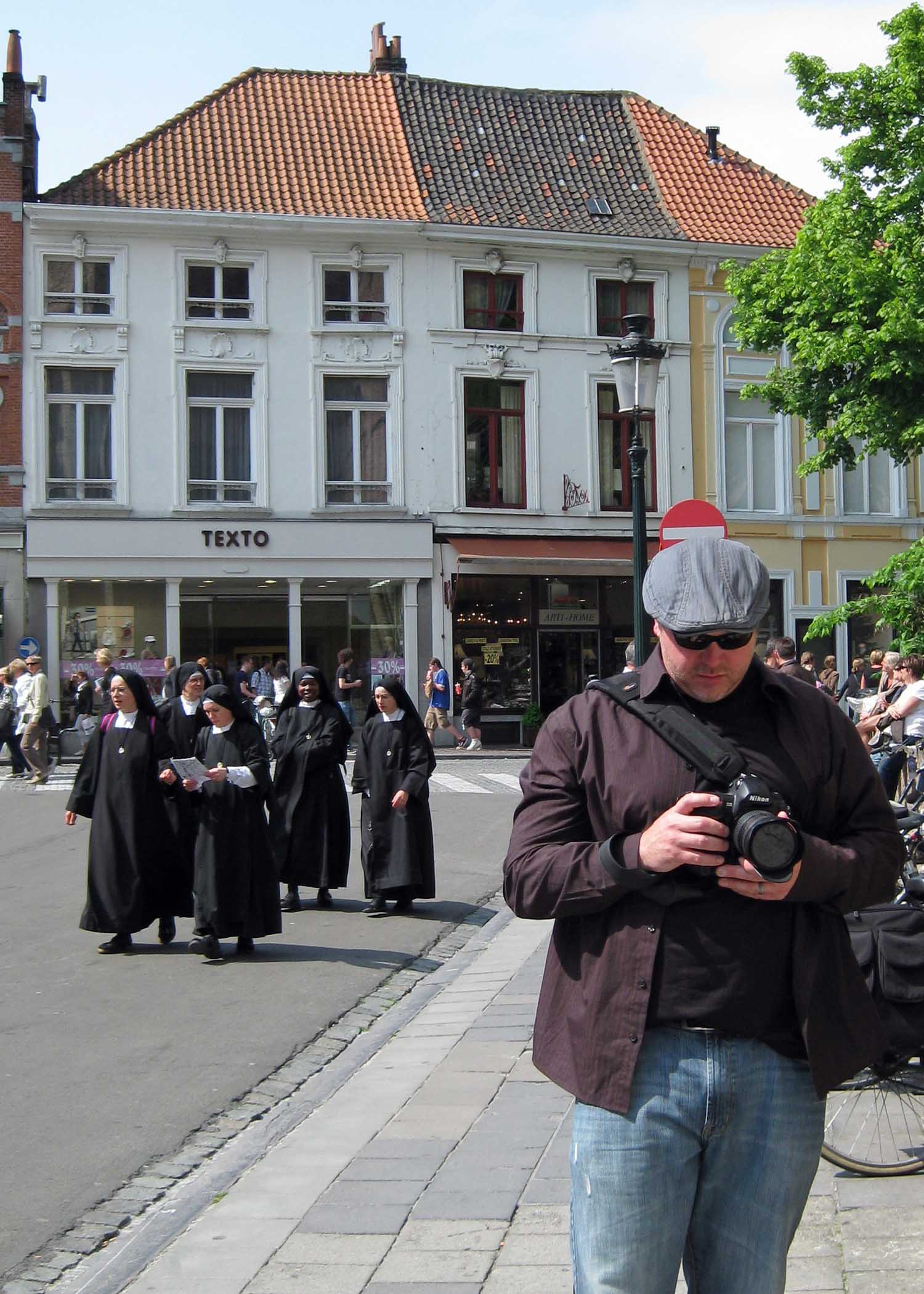
We took a few minutes to let our eyes adjust to the low light, circled under the organ and around the side to the far wing of the nave. Some children were praying in front of candles, and I sat close by to take in the scene and the magnificent stained glass window on the opposite wall. That’s when I saw them out of the corner of my eye. NUNS. A group of five women, they were in full uniform, cloaked head to toe in robes and habits. Rosary beads jangling, they walked past me toward the alcoves of saints on the east wall. I had to smile because they were not parishioners as I originally thought, but tourists. The camera backpacks strapped to their shoulders gave them away.

I followed the traveling sisters around the church and watched what they were interested in. The nuns stopped at each piece of religious artwork and the gold chests that held bone remnants of various saints. I wish I could have understood their whispers because on occasion, they would speak to each other and giggle. They were definitely women with a sense of humor.

When the sisters stalled to linger in one particular area, I swept past them to finish my tour of the cathedral. I walked by an area that was sectioned off and peeked over the barrier. A smaller chapel was in the midst of repair and the section had been barricaded to avoid injury to visitors.

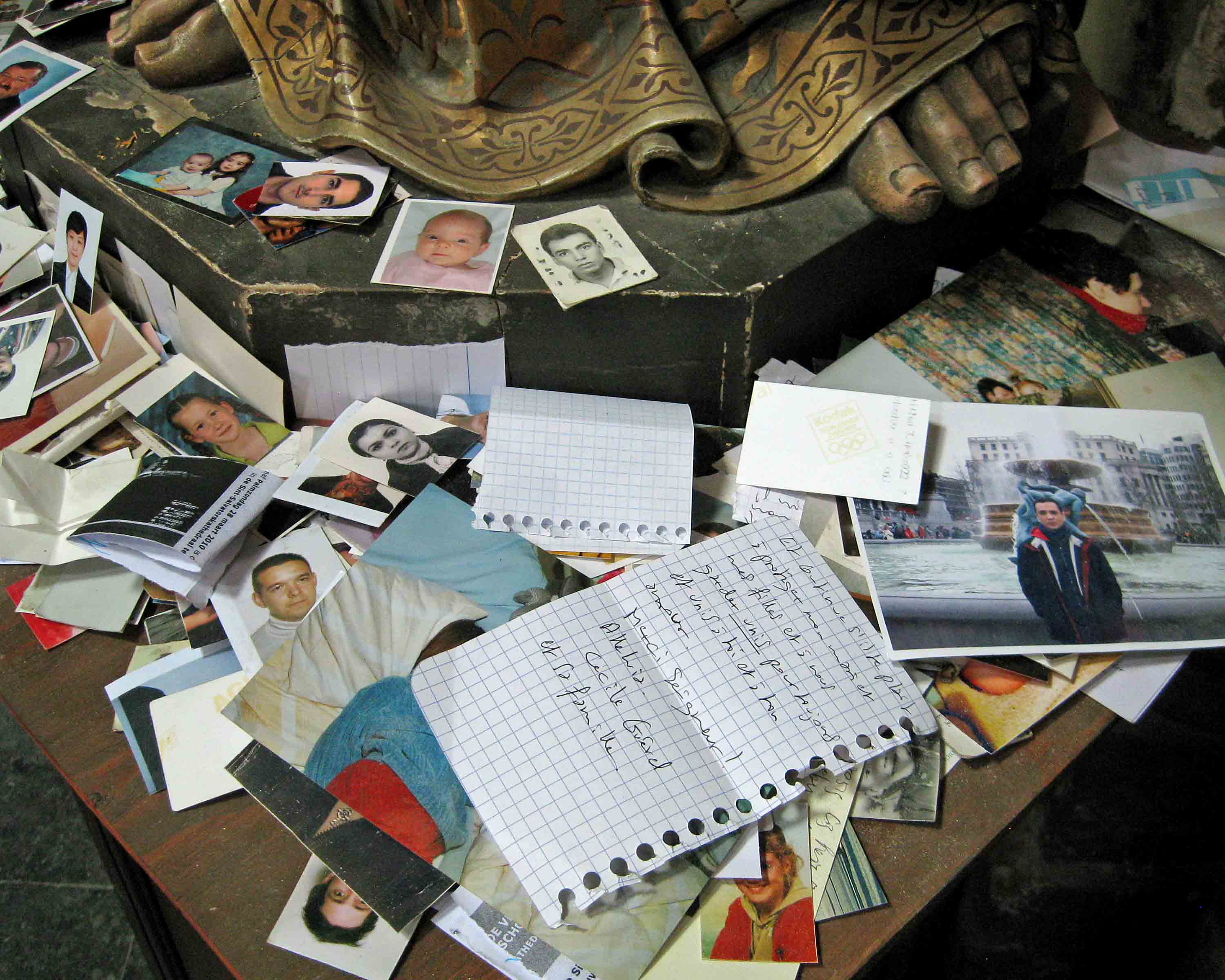
While I was looking at the chapel, I felt someone staring at me. Turning slowly to my left, not to be discovered, I realized a statue of Jesus was in the corner above another set of prayer candles. There was debris at his feet and I was curious if the construction nearby had spilled over onto the statue. I pushed past some chairs to get a better look at what the debris was. Pictures.

At the feet of Jesus were photographs. Dozens and dozens of photographs. Some people had obviously come to the corner with purpose – to light a candle and leave a picture of the person they were praying for. Other photographs looked like a spiritual moment – tiny wallet sized photos left when the statue had been discovered by people just like me. I instantly wished I had a photograph of someone to leave behind as well. There was an incredible sense of peace and healing in that place, standing at the feet of Jesus.

I went back to the nave to view the remaining stained glass I had not seen, and to wait for husband. I took in all of the unexpected pleasures I had experienced inside St. Salvator’s. For me, one of the joys of travel is watching how others appreciate the same experience.

I even got one picture of the nuns before we departed the church grounds. I just hope husband got a shot of them too,considering he was looking at this camera when they walked by.

Tip: The only Tourist Information office in Bruges is located at the train/bus station. Make sure you stop there for a map before heading into town.

In a few New York minutes

When I travel to New York City, it’s typically a quick trip for work. I know Midtown well since company offices are just blocks from Rockefeller Center. However, the last time I was in New York, I decided to take some time to explore the New York I really wanted to see – Greenwich Village.

We walked from Midtown to The Village down Fifth Ave., photographing along the way. I don’t recommend taking this route without good shoes and lots of breaks, but it’s the best way to see a little of the city, including the Flatiron Building and the New York Public Library.

Bleecker Street was our final destination in The West Village. Tired from our walk, yet too early to find a spot for dinner, we settled into a booth at Peculier Pub at 145 Bleecker St. At Peculier Pub a patron can choose from hundreds of beers and plug the jukebox for hours. Since it was early in the day, the crowd was a mix of college students and professionals at this neighborhood dive.

Dinner was an easy choice based on the reviews I had looked up on my smart phone. Sangam Indian cuisine, just up the street at 190 Bleecker St. was a shoebox restaurant with five tables, but the smells from the kitchen confirmed what the reviews had said. Sangam was authentic homemade Indian with no frills, all flavor and a monstrous amount of food for $7. (Editor’s note: Sangam is now closed.)

After dinner we wandered through the streets of the West Village. The bohemian artistic vibe now all but gone, Greenwich Village feels like a comfortable neighborhood that anyone could call home.

The end of our evening put us at Sullivan Hall, at 214 Sullivan St. Trying to find at least a shred of the bohemian flavor that once was, we thought seeing live music in The Village would bring us one step closer to an era past. The band that night was a reggae group from Boston with a smooth beat that did not disappoint.

New York City is best done in pieces. If you have time, pick a neighborhood and settle in for a few minutes. You’ll feel like a local faster than you think.

Paris six feet under

The majority of people who look at my pictures from the Pere Lachaise Cemetery in Paris say the images remind them of the Saint Louis Cemetery in New Orleans. The Big Easy is definitely on my travel list, but until I get there, Pere Lachaise is still the mecca of cemeteries that I’ve seen in my lifetime.

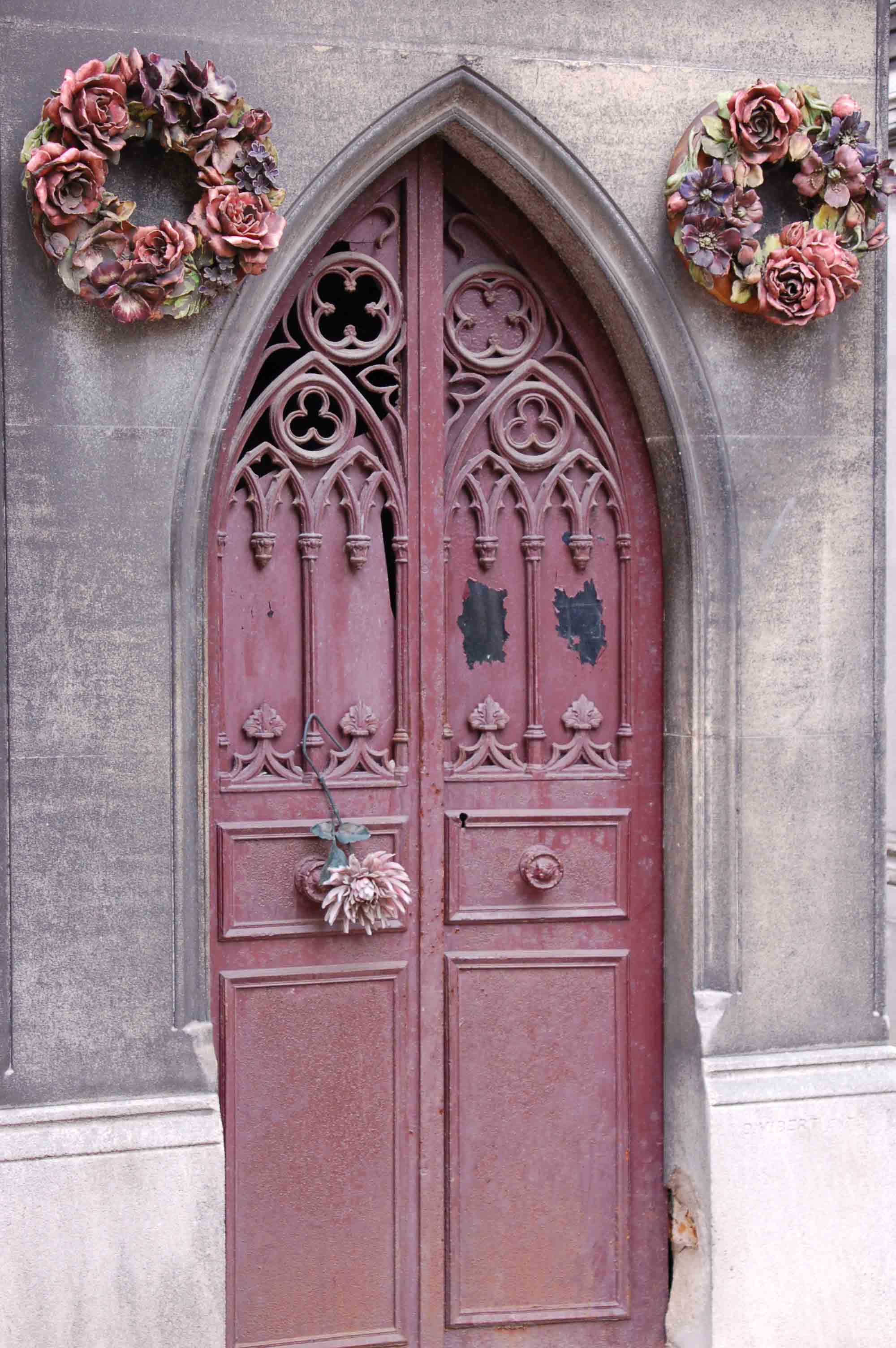
You might think that touring a cemetery is morbid, but I visit cemeteries with the same attitude I would at any memorial. It is a place to honor the lives of those who have passed, learn some history about the era in which they lived and admire the architecture before you.

Pere Lachaise is steeped in history.  The brainchild of Napoleon, the cemetery opened in 1804, and there are over 300,000 people buried there today. The cemetery was considered too far from the center of Paris when it first opened, so a campaign emerged to get more funerals on the property. The strategy was to move the bodies of famous Parisians to the cemetery, beginning with Jean de La Fontaine, a French writer and poet, and Moliere, a popular French playwright and actor. The marketing worked, and common Parisians clamored to be buried near the rich and famous.

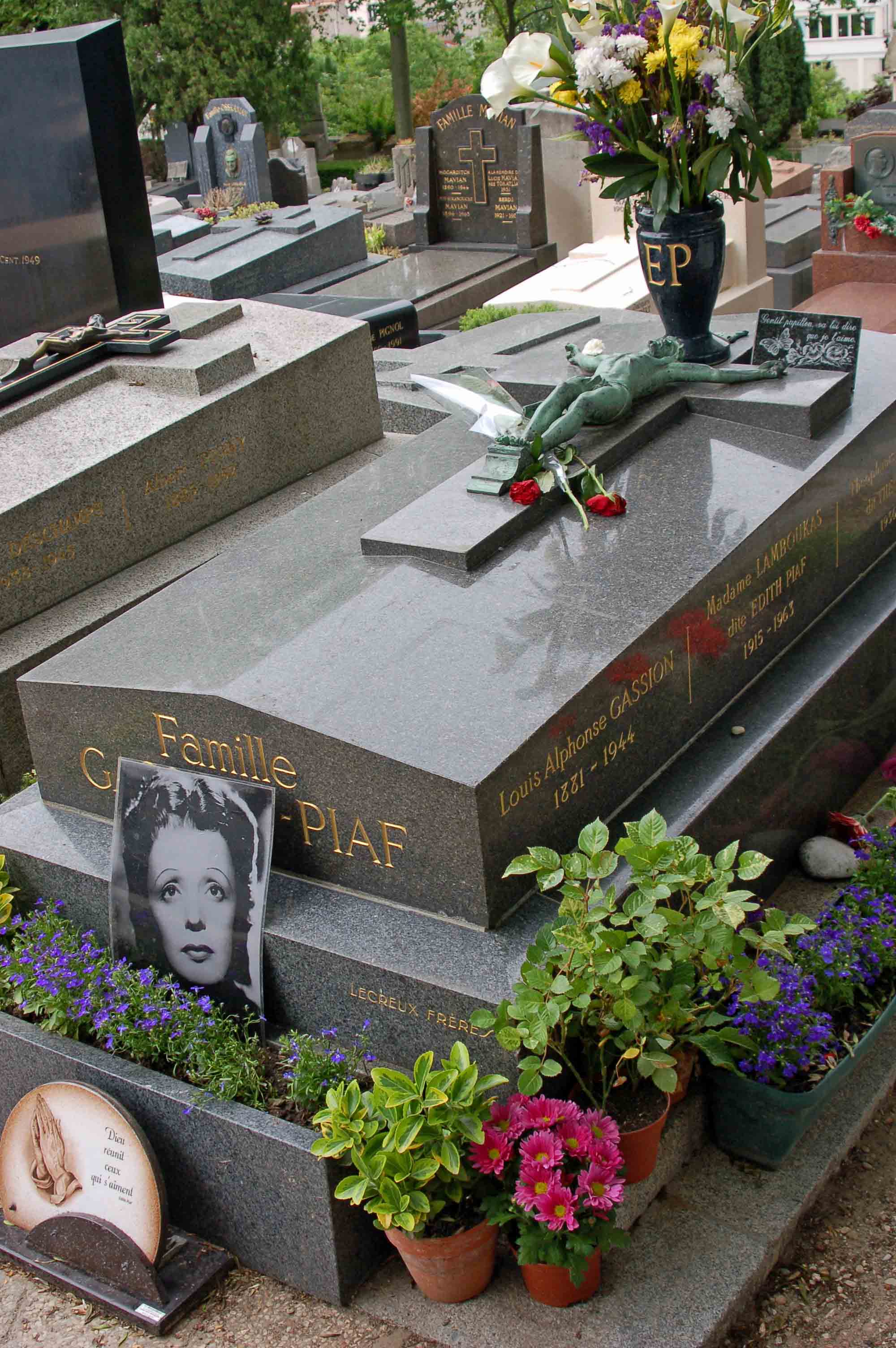
Oscar Wilde’s grave was a favorite, with lipstick kisses firmly planted on every inch of his memorial. Edith Piaf’s grave was laced in flowers and photographs the day I was there, which put “La Vie en Rose” in my head for the rest of my walk. Max Ernst, Gertrude Stein, Frederic Chopin – many of the greats are laid to rest in this picturesque place, making it a definite stop on your Paris tour.

I’m probably the only person who has been to this cemetery and not visited Jim Morrison’s grave. It wasn’t because of my disinterest in paying homage to The Doors lead singer. I just got lost trying to find it. Pere Lachaise is over 118 acres and easy to get turned around in. If you decide to visit the cemetery, I highly recommend checking out the online virtual tour at the cemetery’s website and buying a map from one of the shops across the street from the cemetery before entering. You can also preview Rick Steves’ walking tour of the cemetery in addition to his Paris iPhone and iPad apps.

Note: Another great resource of traveler’s comments can be found The New York Times Paris Travel board.

Munich modern art

The smaller crowds and 20th Century art at Pinakotek der Moderne in Munich, Germany makes this museum a stand out can’t-miss.

Designed by German architect Stephan Braunfels, the museum opened in September 2002. Munich’s art collection was not affected by the Nazi’s regime of banning modern art, perhaps because Munich’s collection was fairly slim at the time of the war. However, after 1945 the modern art collection of Munich blossomed, and today the Pinakotek der Modern holds stellar examples of modern art, from known masterpieces to sleek design of everyday products. If you visit Munich, the museum is a definite sightseeing stop.

In town on Sunday? It’s only one Euro. Can’t make it during the day? The museum is open until 8:00 p.m. on Thursdays.

Ljubljana, Slovenia

Standing in line at the grocery store two blocks from my rented flat in Ljubljana {pronounced loo-blee-ah-na}, I felt like a seasoned professional. The deli counter had been my first small victory of the day, successfully asking for 400 grams of cheese in Slovenian and not getting 400 kilos of liver sausage. From there it was a breeze collecting Nutella, bread and bananas.  I had only been in Eastern Europe for 24-hours and like countries before, had found market shopping a delight to the senses.

Then I noticed the elderly gentleman in the checkout lane next to mine. He was smiling at me, holding up his properly weighed bag of bananas, and pointing at my bundle.

The bananas. I had forgotten to weigh my bananas and just grabbed two from the pile like I would in the United States.

My travel savvy high diminished, I weakly smiled back and mouthed, “Hvala” in thanks for his observant and discrete assistance. Returning to the produce section, I bagged, weighed and labeled the fruit I was carrying. Task complete, I went back to the front of the store, only to find my guardian angel waiting near the door, looking to make sure I understood his sign language. I held my bagged bananas in the air, and the smile cracked across his face once again. He waved “Nasvidenje” and exited the grocery.

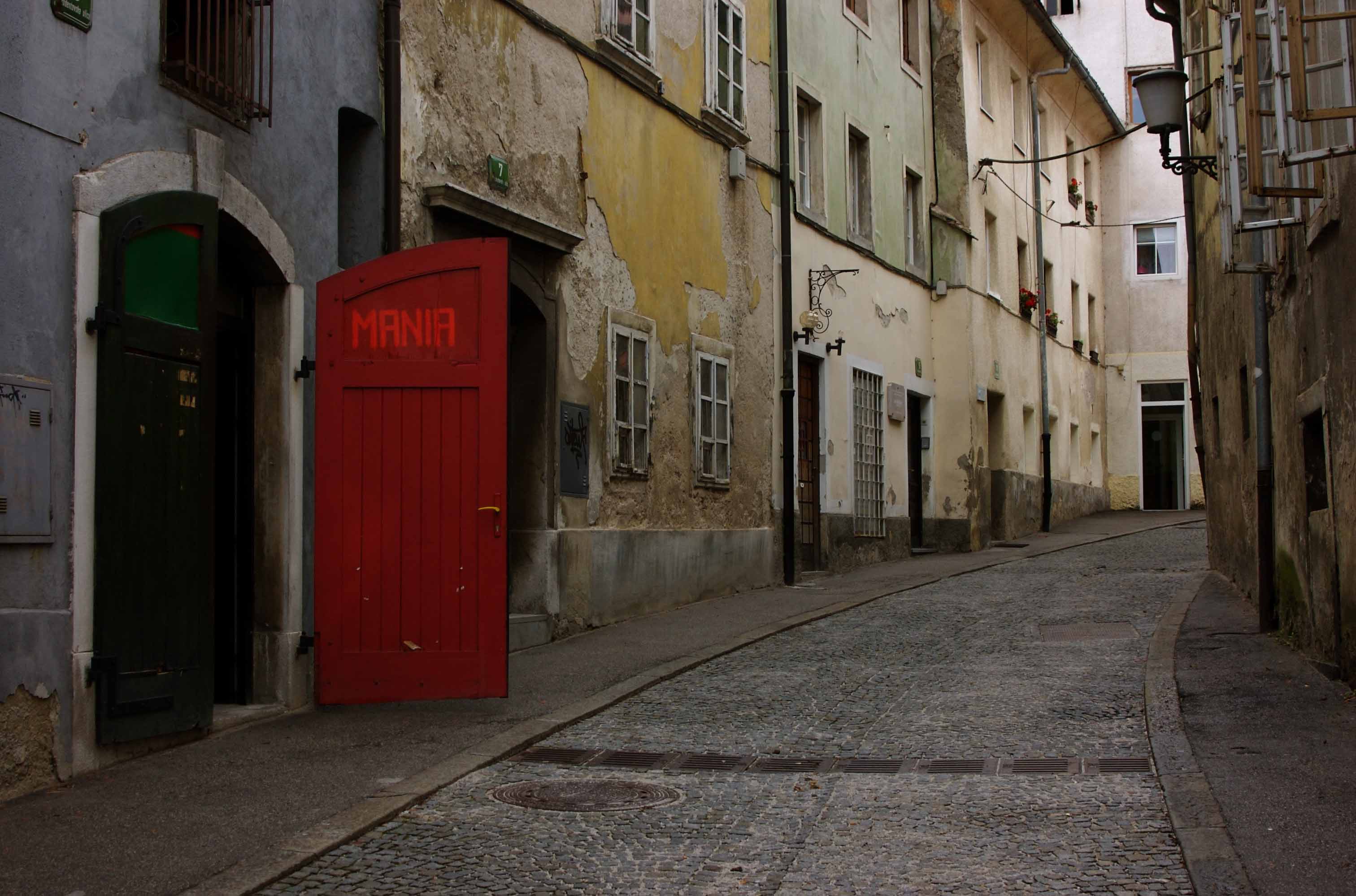
Despite being the country’s capital, Ljubljana maintains a small town feel with cafes and pubs, an expansive daily farmer’s market off the main square, and locals who assist strangers who haven’t properly weighed their fruit. The city also feels incredibly youthful since the University of Ljubljana resides in a bohemian district full of art galleries, coffee houses and open displays of affectionate young love just beyond the Old Town section.

Tucked between the Alps and the Adriatic Sea, Ljubljana is a big city of 276,000 that is sprinkled with old structures and narrow curvy streets. Looming over the city is Ljubljana Castle, originally a medieval structure that was rebuilt to its current glory following an earthquake in 1511. Over time the castle has not only protected peasants, but has served as a royal residence, prison, and barracks. I went to Ljubljana Castle specifically to take in the impressive 360-view from the top tower, paying just a few Euro to climb 95 wrought iron steps to behold a breathtaking vista of red roofs below.

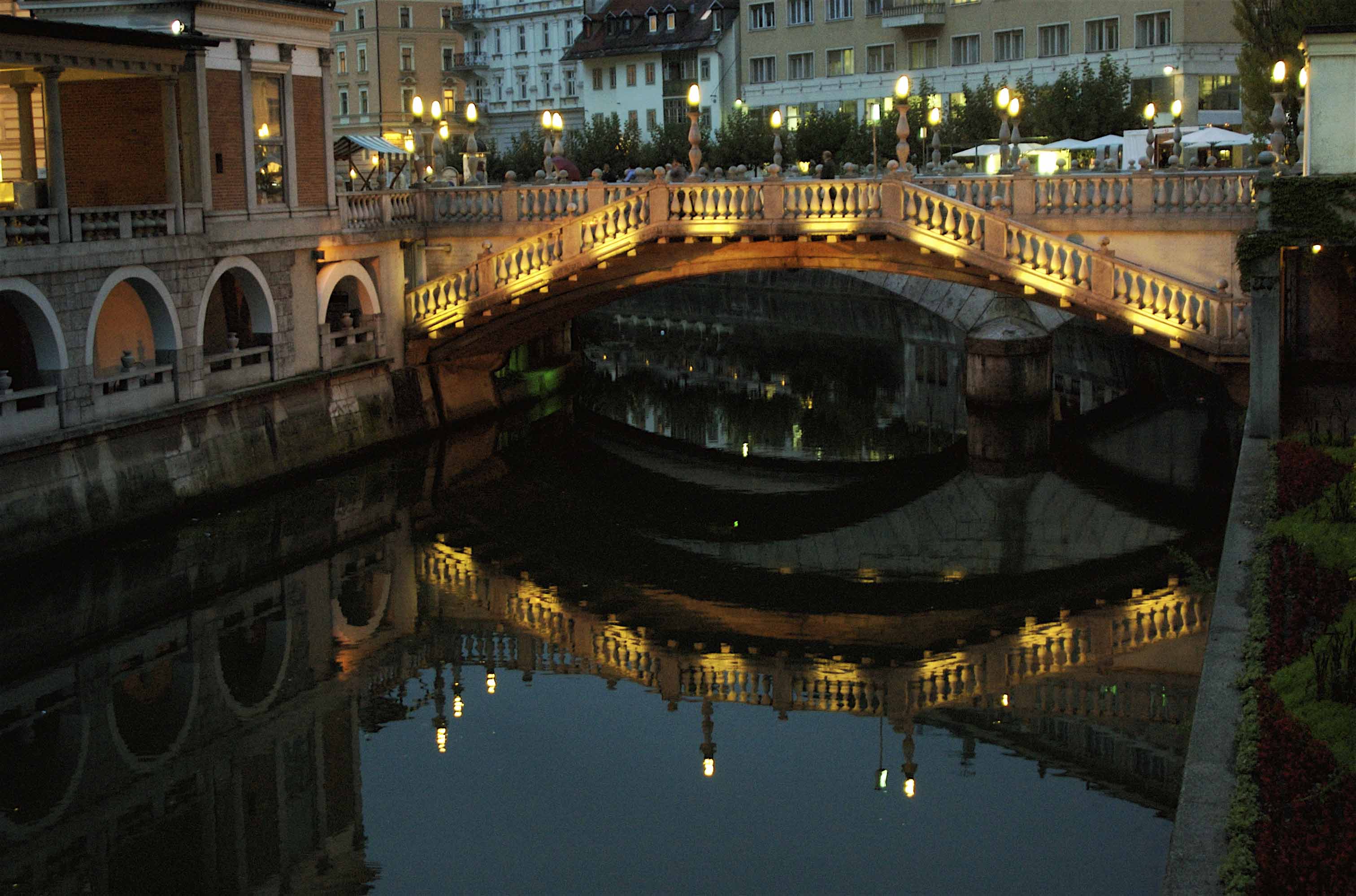
Big city elements also include a placed steeped in history. Ljubljana-born architect Jože Plečnik began his career working on churches and residential structures in Vienna, and then moved to Prague, where he expanded his craft on the Prague Castle and other ornate religious structures. Many of Ljubljana’s gardens, churches, the city’s famous Triple Bridge (Tromostovje) are designed by Plečnik, hence the dejavu feeling of being in Prague, minus the tourists. And the relatively small amount of tourists makes Ljubljana a hidden gem, not only for the amount of elbow space one has strolling down cobblestone streets, but the way it affects your overall travel experience when you dine in a local restaurant or stop in a place like the Sax Pub.

The Sax Pub is a tiny jazz club just on the outskirts of the Old Center. Playfully painted in colorful hues with a half hippie, half graffiti vibe on the outside, the bar fills most of the establishment. Four additional tables are available in a high-back booth style on the far wall. My husband and I decided to stop one evening since it was on the path back to our flat, and because it was mentioned as a “must see” in the guidebook we had along.

The mixture of English pub décor and Euro tech grooves playing through the sound system might not have matched in most environments, but in Slovenia, it worked. We chatted with the bartender while sipping Union, one of Ljubljana’s local brews, and asked about the live music schedule. No music that evening, but we were told that a jazz combo would be playing around 9:30 the next night. Duly noted.

We stopped back the next evening a little after 9:00 p.m. and found the bar hopping, and not one word of English being spoken. This was a neighborhood establishment.

After asking if we could share one of the four tables with a fellow jazz fan, our musical senses were immediately appeased. A four piece played long improvised tunes, one after another. Being struck by the scene, I pulled out my writing pad to jot down a few notes and husband pulled out his camera.

The bartender, who turned out to be the owner, had taken a seat next to me. Once I put my notebook down he leaned over and asked what newspaper we were with. I explained that we were just music fans and travelers, enjoying Ljubljana for a few days. His face crinkled. “Why Slovenia??”

Realizing I couldn’t shout in detail why we wanted to escape the ordinary over the drummer’s solo, I answered that our travel book had said that it was worth checking out. He pulled back, eyes wide. “My place is in a BOOK??”

Charming encounter number two with a local and proof that this former Yugoslavian Republic still retains its quaint originality while satisfying the American wallet.

During my time in Ljubljana, food, lodging and sightseeing cost approximately $85 American dollars each day. My fully furnished apartment offered a double bed and bunk bed option (perfect for a family), plus a small kitchen for $68 dollars a night. I purchased two days of breakfast and lunch materials, plus those infamous bananas, at the local market for $3 dollars per day, and was still able to dine out for dinner at a local restaurant for about $7 on average. In addition to lower pricing, many of the museums in Ljubljana are free or cost only a few Euro for admittance. With the Euro around $1.20 to the American dollar, Slovenia is a budget travelers dream.

It was difficult saying goodbye to Slovenia. A beautiful place with no nonsense people, Ljubljana had an unbridled enthusiasm for what is to come. Sitting in a coffee house any active eavesdropper could hear that enthusiasm, either in lively discussion over which local beer is better, Union or Lasko, or a passionate exchange about its political evolution. Ljubljanans are a distinct people, proud of their history and still unafraid of moving forward.

Another article published recently about the charming people of Slovenia can be found at The Telegraph.

Canadian wine country

When I read the Sunday paper, I typically look at the travel section first. Yesterday was no exception. I curled up with my iced coffee and The New York Times. As I pulled open the travel pages, I saw the picture of a rolling valley first, and the headline second. The New York Times had found Canadian wine country.

That’s not a typo. Canada has wine country, and this little known secret rivals the French, Italian or Australian bottles we buy here in the States.

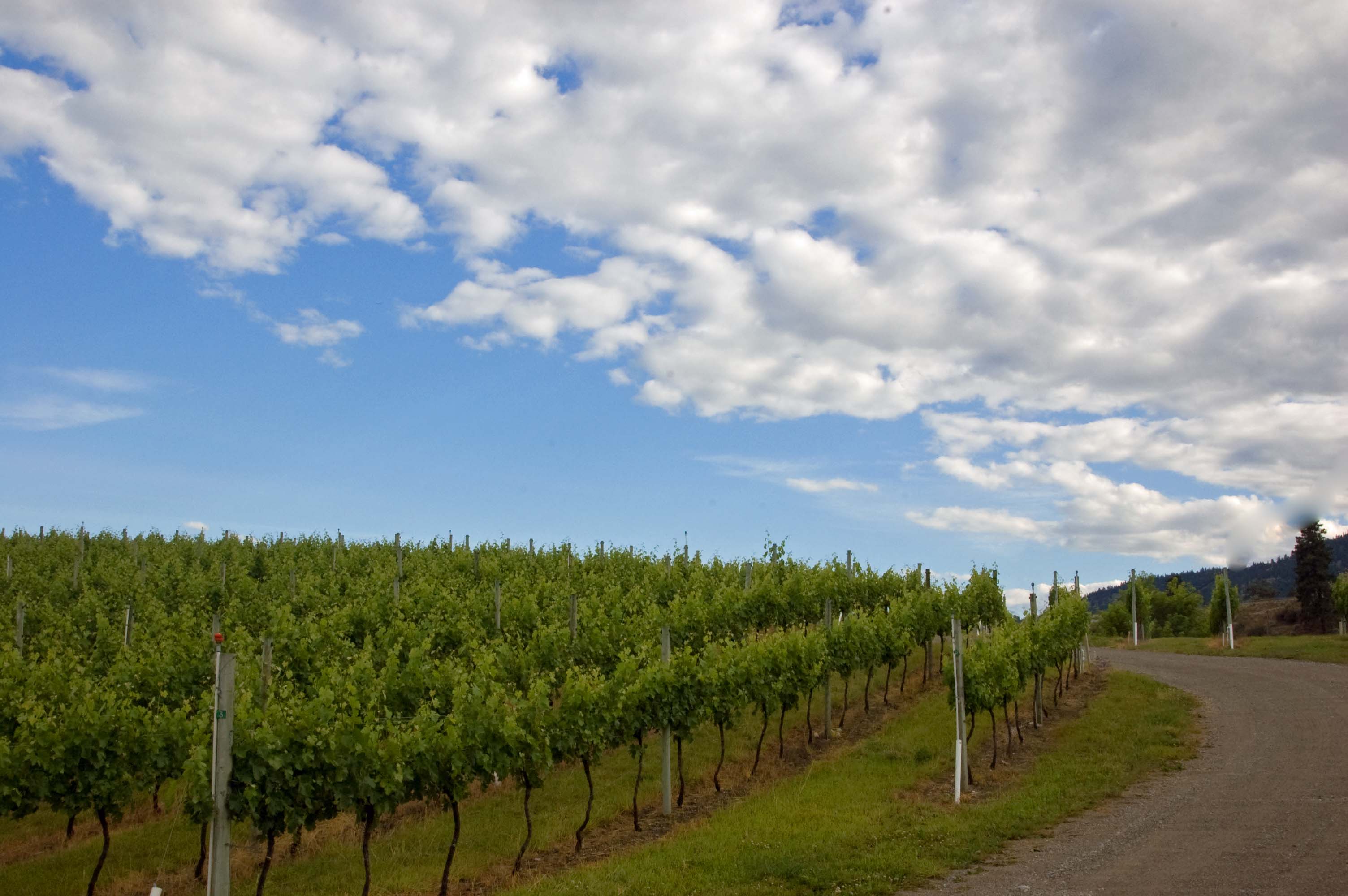
My husband and I based in Oliver, British Columbia and traveled the Okanagan Valley in 2008. The area starts just a few miles over the border above Washington State, and spans 155 miles around the 84-mile Okanagan Lake. Contrary to popular belief that Canada is a frozen tundra 12-months a year, the Okanagan Valley is actually mild, with January temperatures averaging 60 degrees, and summer temperatures creeping into the 90s.

Oliver is named after Premier John Oliver, the premier who lead his administration in developing the Okanagan Valley for produce production in the 1920s. The idea was to irrigate the area to increase agriculture and decrease rail freight transport costs of produce products. I grew up hearing story after story about John Oliver because he was my great-great-great uncle, and the most notable person that came from the Oliver side. I’ve also been told that the conservative, God-fearing premier is rolling over in his grave right now knowing that the land he created for farmers evolved into a valley flowing with wine grapes in the late 1960s/early 1970s.

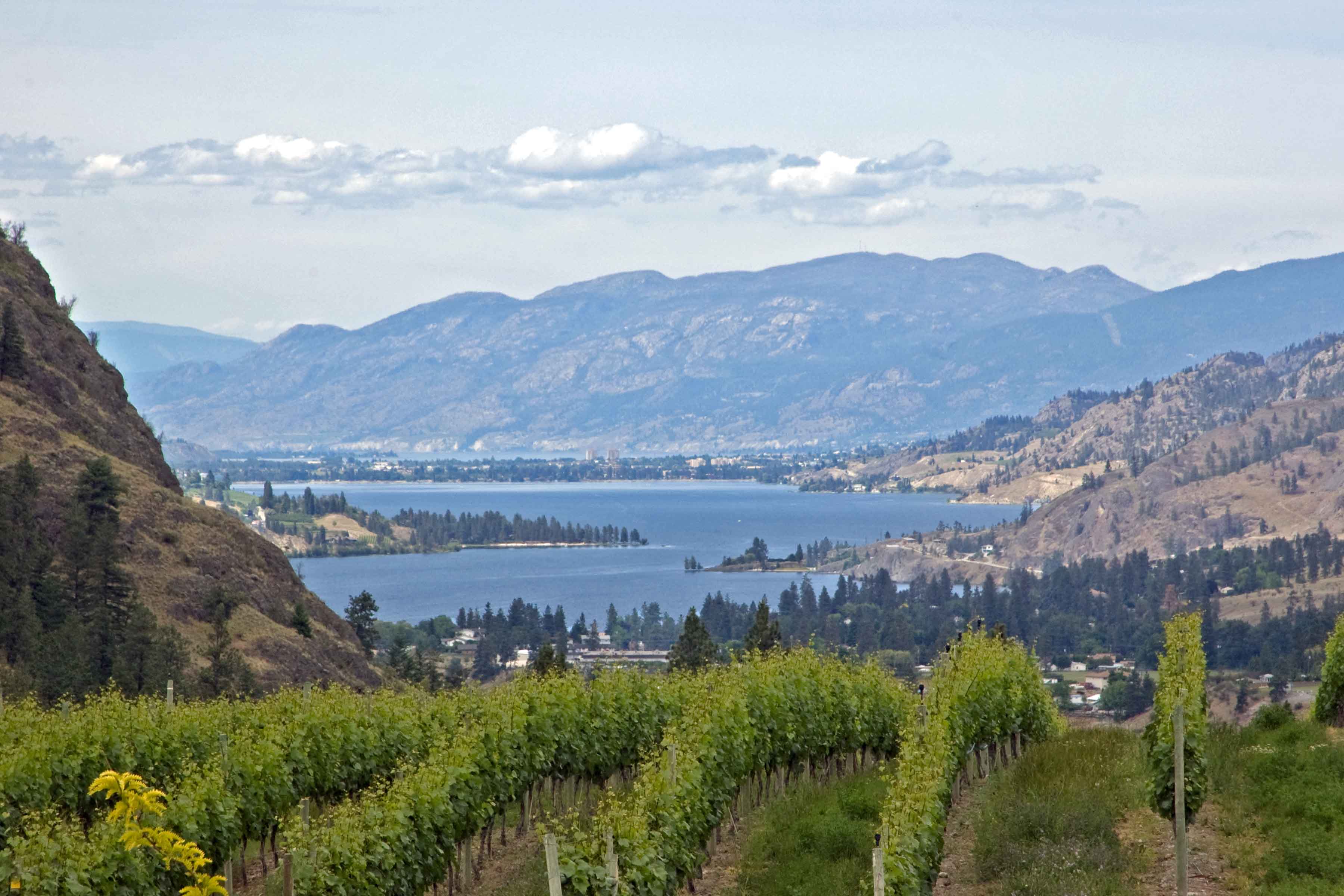
There are the kitchy and marketing savvy estate vineyards like Blasted Church and then the subtle vineyards that sell on reputation. My favorite in the later category was Marichel Vineyard that we happened upon by accident. The view of the valley below looked lovely from the road, and even though the vineyard looked closed, we drove up the driveway to see if we could peak over the fence to see the Okanagan Lake below. Before we were even out of our car a man in his 50s came out of the gate smiling, and asked if we wanted to look around. An entire vineyard to ourselves? I am not one to look a gift horse in the mouth.

The scenery below overlooking the river valley was stunning and I was able to talk with the owner about his wine production. He was also gracious with samplings and I walked away with a few bottles of the best Viognier I tasted on my trip.

The wine that was the nicest surprise was the icewine from the region. Known for being picked in the cold winter months, the wine is thick with a medium sweetness. It quickly became a daily aperitif to open the palette.

If you head to our northern neighbors, stay in Oliver. It’s smaller than the larger neighbor, Kelowna, and has many wineries within easy driving distance. There are 30 wineries within 15 minutes of Oliver and over 100 to see in the Valley. It makes for a full two days, depending how many times you stop and what your wine sampling and driving limit is. We rented a cheap motel on the main drag across from a grocery store and grilled out every night on the motel’s patio. It was simple food with a fantastic wine selection from our day of winery visits.

Cheers!

As I see it …

As I see it, the world is simply an amazing place. So amazing, it’s beyond any meaningful and intelligent definition that I can come up with. My fascination with the various aspects of the world is one of the driving factors of why I travel. I love the smell of moldy cheese coming from the fromage shops in Paris. I love listening to the students practice their songs at the open-air music school in San Juan. I love talking with Belgians about their beer. And I love hearing Slovenians explain why they love America. Every place I go, near and far, the people and sights of the world thrill me. And this is my way of sharing those experiences with you. I hope you enjoy.