Eat, pray, love going solo

This weekend’s release of the movie Eat, Pray, Love has unleashed a mountain of travel stories in the news media, mostly written by women who have jogged around the globe for months at a time by themselves. I am the first one to advocate such behavior. I do not believe you need a partner to enjoy traveling.

That said, I wonder how many women have read these same news stories over the last week and thought, ‘Fine for her, but I would never gallivant around by myself. Too frightening.’

Even my independent spirit falls into that category. I easily identify with Rosalba, the main character in my favorite Italian movie, Bread and Tulips. In the story, frumpy housewife Rosalba is accidentally left behind by her family at a rest stop while on vacation. Instead of waiting for them to pick her up, she hitch-hikes to Venice, Italy and meets new characters along the way. She soars in her new-found independence but there are moments when it suddenly hits – Oh God, I’m alone. NOW what?

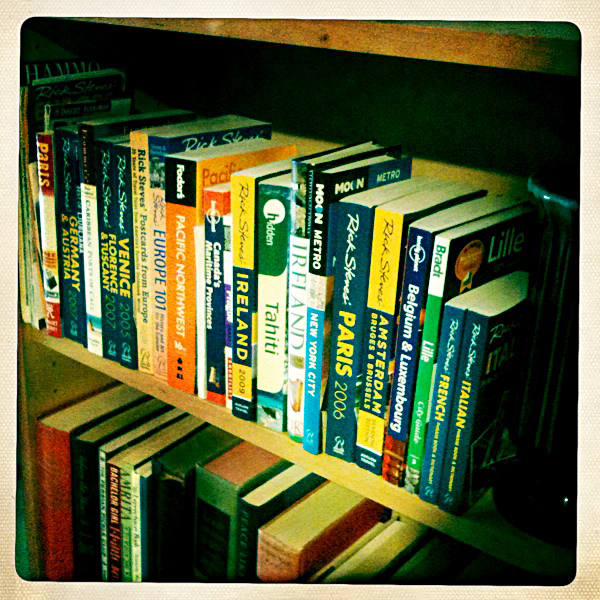
While I have traveled overseas “by myself” in the past, I was never alone for very long. I have been on three Rick Steves tours, two of which I traveled without a partner. But the security of being with a group heightened my travel experience because I was comfortable. If you are independent, a tour with loose rules and minimum group tour time is a great alternative. I look for tours that offer a few hours of tour highlights, and then free time each day, with bonus free days included. If you want to skip the tour that day or skip dinner with the group, more power to you. The beauty of this type of tour is the complete independence or complete tour structure you crave. The choice is yours.

I cringe when movies portray travel situations that I am willing to bet a small percentage of women would never consider. That’s not what solo travel is like for most of us. But there are plenty of good tour options for even the most adventurous at heart who want to eat, pray, and love every minute of it.

Getting away from it all

I have to remind myself that “vacation” does not mean spending two weeks in Europe. The definition of vacation is actually a period of suspension of work, study or other activity, usually used for rest, recreation or travel.

By that definition I have to classify my last weekend getaway as vacation. I took a day off from work, and more importantly, I went to an area without cell phone or data service so I could not answer e-mails. Sure, I had the shakes after 24-hours without checking in online, but it’s remarkable that you can still find a cafe with WiFi in the middle of nowhere.

One of my favorite areas in Minnesota is bluff country, located in the southeast corner of the state. Husband and I decided to fast-track it to Lanesboro, and then wander home on two-lane roads. Located in the heart of the Root River Valley Trail system, you can bike 60 miles through the limestone bluffs inside the river valley or tube down the Root River in Lanesboro, or one of the neighboring towns like Preston.

After a day in Lanesboro we went went east on Hwy. 16 and spotted hawks, rabbits, beaver, coyote, deer in addition to farm animals and a many mosquitoes. We passed through Fountain, Whalan, Harmony, Rushford and Houston. Arriving at the end of Hwy. 16 in La Crescent, Minn., we traveled up Hwy. 61.

If you are driving on Hwy. 61, put down the windows, turn up Bob Dylan’s Hwy. 61 Revisited and take in the North Country. My favorite stops are:

You can see much of Minnesota bluff country in one day or take your time over a weekend. Just remember not to get frustrated with the hills when they block your cell service. You’re on vacation.


Exotic cruising

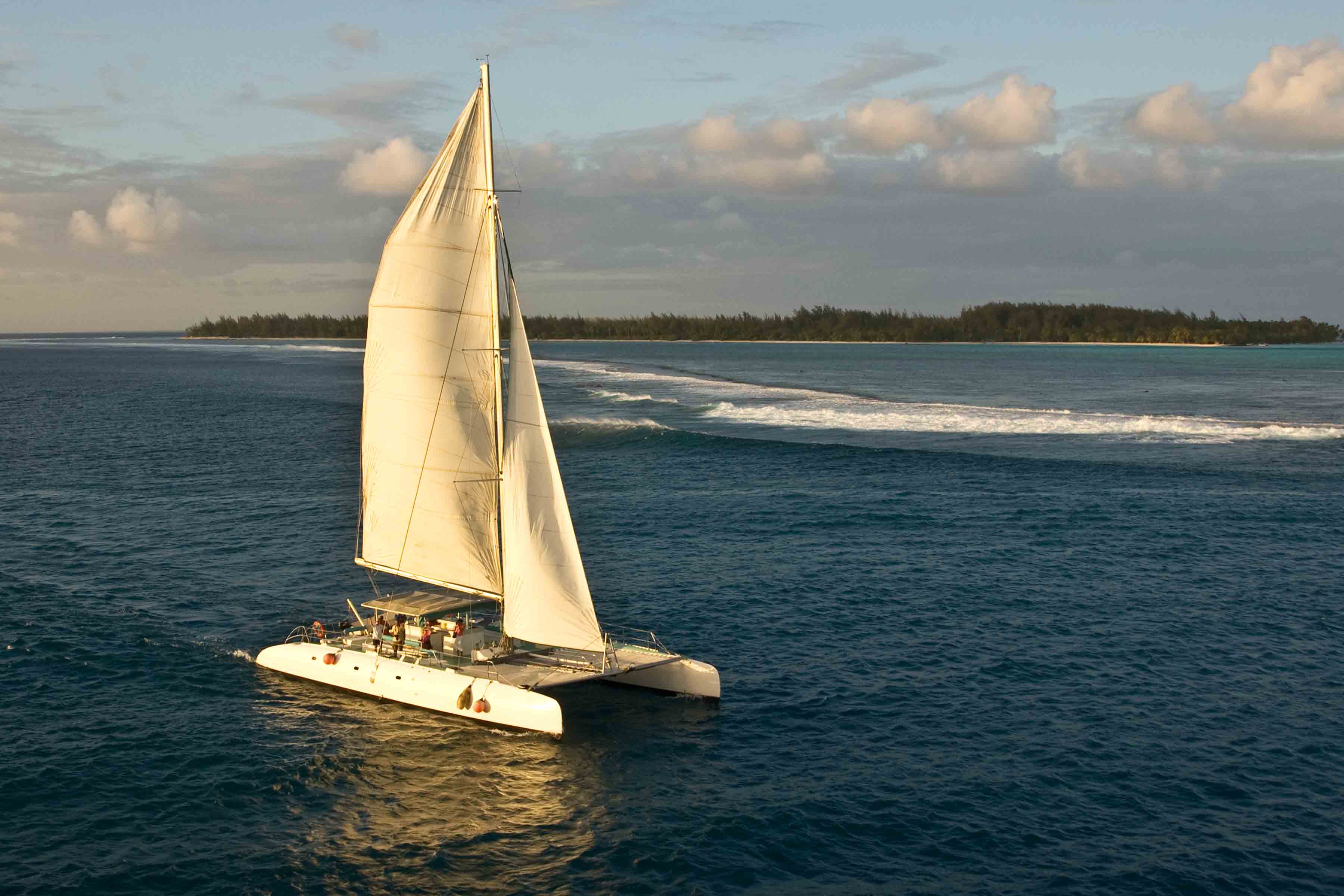
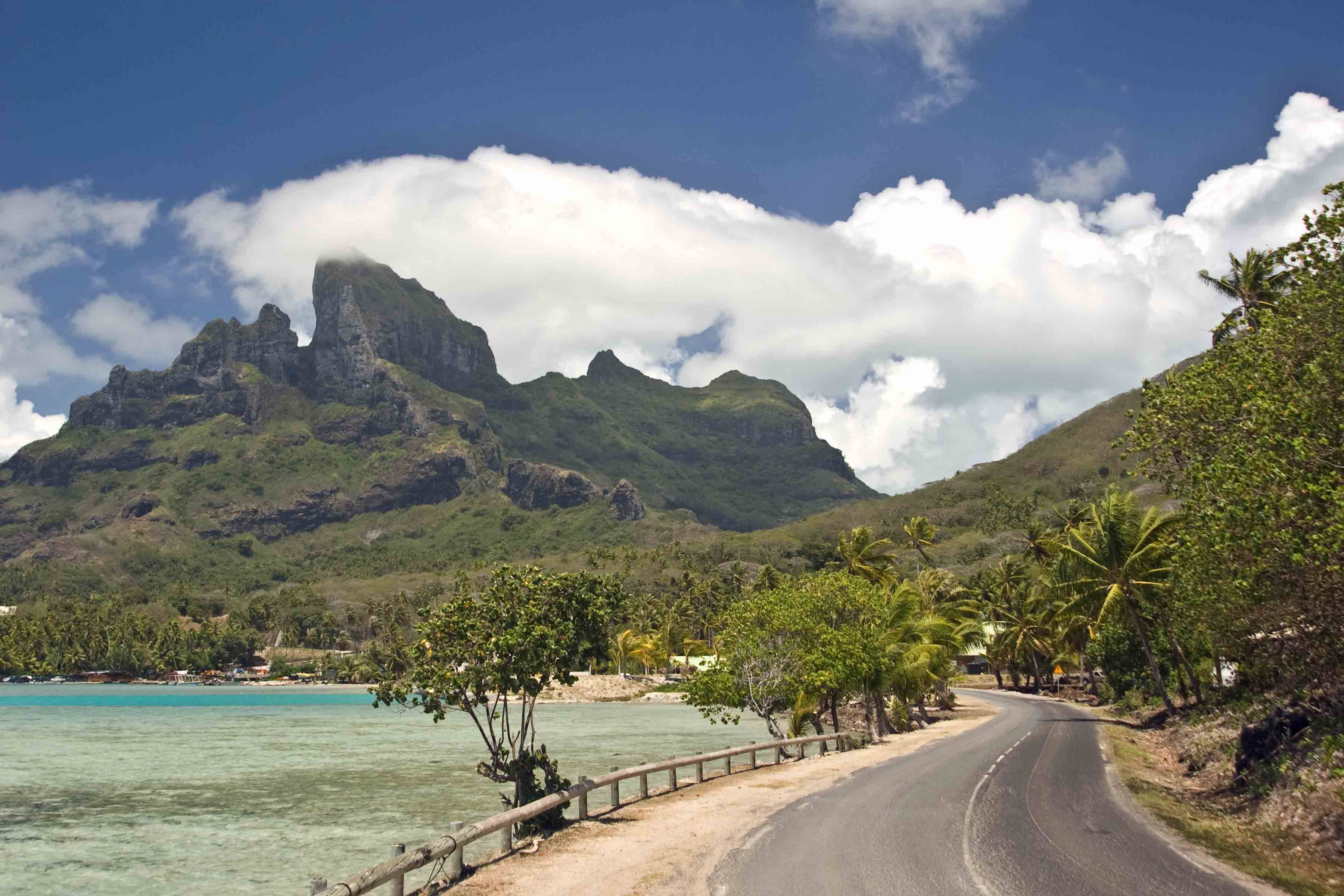
The two words “exotic” and “cruise” are typically not in the same sentence together. “Exotic” on many cruises is just dress-up night by the wait staff. But in Tahiti, everything is exotic, even on a cruise ship.

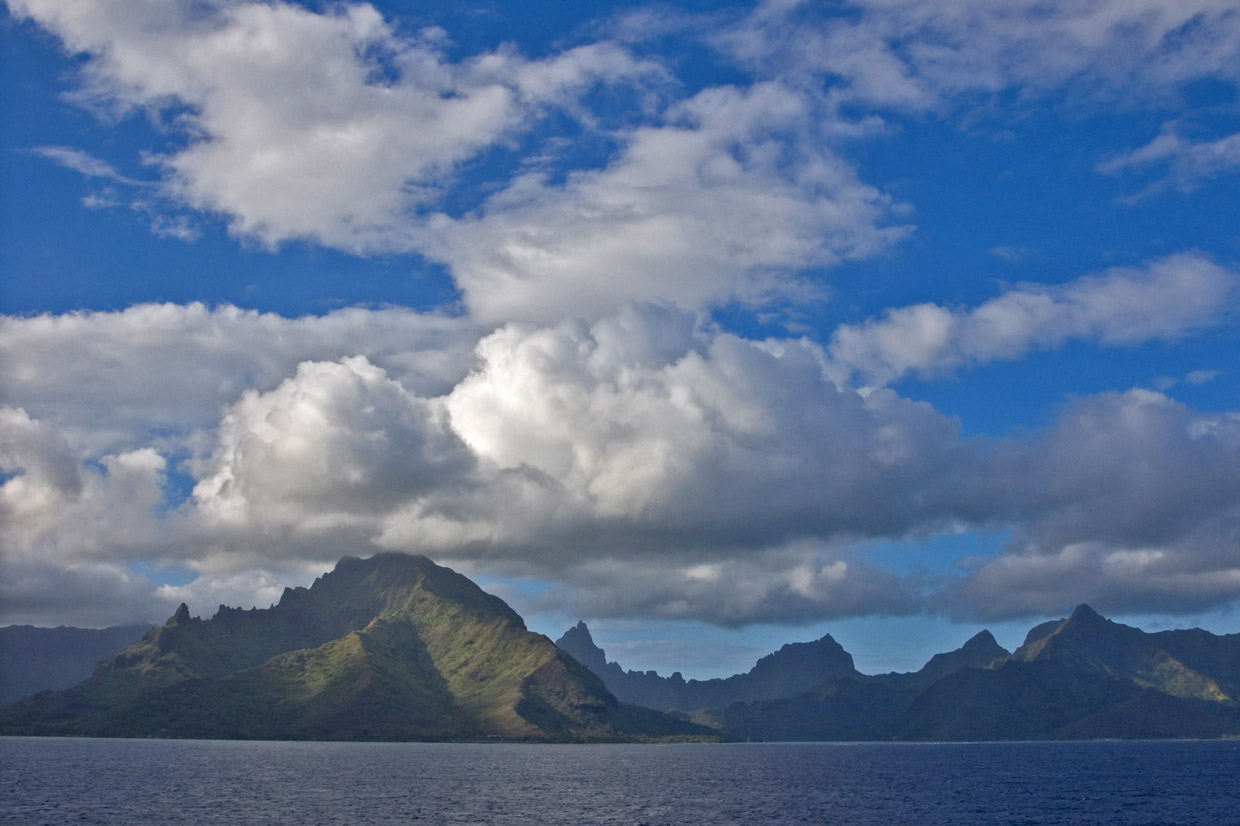
The m/s Paul Gauguin of the Regent Seven Seas Cruises fleet was designed specifically to sail the shallow seas of Tahiti and French Polynesia, visiting small ports that larger ships can’t reach. This is my field journal about my experience on the Society Islands of the South Pacific.

Arrival – Papeete

The warm breeze is the first thing I notice when I disembark from the plane in Papeete (pronounced pa-pee-eh-tae). The second thing I notice is the smell. Tahiti’s national flower is Tiare, a heavily scented gardenia, and it’s tucked behind the ear of most of the ladies greeting me at the gate.

Prior to arrival I fill out the necessary paperwork given to me by my flight attendant. Not knowing what Tahitian officials want as my official address while visiting, I leave the space blank. When I go through immigration I’m instructed to place the m/s Paul Gauguin as my residence for the next week.

And I’m off to the ship!

Raiatea

Tahiti can feel like the Caribbean – until a local fisherman pulls up to the boardwalk, whips a freshly caught swordfish onto the dock and proceeds to filet his catch right there in the marina while friends driving by honk their horns in happy congratulations for a fine day at sea.

Welcome to Raiatea. (re-eh-tah)

I decide to take an easy day of it after seeing the fishing spectacle on the docks. I sign up for a general island tour overview that will take me through the tropical forests of the island and up into the hills. My guide is an American who came to Raiatea to surf 12 years prior, and wound up meeting her Tahitian husband and staying to raise a family. She gives us a nice overview of the regional landscape and flora, and takes us to meet a family that serves juice and fruit known in the region. Back to the boat in just a few hours, I have the afternoon to explore the ship and meet my fellow passengers. In an hour, I’m having tea with an Australian couple on their honeymoon and a woman from Vienna who decided she wanted to see the sunset in Tahiti before she was “too old to care about such things.” Once again, travel brings the beauty of life to the forefront.
Taha’a

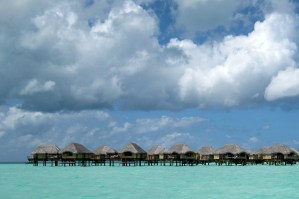
Day two gives me time to explore a pearl farm on Taha’a and then snorkel in a crystal blue lagoon. I swim with fish that have previously been just an image from a televised National Geographic special.

After snorkeling for an hour, I’m taken to Motu Mahana, a private island specially reserved for guests of the Regent Seven Seas. I sink into a shaded lounge chair and examine my once-fair skin. I have quickly discovered my sun block is no match for the Tahitian sun. SPF 30 did not work, and I had bumped up to SPF 50 after getting a mild sunburn on Raiatea. This change will be helpful, but I recommend even SPF 60 for the fair-skinned. This trip will prove the Tahitian sun is merciless.

Bora Bora, Day 1

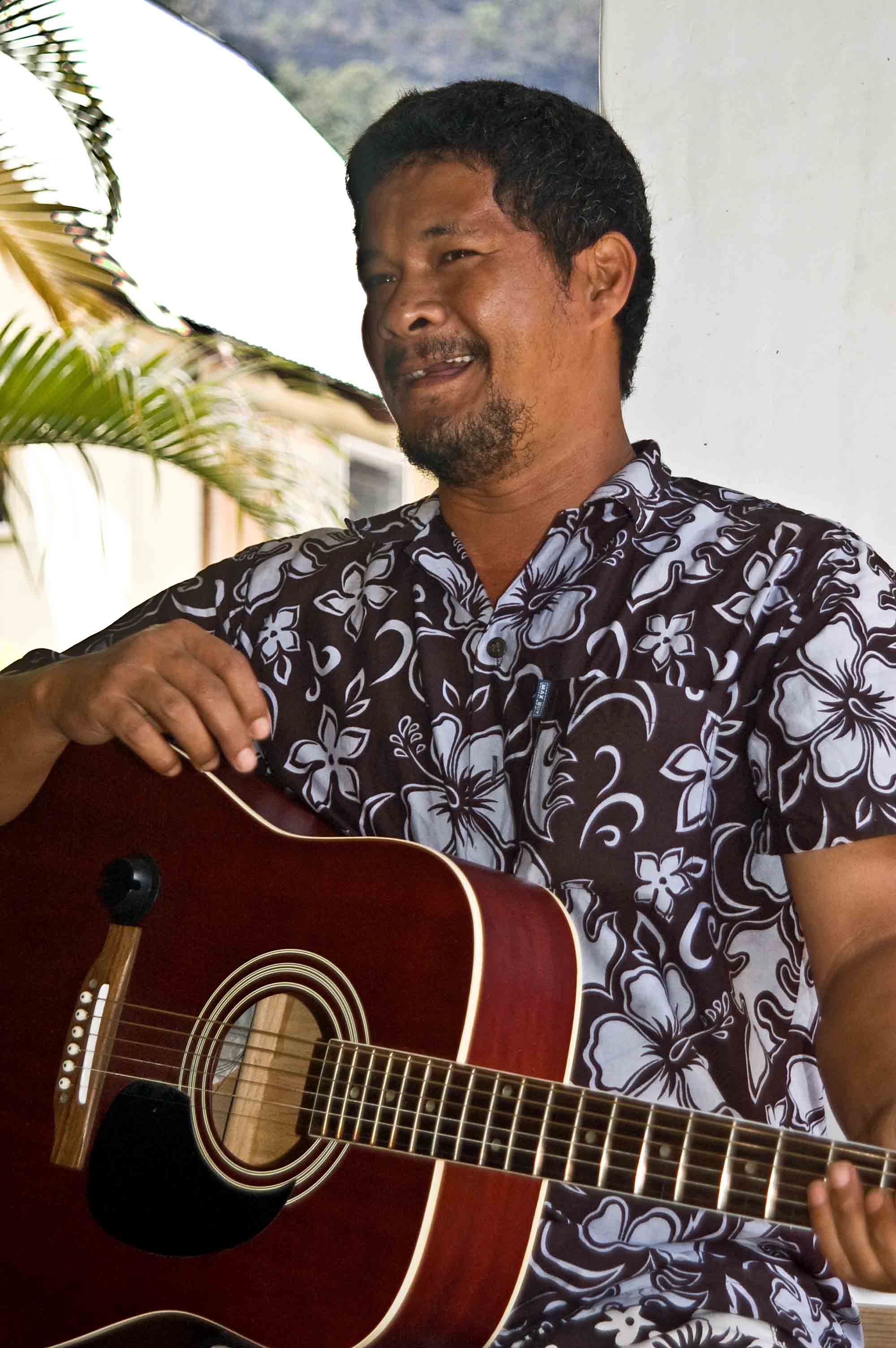
Rumbling full-speed up the rugged cliffs of Bora Bora in an open Land Rover is my expedition highlight thus far. Songsfrom “South Pacific” play through my head as the tour guide explains the basis of United States occupation on Bora Bora during World War II. There is a little magic in the air, along with those gardenias. By the end of the tour, my appendix is still vibrating but it is well worth the jiggle. The vistas are breathtaking and the jungle can be exciting for botanists and birdwatchers. There is even a stop at a native gallery for fresh fruit, music and hand painted fabrics – which equates to stopping at another home of a local who entertains visitors for tips. There is no pressure to buy though, and we just sit back and listen to the music being played on the porch until it’s time to leave.

Bora Bora, Day 2

A tender boat from the cruise ship drops me off at the main dock of Bora Bora. Tourist information is located there, as well as a few shops and a free shuttle to a nearby pearl farm. Weighing my options, I decide to explore Bora Bora on foot.

Taking a quick walk around I quickly realize the people of Bora Bora have never stopped to adjust their lives for tourists. While there are some shops and boutiques available, the offerings are few. I decide to take a dive into the culture by stopping into a grocery store to check out the French bread sitting in shopping carts right at the front door. I also stroll down the cereal aisle to find out what unusual combinations Kellogg sells to the islands. I’ve found that cereals differ country to country, wherever I go. And there it is – chocolate infused cereal pieces in the shape of croissants. Only in French Polynesia!

Moorea, Day 1

If Bora Bora is magical, Moorea (pronounced Moe-oh-ray-ah) is mystical. Throwing open the shade on day five of my cruise reveals a jagged and mountainous place. I can almost hear drums beating in the hillside. Or is that my stomach asking for breakfast?

This being my fourth cruise, I know to expect an ongoing parade of gastronomic delights. That said, I had no idea to expect THIS. Every day the restaurants provide gorgeously presented five-star quality food. Breakfast is a never-ending buffet of breads, fruit, nuts, meat selections, tuna and lox, omelets, pancakes, cereal and oatmeal, plus exotic fruit juices. Lunches have a different theme everyday, and the German and TexMex buffets are well received. Dinners are the crème-de-la-crème of six-course French and Polynesian fare. In between, there are light snacks and fresh appetizers delivered to your room by 5:00 p.m. each day. Regent Seven Seas is known for their all-inclusive cruising style, and it doesn’t disappoint.

Moorea, Day 2

AM

Moorea’s rugged beauty is the perfect place to delve into the ancient aspects of Tahiti. There are several good excursions tochoose from on this stop, including an archeological tour. If you want to explore on your own, cars and scooters can be rented right at the dock. A small market is also open at the tender boat’s landing sight, where necklaces and redwood carvings are available for sale. Beyond that, Moorea is just a lightly populated place with nothing more than one road wrapping island. Perhaps day two is best spent on the ship.

Tahiti is known for its water sports, and the marina off the back deck of the ship compliments this feature beautifully. A quick walk down to Deck 3 puts me in the ocean within minutes. Cook’s Bay in Moorea is calm and a perfect place to enjoy a quiet kayaking adventure. I can’t stay out for long though. The ship sails at 5:00 p.m. for Papeete.

PM

Pulling back in to civilization just a few short hours after leaving Moorea is bittersweet. I’m sad to be thinking about going home. Then I see “Le Truck” in the Papeete port below. We are free to disembark once in port, so I head down to the plank to check out the scene.

Steak and frites, crepes and pizza, Asian bowls and suckling pig – “Le Truck” is an outdoor gathering of locals who come together for dinner on the dock every night. Small trucks roll out their awnings and the smell of food coming from the tiny kitchens inside makes my mouth water, even though I’ve just had a gargantuan dinner. While children play European football on a nearby field, adults greet each other and catch up on the week’s events. This is Papeete, the city in action.

Papeete

I’m able to stay on the ship overnight and disembark in the morning. After saying goodbye to many new friends, I head into downtown Papeetee. With time to kill before my flight, I make the Public Market my first stop of the day.

The sights and smells of the market are almost more than I can handle. If the coffee from breakfast hasn’t woken me up, this does. Fabrics, baskets, flowers, fish, fruit, jewelry! You name it, it is here and the locals are buying.

From the market, I tool around downtown, checking out churches and bookstores. Close to 1:00 p.m. I’m hot and ready for a shower. I hail a taxi right outside the Public Market for the airport not more than a mile away.

As I sit in the airport waiting to board my plane back to the U.S., a quote from Paul Gauguin comes to mind. “Life is hardly more than a fraction of a second. Such little time to prepare oneself for eternity!”


Making the old, new

I’m in the process of having some 35 mm film negatives transferred to digital images. Over the last few days I went through all of my travel images to see what I really wanted to preserve and what could be left for a later day.

The greatest thing about looking at old travel photos is the reality check it provides. In your hands you have proof that 1)  the hairstyle you had was not ‘da bomb’; 2) your Euro fashion attempt was just an American in a scarf; and 3) your travel pictures look just like everyone else’s.

I was mortified at my photos. Boring! I have stood in the center of some majestic, ancient cities, and my pictures make me want to take a nap.

You probably know the remedy – take a look at your subject from a different angle. That theory is harder than you think when you’re standing in front of the Eiffel Tower. You want to take a picture of the whole darn thing. And you should. But then it’s good to play around with angles to see what other lines, shapes and dimensions you can get from your subject.

I’ve pulled a few examples of when I did break the norm just a little bit. As a disclaimer I do realize that at least 1.7 million people also have these “alternative” angles.

First, let’s look at the Louvre Museum in Paris. We know the glass pyramid at the Louvre mixes contemporary in a traditional setting. But how does that feel? I took this picture inside the pyramid to put the modern age in the foreground while blending France’s history in the background. It felt like momma was looking in on what had become of her children over the years.

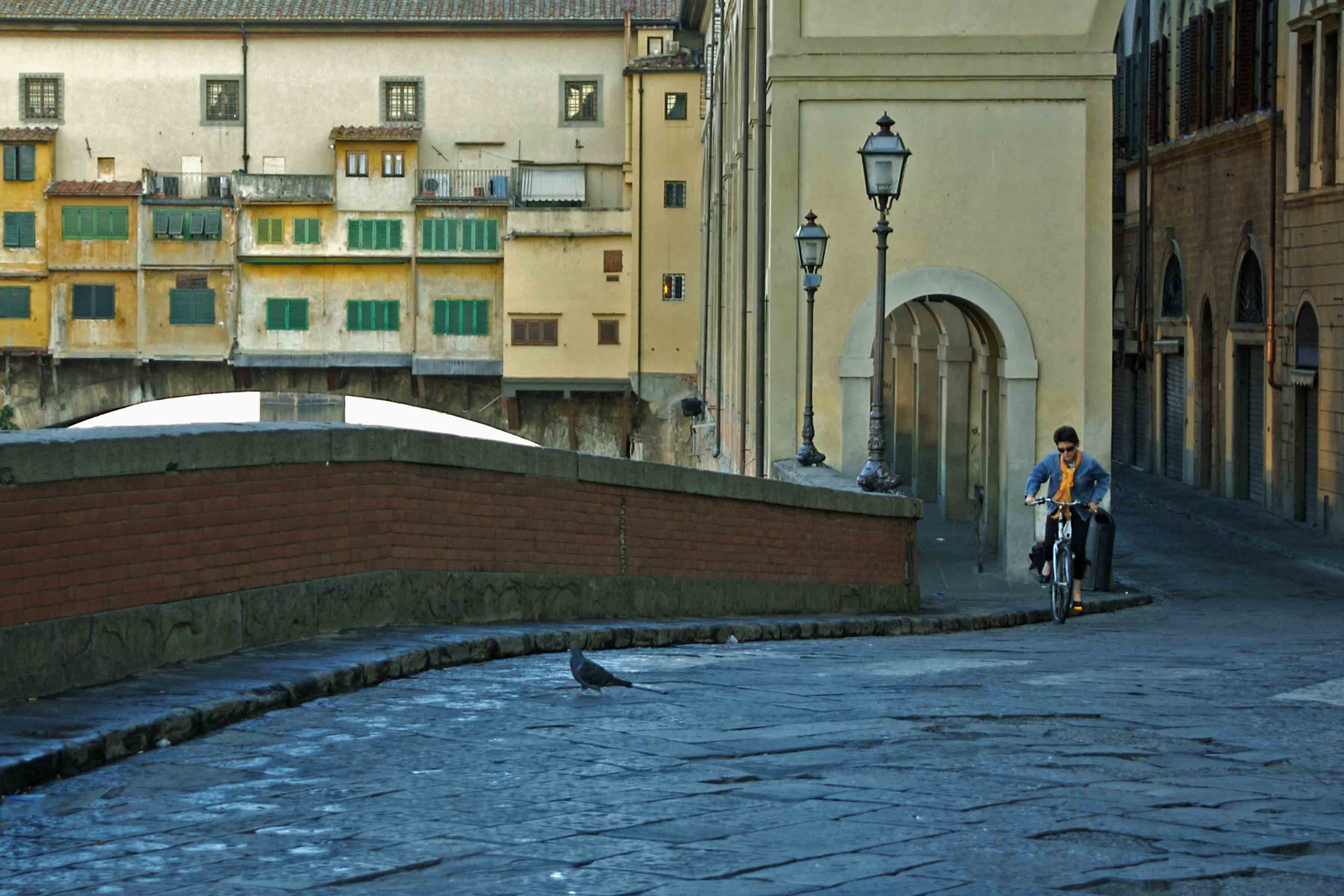
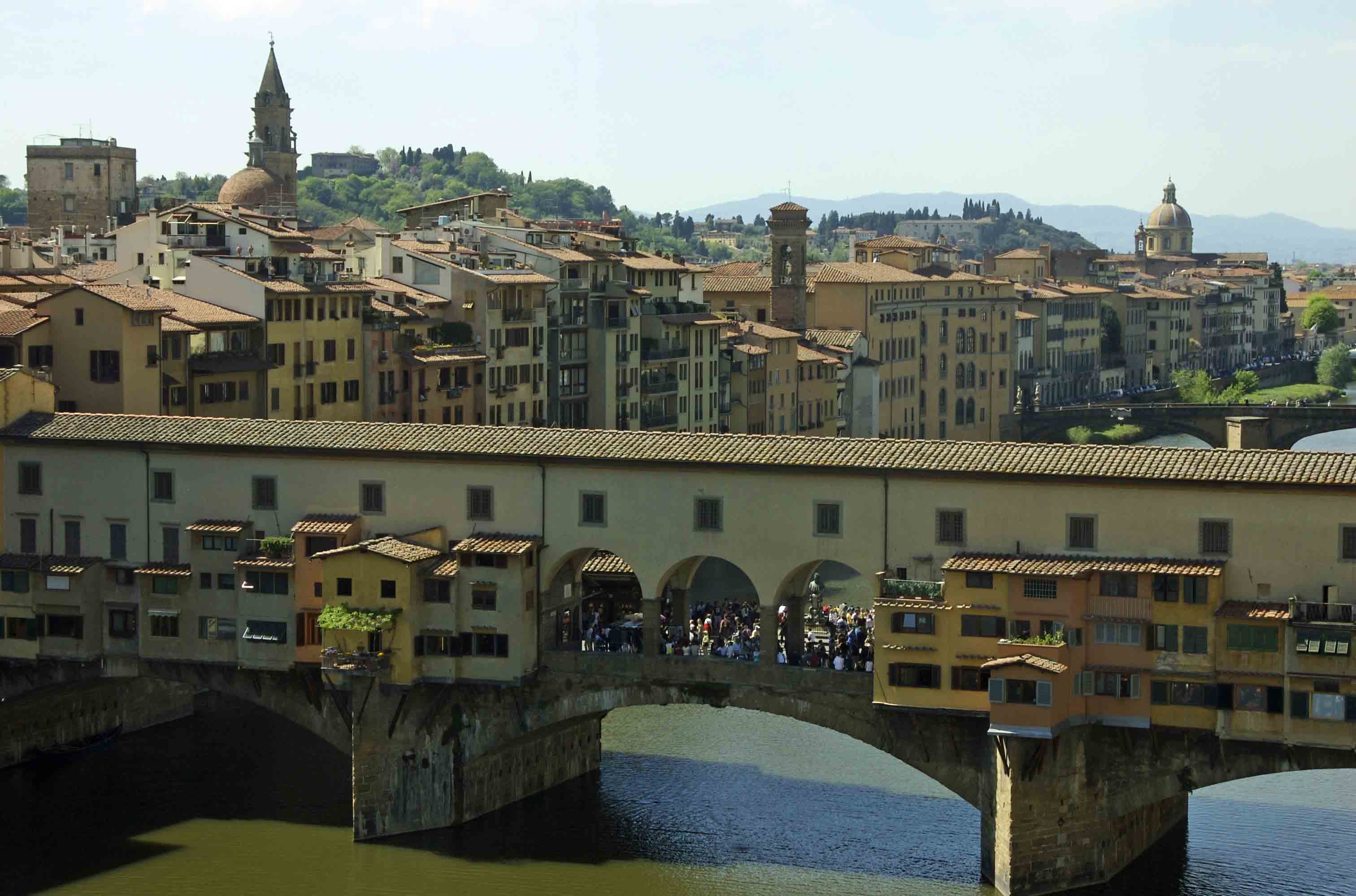
Next, the Ponte Vecchio in Florence. It’s the most recognized bridge in the city. While this angle isn’t really different (it’s not hard to get this angle, you just have to climb some stairs) it’s still different than the straight on shot that every tourist takes from the bridge opposite of the Ponte Vecchio.

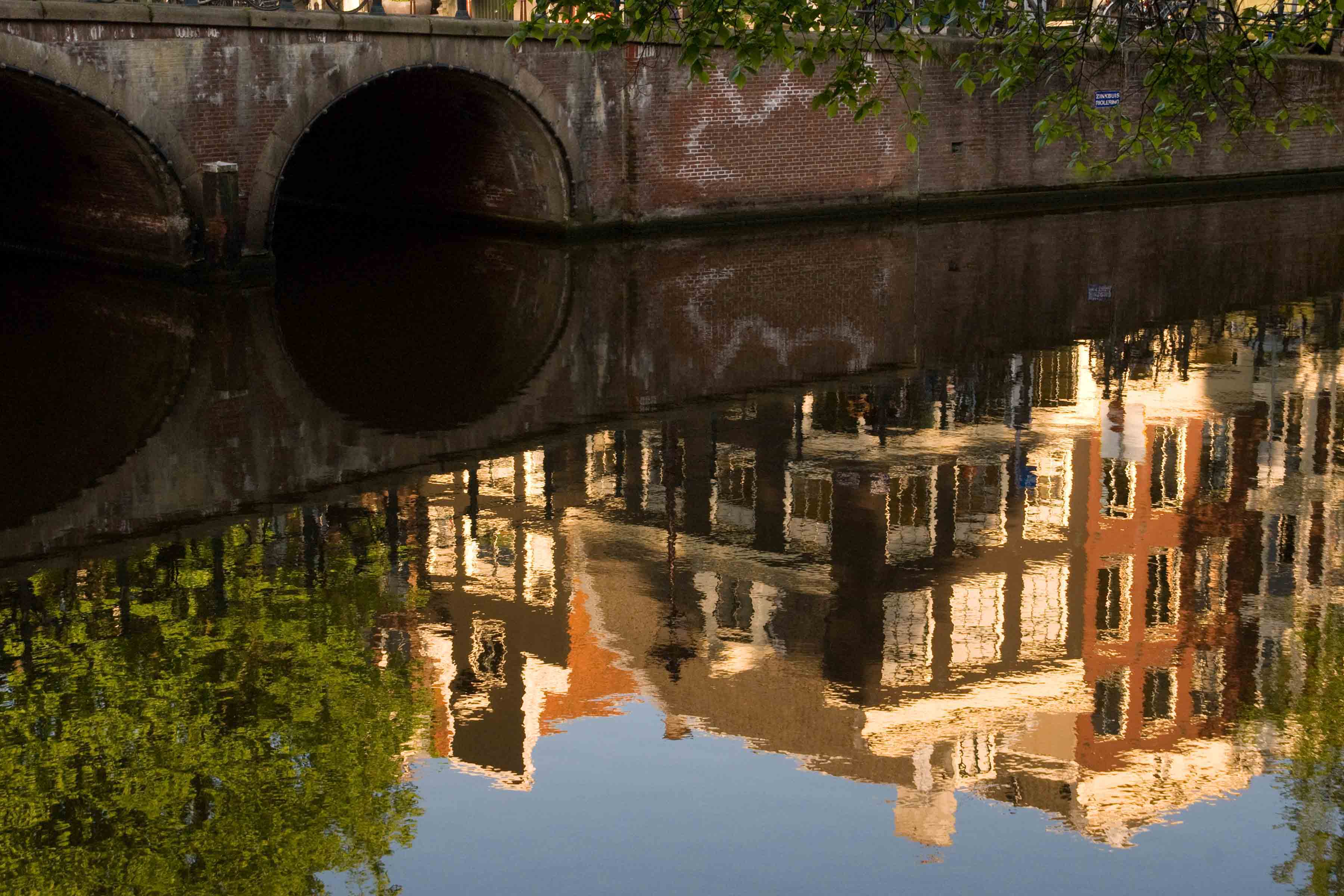
This next picture was taken one early morning in Amsterdam. My photos were starting tolook the same again. Bicycles, coffee shops and canals were filling up my memory card. I needed something a little different – stat. Again, this isn’t the most intriguing picture, but it sums up the quiet Amsterdam neighborhood of Jordaan to me. The reflection has Dutch buildings, a canal and bicycles, just from another point of view.

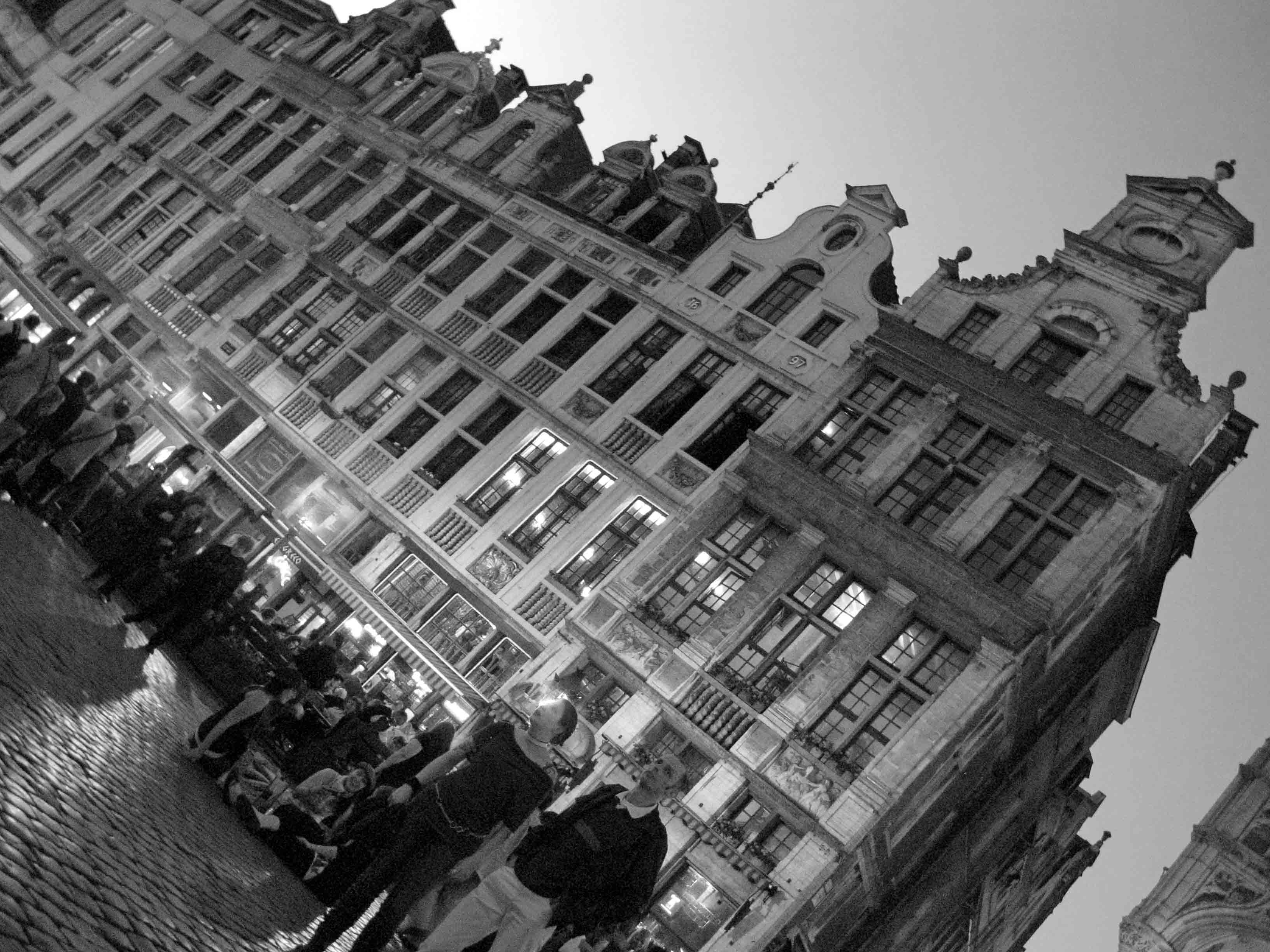
Finally, this photo was taken in Brussels at night with my point-and-shoot. I had put the digital SLR away for the day and was just enjoying the scene. It was a holiday weekend in Brussels when I was there, so everyone was out. I took this angle for two reasons. The main reason is that I was literally sitting on the ground. People gather in the Grand Place square and just hang out on the cobblestones with a picnic basket or a beer. I also wanted to get the grand spectrum of the buildings, but they are so tall you cannot capture them unless you turn your camera sideways. This is probably one of my favorite things to do now – turn the camera on it’s ear. The scene is kind of interesting, but a different angle and black and white treatment make the lovers walking by more intriguing to my eye.

The moral of the story is sometimes you just need to get up and move around or sit on the ground with a beer. The one thing I do know is that I have a lot of places to revisit so I can get better pictures next time.

Travel 10 days in one bag: the ultimate packing list

When you travel overseas the last thing you want is a lot of luggage. Drag a big suitcase on wheels over a cobblestone street in Italy and you will get stares and snickers. Take that same large suitcase on any train in Europe and pray for a spare seat next to you. Luggage compartments on the railways are typically not big enough to hold more than a large backpack unless you’re lucky.

I travel 10-12 days with a Rick Steves convertible bag. It’s dimensions are listed as 14 x 9 x 21. It allows me to put my Think Tank Speed Demon camera bag around my waist in the front, carry my clothes on my back, while keeping me completely hands free to fiddle with train tickets, maps, etc.

Think it’s impossible to put everything on your back? Think again. Here is my packing  list that I follow every time I leave home for a few weeks, plus my personal pre-travel to-do checklist with handy hints.

SUITCASE

  1. Alarm clock, jewelry, sunglasses, European adapter, sporks for picnics
  2. Make-up bag and toiletry bag
  3. Hair dryer (if needed)
  4. Under garments (total days travel plus one for insurance in case of travel delays)
  5. Socks (total days travel)
  6. Sleeping t-shirt and shorts
  7. Shirts (total days travel)
  8. Jeans and slacks (one of each)
  9. Scarf
  10. Extra travel books and necessary confirmations, plus maps

Where are the shoes? Don’t need them. Wear the same pair on your feet everyday. It will save a lot of space. Dress-up clothes for fine dining? Not my style, plus it adds several additional layers to the suitcase for a one-time event. Packing light means prioritizing.

I’ve also gotten into the habit of slinging a carry-on sack for the plane that can be easily packed away once I arrive at my destination, and then brought out again for farmer’s market shopping or a place to put books for a long train ride.

TRAVEL SACK

  1. Money belt (which you need to put on once you arrive at your destination!)
  2. Passport and wallet with essentials needed
  3. Airline tickets/EuroRail tickets
  4. Travel books you want to read
  5. Neck pillow (Like the American Express card, don’t leave home without it)
  6. Sweater for chilly plane ride and chilly European nights

I carry more camera equipment than many, but here are the items that I find necessary for my camera bag:

CAMERA BAG

  1. Digital SLR with lens attached
  2. Point-and-shoot camera
  3. Polarizing filter
  4. Extra memory cards
  5. Battery chargers
  6. Lens cleaning cloth

Finally, I keep a pre-travel list handy that makes a great reminder checklist to click-through before I holiday for a few weeks.

TO-DO CHECKLIST

  1. Arrange care and feeding instructions for any pets at home
  2. Water plants
  3. Stop mail
  4. Call credit card companies and alert them of travel plans in specific countries (Note: In Europe most establishments accept MasterCard Euro, which is not the same as MasterCard as we know it in the U.S. Make sure you have a Visa card packed. Medium to larger establishments also accept American Express.)
  5. Compose “out of office” e-mail alert
  6. Pack plan baggie for the best hygiene feeling (travel toothbrush, toothpaste, earplugs, face wipes)
  7. Pack liquid security quart sized baggie to appease TSA, if necessary
  8. Photocopy your credit cards, passport and list out credit card emergency numbers. Hide away in your suitcase, far from your wallet
  9. Compose travel card with flight information for wallet

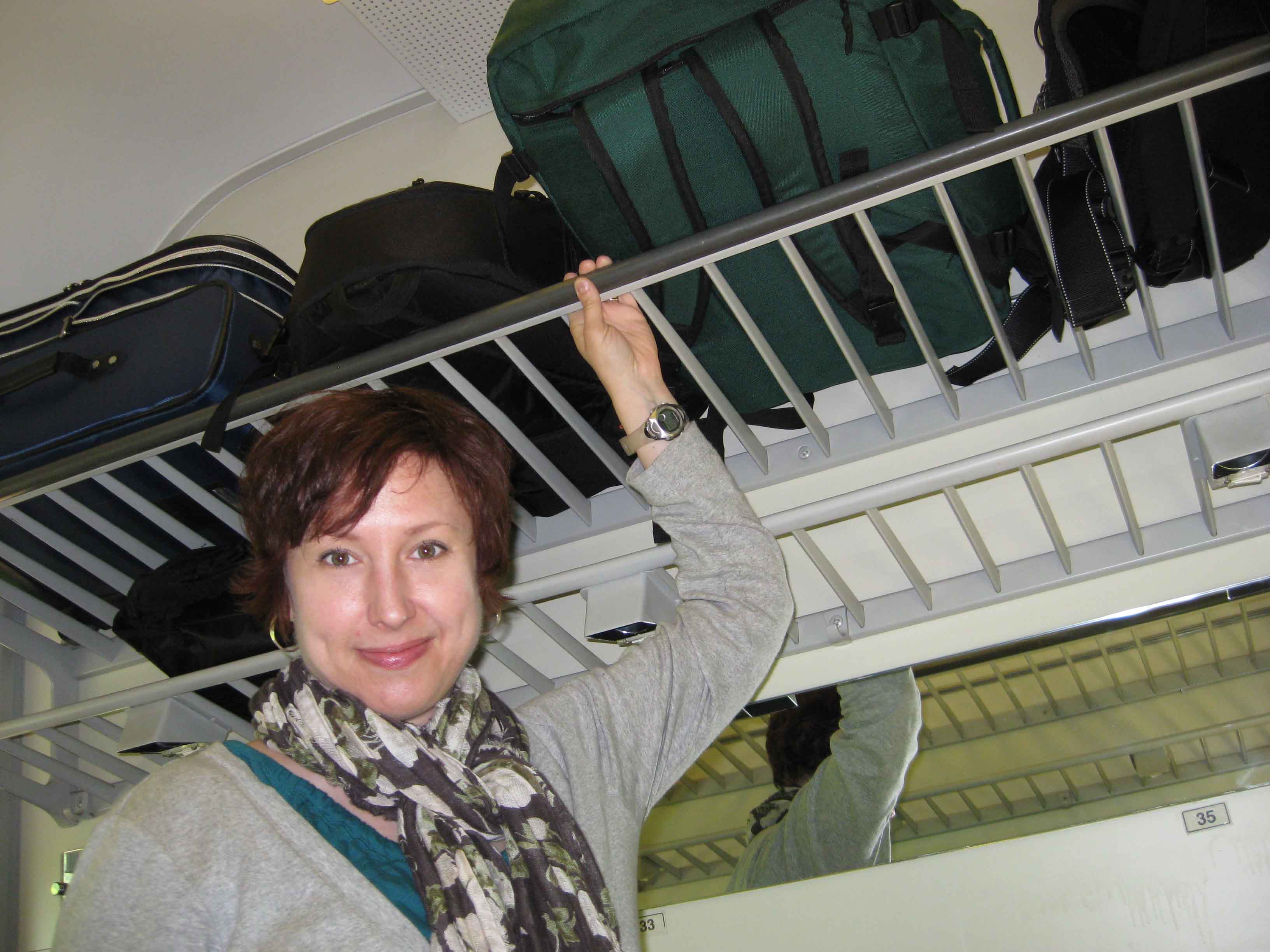
As much as I resemble a pack mule in this photo, this is a side view of me with all of my travel luggage exposed, just prior to jumping on a train for my next destination. It ain’t pretty, but it works. In the end, less is more.

The days of the travel journal

Not so many years ago I traveled with 20 rolls of film and a travel journal. I ditched the film in 2006 and the journal in 2008. I wouldn’t trade my digital camera for anything, but I regret not keeping up with my travel writing.

Documenting where you have been is a great way to relax at the end of a busy day of hard-core touring. Are you going to remember the unique characteristics of the Michaelangelo you saw 15 years from now? Probably not. And what about that unique encounter with a local that made you shudder or made your day? Write it down.

The other way of journaling about your travels is to photograph. I’m not talking about the perfect scene of Paris that is hung on a wall. While getting those types of shots can sometimes make your day on a trip, snapshots are what jar memories for me.

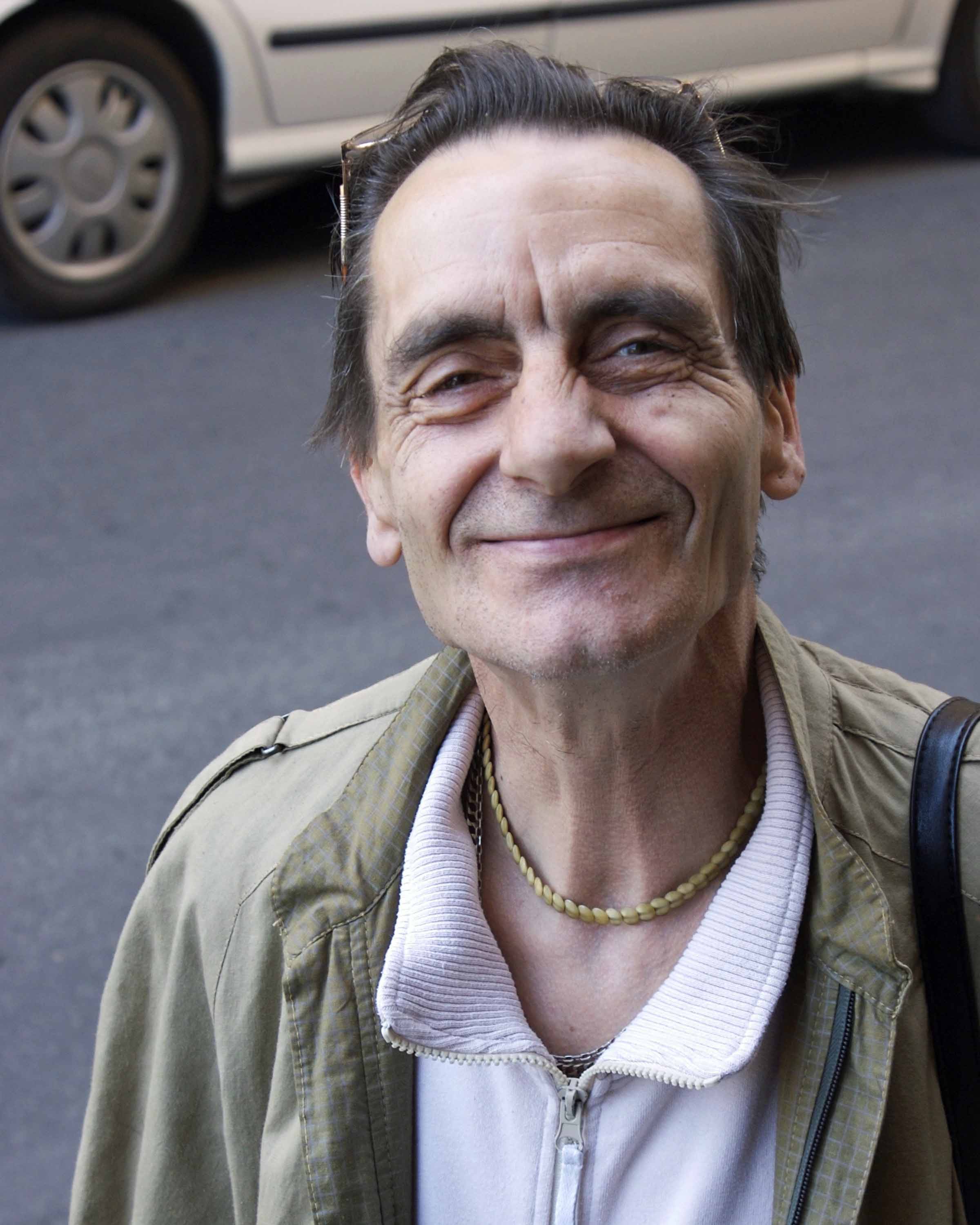
When I was in Florence one afternoon, I took the picture on the left. I wanted to show the massiveness of The Basilica di Santa Maria del Fiore (The Duomo) from a side street. As I was photographing, the man on the right walked up to me and said, “I am as beautiful as this street. Don’t you want my picture?” And then he gave me that grin. When I look back at my pictures from that trip, I am always reminded of that moment when I see this silly grin.

Do you have a special travel memory or encounter with a local you want to share? Post your stories and photos at the Travel Snapshots Group Flickr page!

Traveling as a vegetarian in a meat country

As a strict vegetarian I’m a little harder to travel with than most. I have not sampled the wiener schnitzel in Austria, the foie gras in France or the blood sausage in Ireland. On my last trip I ate either Asian or Indian food every single day because they are the easiest menus to find variety on.

However, I’ve also been in countries where Asian and Indian foods are non-existent. So then what?

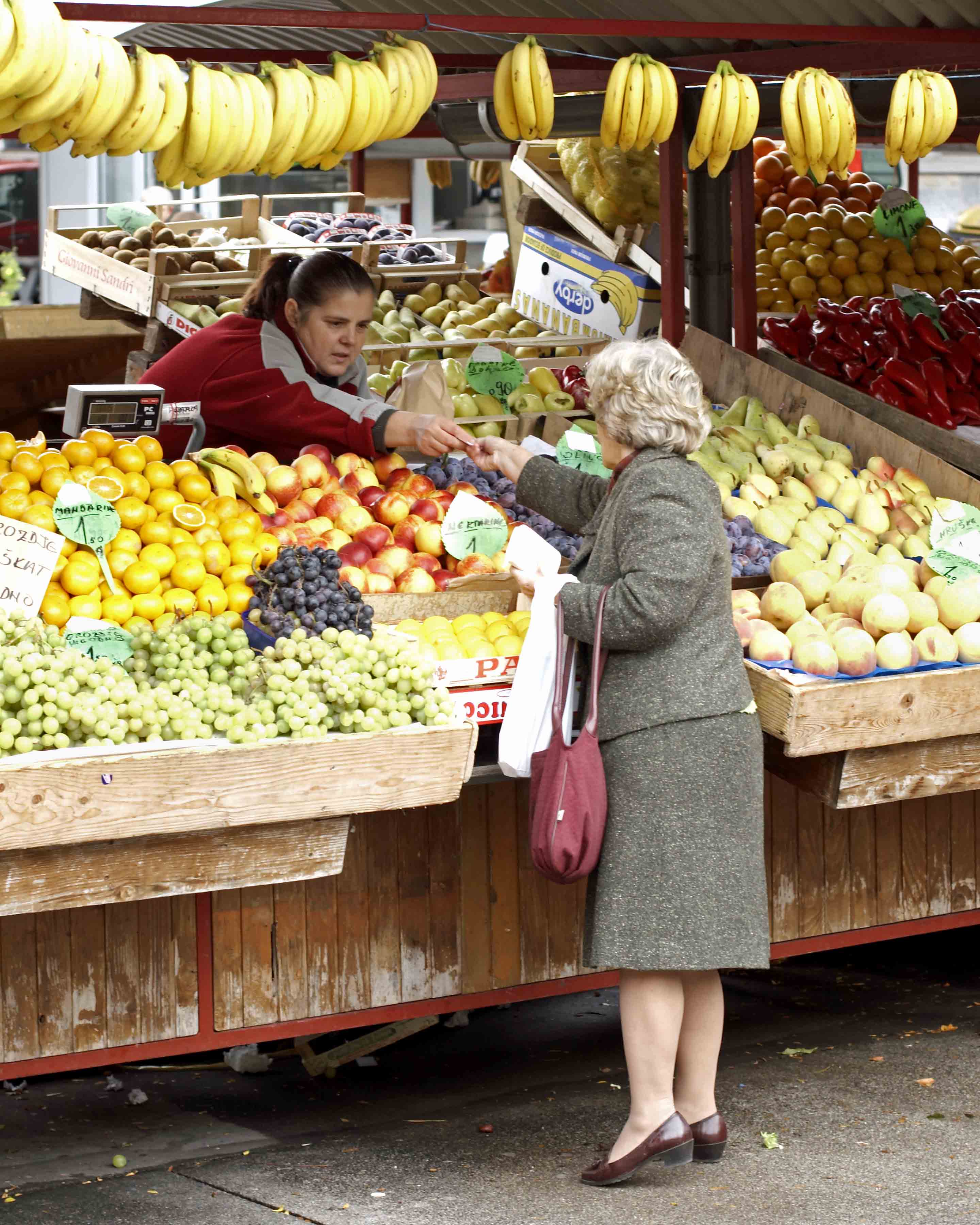
My first choice for vegetarian fare is the local farmers market. A delight of most European cities, farmers markets put you in the heart of a local community. You can also get fruit, nuts and easy vegetables for a picnic that day. I always pack a few sporks in my bag for spontaneous outdoor eating.

Locate the grocery store when you arrive at your destination. Even if you are not vegetarian, grocery stores are another lesson on the culture you’ve just stepped into. Ponder over the labels and look for canned goods that have easy open tops. You can also pack a hand-twist can opener in your carry-on bag without TSA problems.

Talk to a local produce vendor at the farmers market about restaurants that have vegetarian meals. They typically know about restaurants that have meatless options nearby. If there is a language barrier in the area you will be traveling in, pack along a good travel dictionary that has phonetic spellings for saying key phrases or words.

If you are staying in a city for a few days, research apartment rentals online. I have always had great success finding apartments with kitchens for less than an average hotel. Considering the money you save buying groceries versus eating out for every meal, it’s well worth the effort.

For a list of helpful vegetarian eating establishments worldwide, check out Happy Cow or the Vegetarian Vacation URL guide.

Happy meatless travels!

The back streets of Antigua

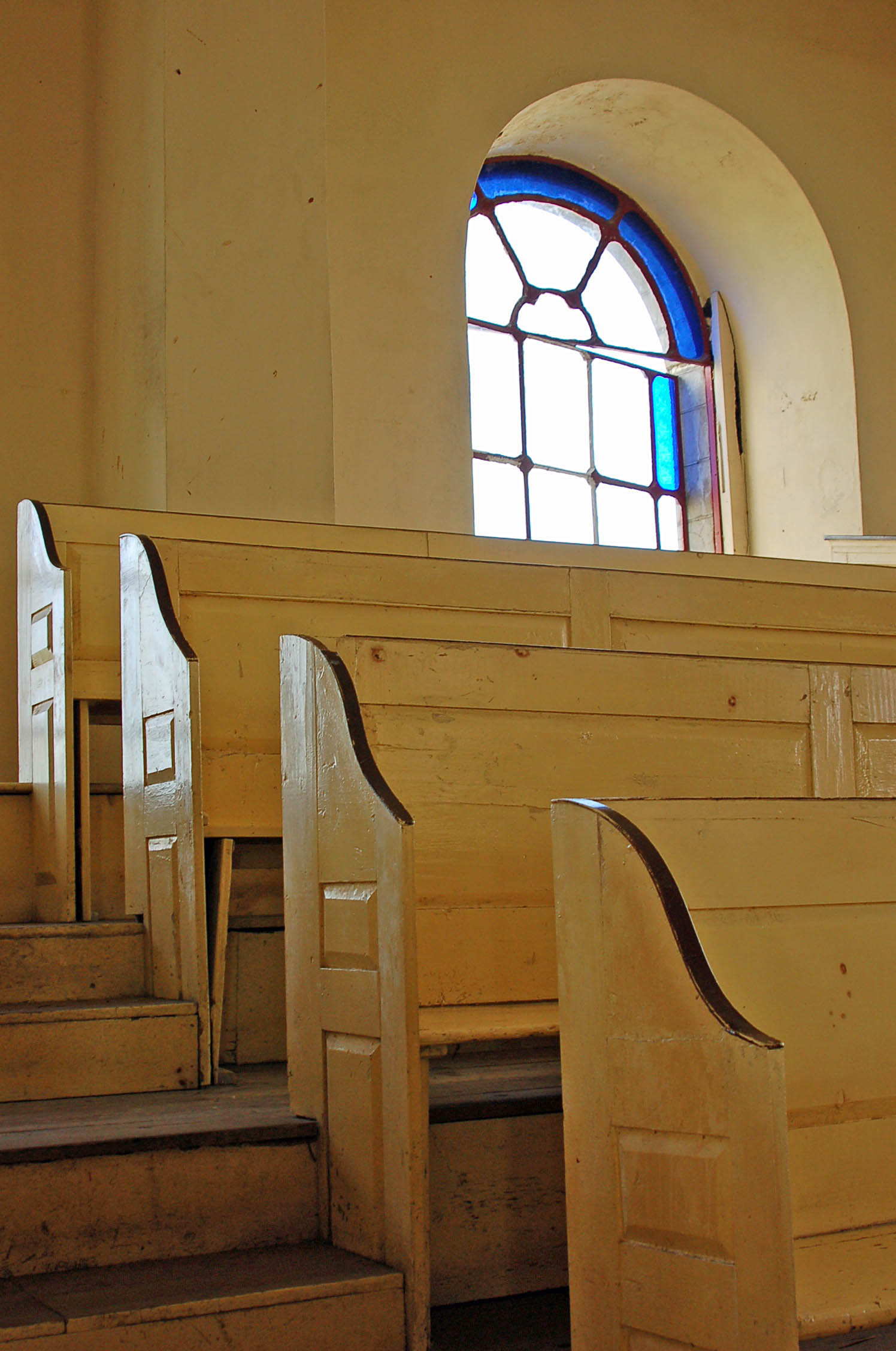
The church was Ebenezer Methodist – a colonial style church influenced by the British living in Antigua when the church was constructed 165 years ago. I was traveling with my mother, and we had wandered from the main street in St. John’s after spotting Ebenzer’s bell tower and cross steeple down a side street.

Finding the side door to the church open when we arrived, mom and I marched up the steps and were immediately greeted by a friendly native who invited us in to look around the church.

After photographing in the choir balcony, mom and I agreed the woman at the door was well worth knowing. We carefully wound our way down the steps and found our greeter waiting for us. She had taken it upon herself to dig out church bulletins from a music concert six months prior because she just thought we might be interested. Then she settled in a pew by the side door and began telling us about herself and her congregation.

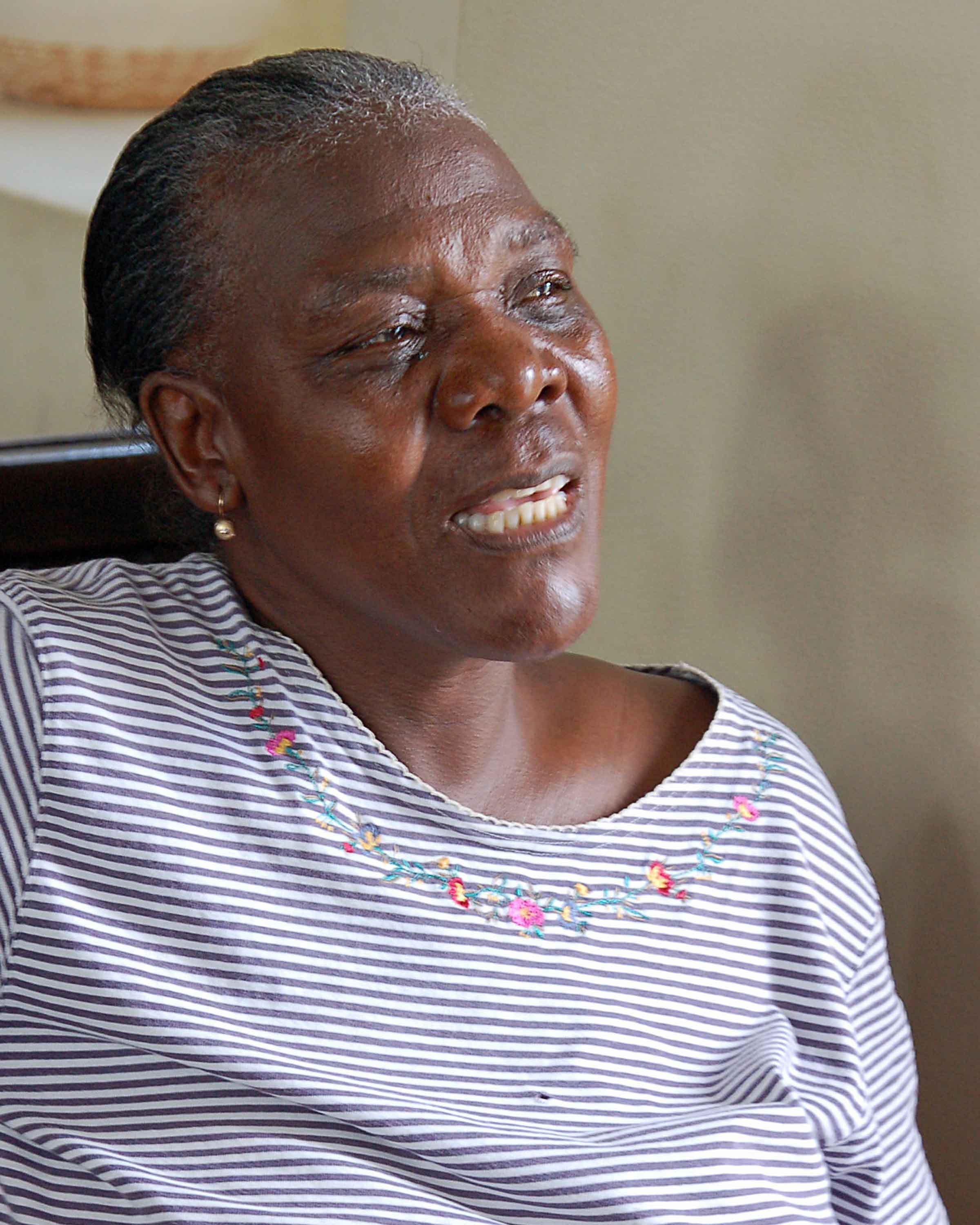
The woman referred to herself as Miss Martin. Miss Martin had five children, all whom were employed, she proudly declared, leaning toward us when she made the statement. She told us she sang in the choir and that she cleaned the church every Tuesday. So remarkable you came to see Miss Martin today! It was meant that you would be here when I was cleaning this church, praise God, to His glory!

Amen. The back streets are the best places on any trip, I’ve found. Even if the path looks a little sketchy as our route did, you might miss the opportunity to meet Miss Martin if you stick to Main Street.

Have you had a similar encounter with a local on your travels? Was your experience the same or vastly different? I would love to hear about it.
Reminder! All photos from your 4th of July weekend celebrations are due tomorrow. Find out more here.

Those quick business trips

I’m fortunate enough to travel several times a year on business. Sometimes that equates to one long day flying in and out of a city in less than 24-hours. But once in a while I have a few hours to explore on my own.

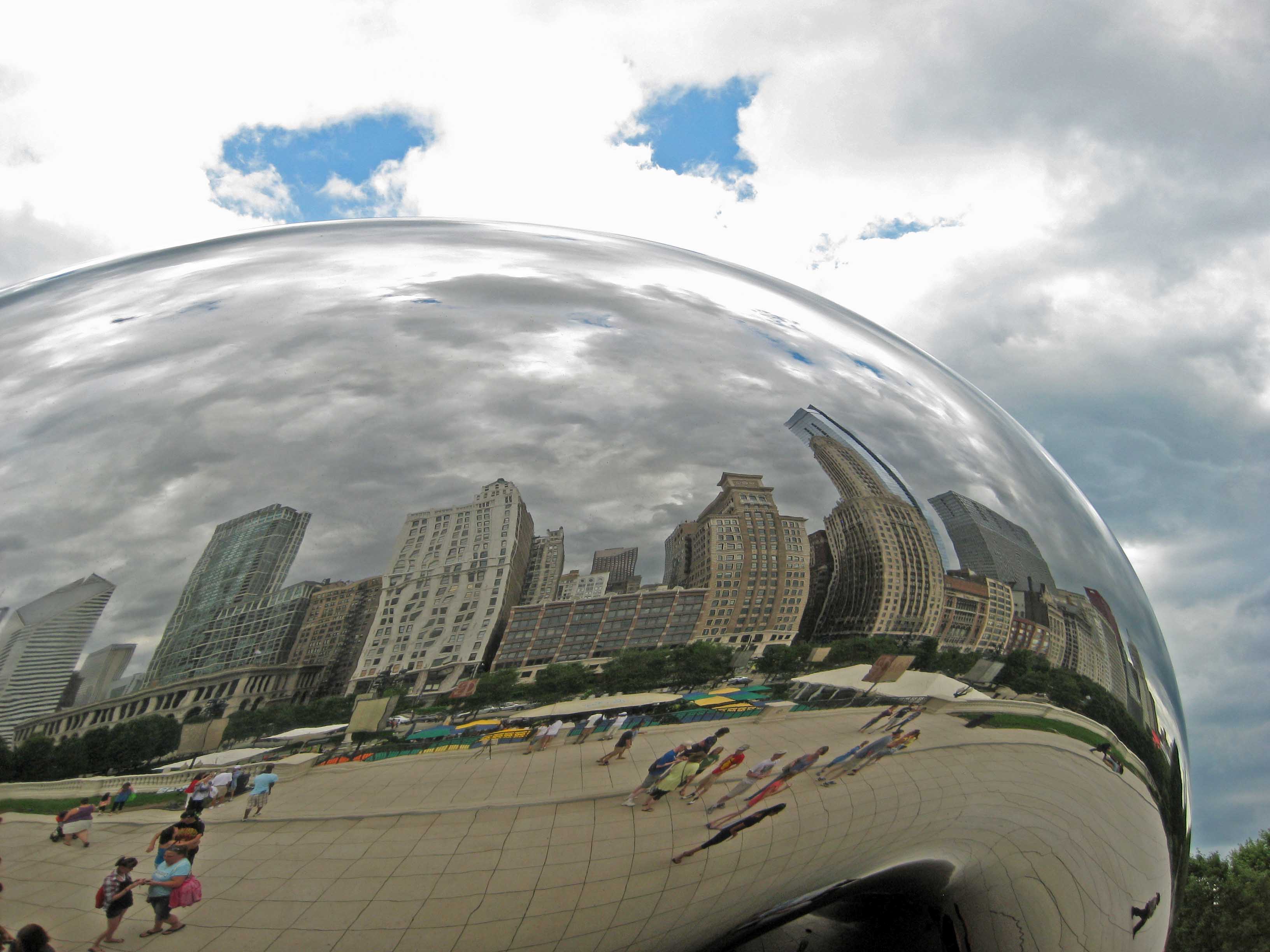
This week I was in Chicago, a city I haven’t visited in almost a decade. My first order of business was to visit Millennium Park. I have seen many pictures of Cloud Gate, the sculpture fondly known as “The Bean,” and wanted to snap a few photos of my own.

If you happen to be in a sour mood while sightseeing in Chicago, visit The Bean. The first thing you hear approaching the structure are squeals and laughter. People are jumping up and down to see their reflection in the sculpture. Families are posing for photos. Children (usually children) are rolling on the ground in the curved underbelly to see their distorted image in the stainless steel above them. It’s a happy place.

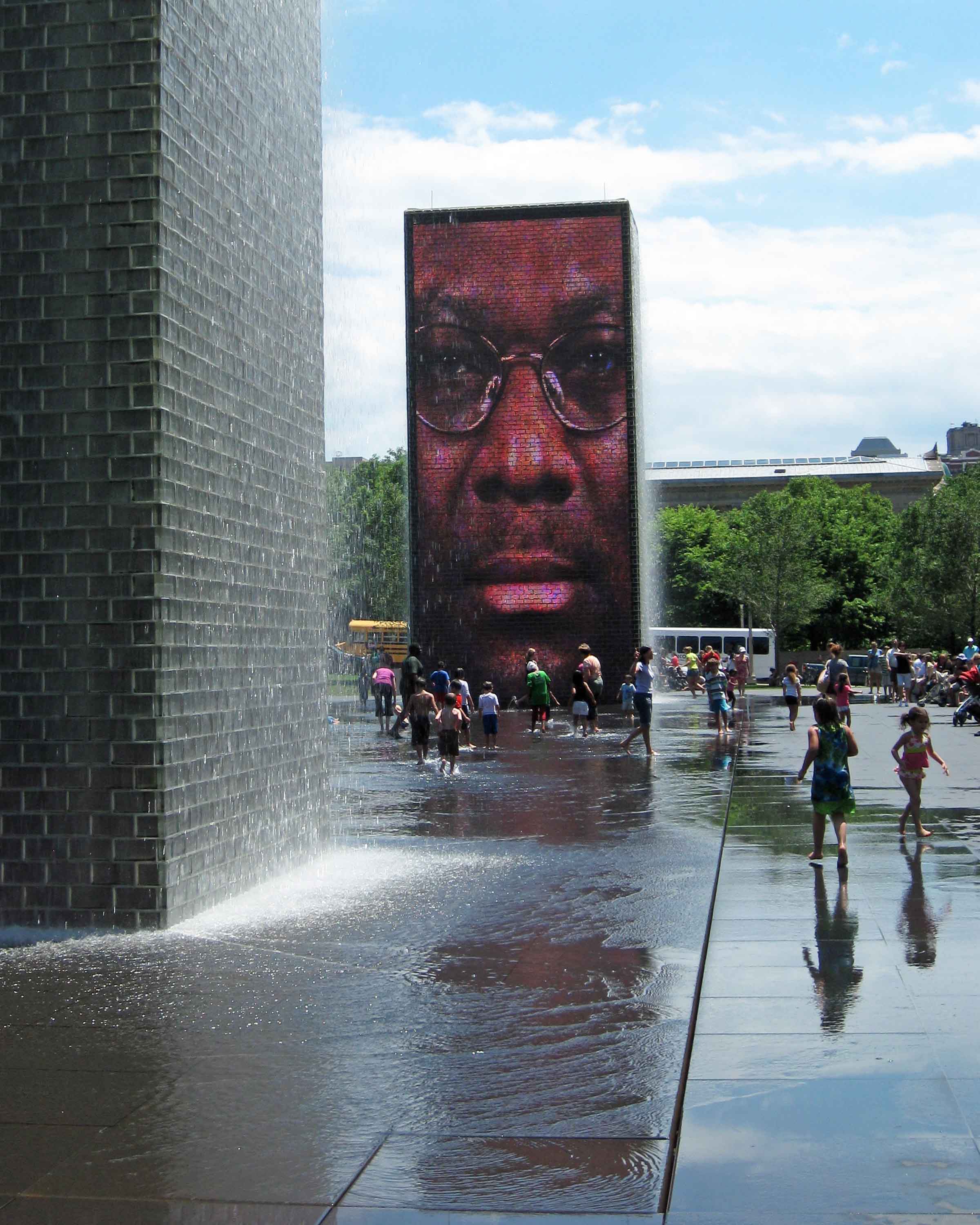
From Cloud Gate walk south to The Crown Fountain. Not one but two fountains, the glass sculptures project images of faces overlooking a thin reflecting pool. Watch the kids play in the water. They will take you back to childhood memories of your own.

While I was doing the business part of my trip, I asked a local what was within walking distance from my hotel for dinner. Ethnic food was my only stipulation. He recommended Singha Thai Restaurant at 340 North Clark Street (listed in the River North section on Urban Spoon). Sold.

I arrived at Singha Thai with my colleagues, one who was craving spice, one who wasn’t familiar with Thai, and one who thought ground pepper was a hot condiment.

We were seated in sunken booths that made you look like you were sitting on the floor Japanese style. Flipping open the menu we didn’t find many entrees over $9.99. And then the food arrived. I watched my co-workers eyes roll into the back of their heads as they sucked down spring rolls and garlic beef. All was right in the world.

If you are staying in or near the Magnificent Mile or the Streeterville neighborhood, stop in to West Egg Cafe at 620 N. Fairbanks Ct. for breakfast (E. Ontario is the cross street). Solo travelers can sit at the corner without waiting. The service is friendly, the food delivered hot and lightning fast. With a range of omelettes, pancakes and waffles, muffins, skillets and eggs benedict items, you can eat as healthy or naughty as you would like. Either way, the large plates will set you up with energy for the business of the day.

There’s so much more to see in Chicago, but if you only have 48-hours, with business meetings, conferences and the like included, spend a few moments in Millennium Park or find a hole-in-the-wall restaurant recommended by a local. It will make business seem like a vacation.

A souvenir from the conference I attended posed for me in Millennium Park. Making business more entertaining is another way to make traveling fun.

Getting under an Irishman’s skin

If memory serves correctly, it was my fault. Husband and I were sitting in a pub on a bustling street in Galway. As with every pub in Ireland, we were befriended by locals, this time by three men on their way home from work. Our group circled around a small table and talked about American and Irish history. That’s when I brought up the British. Dicky, the tallest, broadest man of the group, spit over his shoulder. “That’s what I think of the Tans,” he said slowly.

Thankfully an awkward moment in Ireland is only as long as a sip of beer. It was evident on our trip that some Irish still harbor unfavorable feelings toward England. It also explains why you could not order a Black & Tan without an Irish scolding. Mixed marriage is one thing, but combining Irish and English beer in the same glass is sacrilege.

After apologizing to our three hosts for the obvious insult, the men did what the Irish do best – talked it out. We spent the next hour talking about the history of Galway, the struggling economy in Ireland, and their travels to America. In the end even Dicky admitted his sister-in-law was a Tan, “and a beautiful woman, God bless her.”

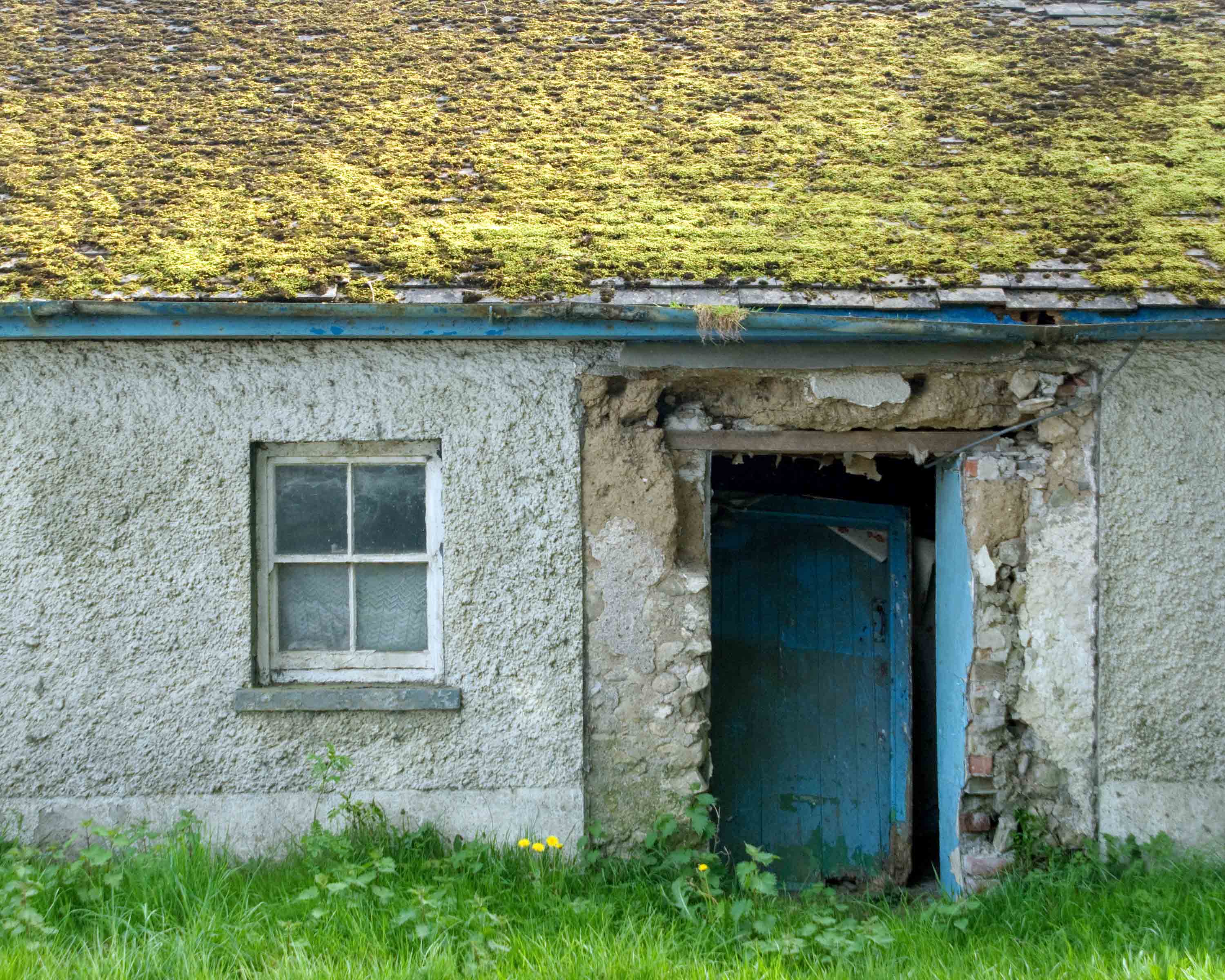
The lush green hills and sheep sprinkled across the landscape are just one element that make Ireland magical. But it’s the people like Dicky that make Ireland unforgettable.

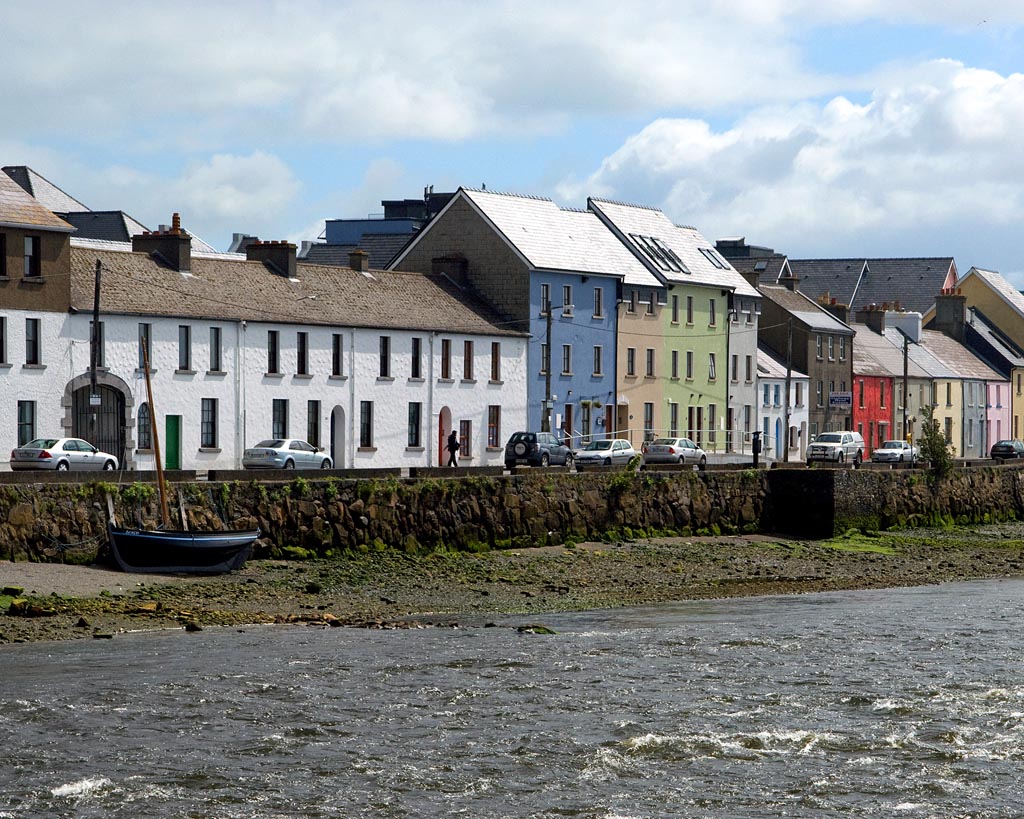
Galway was a favorite town during our trip through the southern half of the country. A college town situated on an inlet of the western sea, it is full of young people, music and a large shopping district.

While there are many places to stay, we had good Irish luck at Victoria Hotel. It was at the end of a street off the main square of town, which meant it was centrally located yet quiet. We were able to negotiate our rate to $70 Euro per night, which included a full Irish breakfast.

If you only have time to do a few things in Galway after the pubs, I suggest fueling up and mingling with the locals.

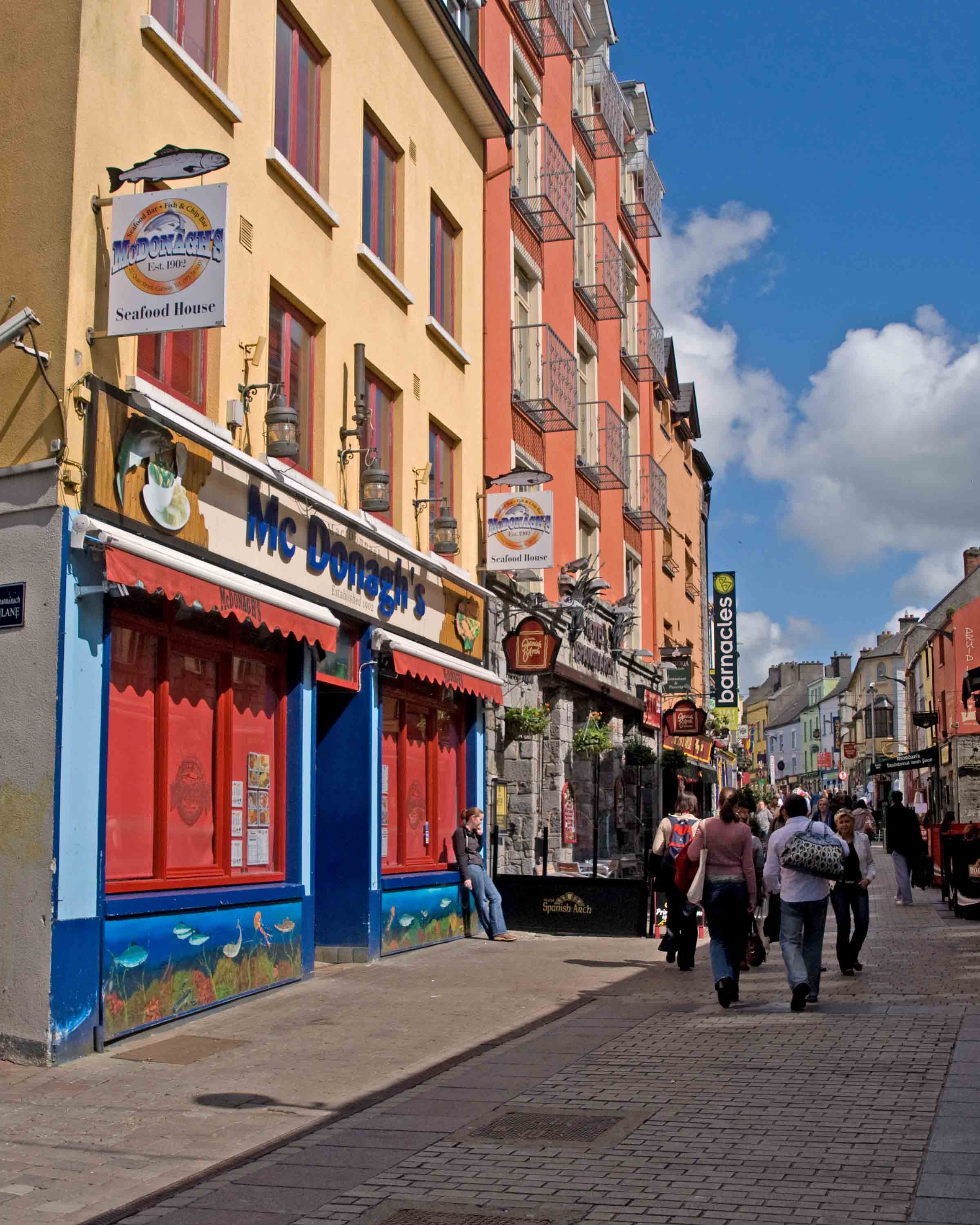
While pub food is usually very good, McDonagh’s Fish-and-Chips at the end of Quay Street is worth a stop in Galway, even if you’re just passing through. Moderately battered, the fresh catch is fried to crispy perfection. The chips are also good, but it’s the mushy peas I dreamt about for months after returning home to the States. The combination of sweet peas, milk, butter and salt are addictive.

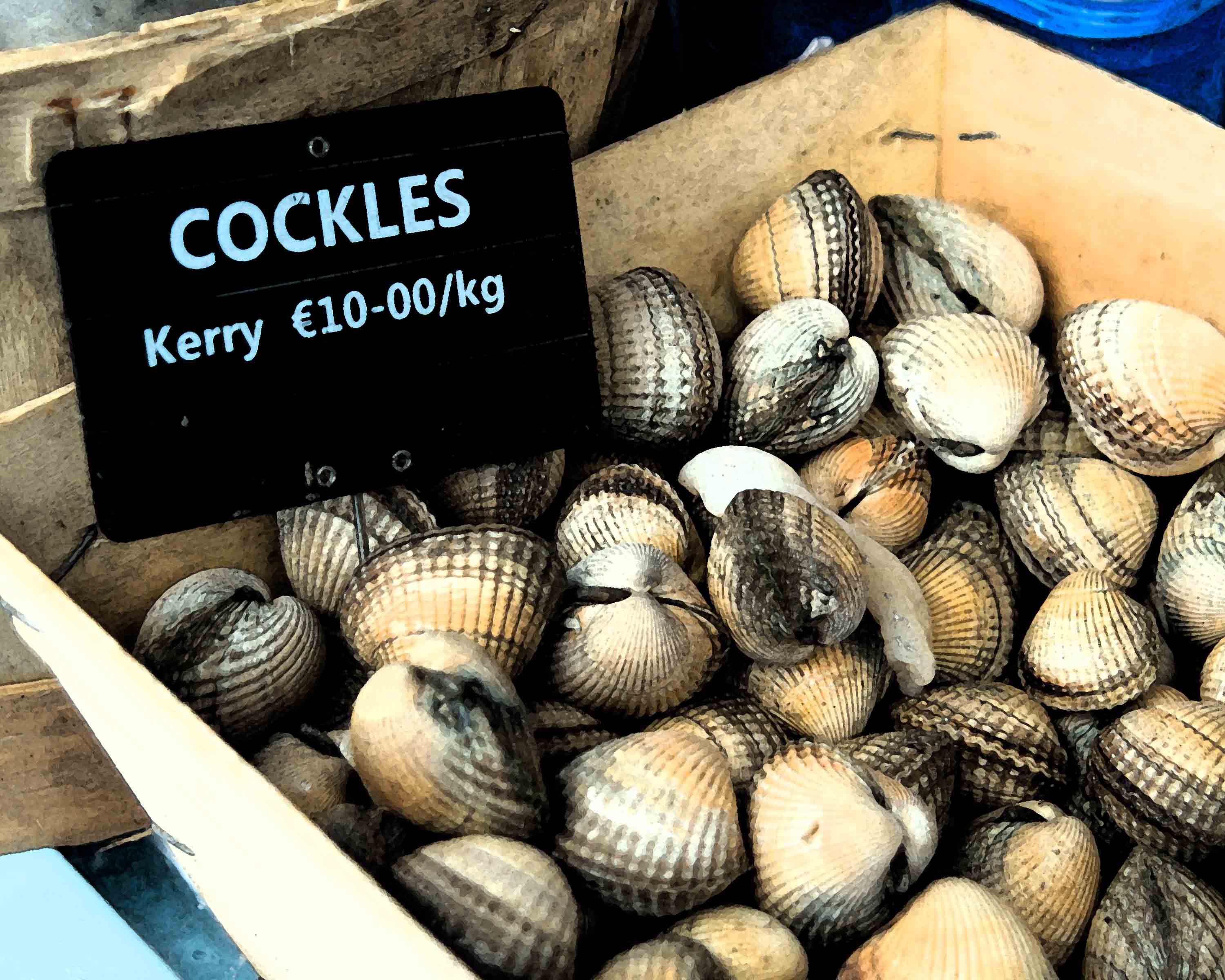
After stuffing yourself on fish, chips and peas, stroll the opposite direction on Quay Street to the open air market wrapped around the St. Nicolas Collegiate Church. Roasted nuts, fresh herbs and cockles are on display, and rubbing elbows with the residents of Galway definitely heightens your local experience.

Ireland spoiled me a little. Trips abroad after experiencing the Emerald Isle left me hoping a stranger like Dicky would approach in a pub to discuss world politics of the day. But that hasn’t happened yet. Instead, I’m left with a longing to return to a place that feels very much like home.

Want to hear more about Ireland from a local? Check out the winners of the Irish Blog Awards.