Finding the un-tourist in Venice

Venice is the city of canals. And tourists. Thousands and thousands of tourists. I have yet to meet more than a few people who have visited Venice and really loved it. “It’s too crowded. It’s dirty. It smells.” These are the most common descriptions you hear from travelers who have spent time in Venice.

But did they really spend time in Venice? Many cruise ships drop anchor every day during peak season, just off Piazza San Marco. The Times (London) once reported that an average of 50,000 people invade the historic city each day. Considering less than 60,000 people live in Venice proper, tourists nearly equal the population and make Venice seem less Italian and more like a cultural hodgepodge.

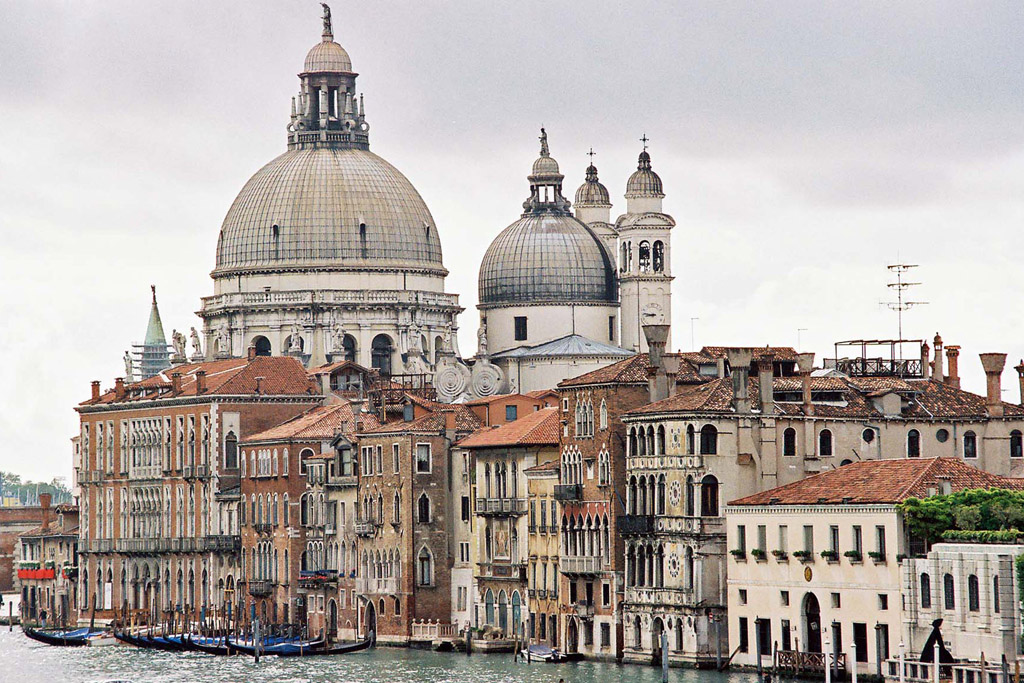
So how do you find the real Venice? It can be difficult, but if you look down alleyways into small campos, you will find the real romance of this Italian city. Here are a few of my recommendations:

  1. Spend at least three days in Venice – five if you can swing it. People hate Venice because they fight crowds for a day and move on. Stay after hours. Venice at night is an entirely different experience. The tourists are gone, for the most part, and the city comes alive in each community. You can find quiet cafes or dance to orchestra music in front of San Marco.
  2. Unless you cannot travel without seeing every piece of art a country offers, cut back on the number of museums you visit. Venice is full of art, but I encourage people to view the art on the street versus in a museum. My top favorites: Galleria dell’Accademia, which houses many of the Renaissance greats, and the Peggy Guggenheim Collection, an awe-inspiring museum of 20th century art, located in the heiress’ former home on the Grand Canal. If you want to see art of a local Venetian, Scuola Grande di San Rocco has one of the greatest Tintoretto collections in the world. After that, the rest is gravy.
  3. Get off mainland and visit other islands in the Venetian Lagoon. Torcello, Murano and Burano are can’t miss islands that are a one-hour boat ride from Venice proper. The colorful homes on Burano are stunning in the Italian sunshine, and the ride back into Venice gives you a gorgeous view of the city that you wouldn’t normally see.
  4. Find a campo to call your own. Mine was San Barnaba. It felt like home the moment I stumbled onto it. The decent sized square had several cafes, a bookstore, and most importantly for me, families. Children played European football, old men played dice games and women would water their dogs in the public fountain. It was true Venice, living out its life.
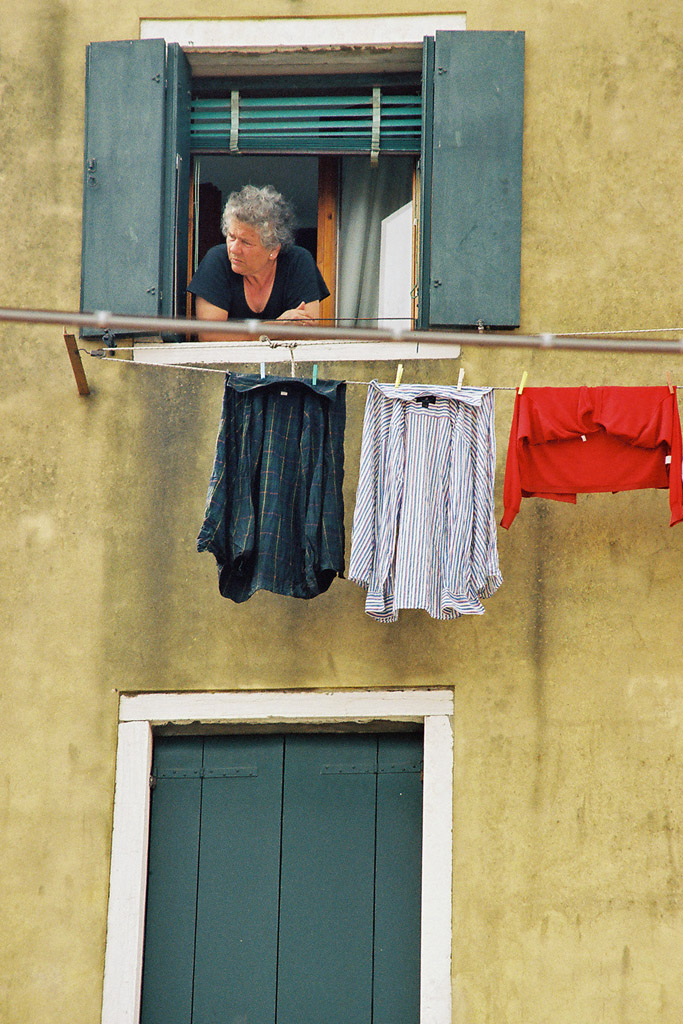
My trip to Venice taught me – or maybe confirmed – the way life should be led. Respect those around you. Laugh often. Take time to enjoy the finer things. Make living beautiful.

Still need convincing? Rent Bread and Tulips, a quirky Italian film from 2000. You’ll immediately book your trip to the city of canals. Ciao!
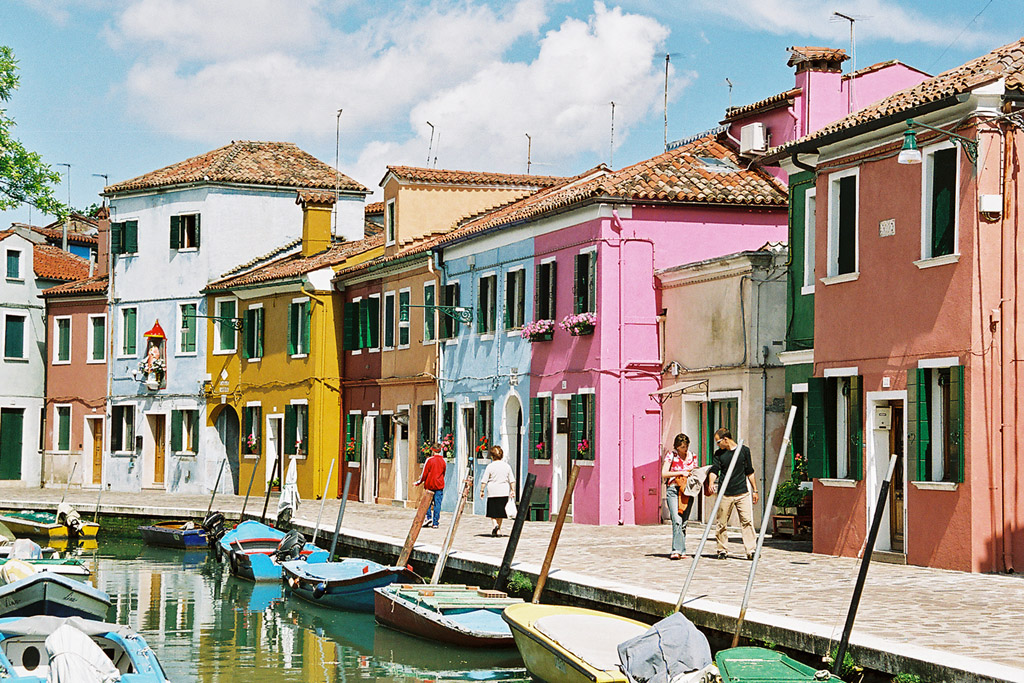
The island of Burano.
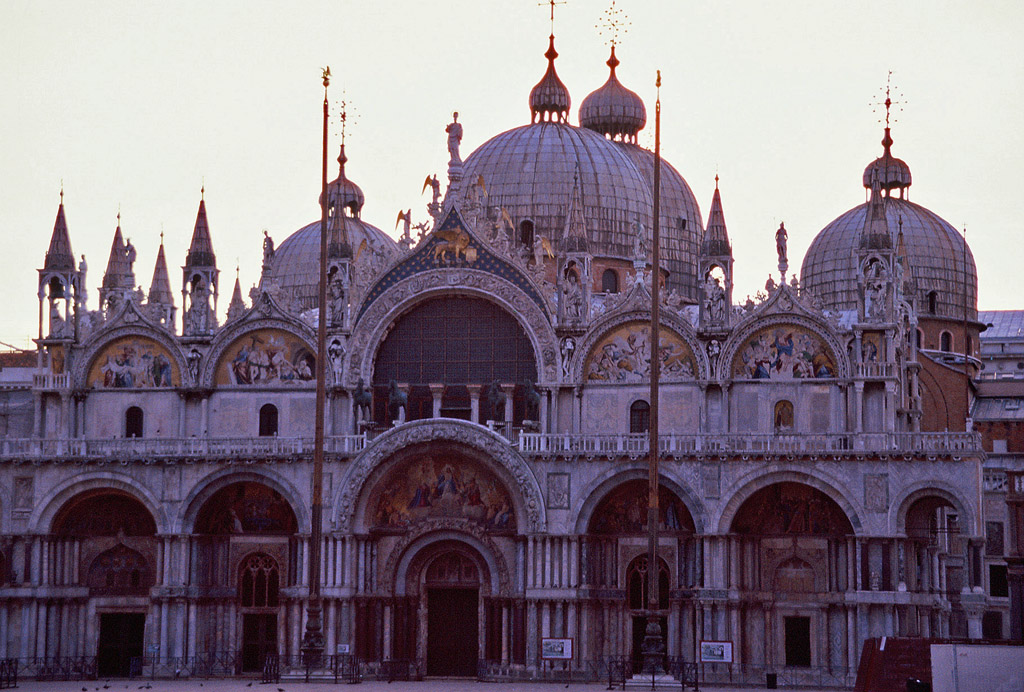
Basilica di San Marco at sunrise.
Crawling for Art

A little known art festival runs twice a year in the Lowertown district of downtown Saint Paul, Minnesota. The Saint Paul Art Crawl has been held every April and October in one location or another for the last 30 years. Today the Lowertown art community opens up its studio spaces to display paintings, photography, sketch drawings, media art and the like. More than just an art show, the concept of Art Crawl is to educate the masses on new ideas in the world of art.

Perhaps the name “Art Crawl” describes the state you are in after eight hours of moving from studio to studio. Most of the artists’ studios are in converted warehouses with few elevators. Climbing six to eight flights of stairs per building is a great workout, and you typically have enough time between each floor to give your knees a rest while you survey the various art mediums.

If you are in Lowertown during Art Crawl, here is one full day of studio hopping that I recommend:

  • JAX Building
  • Northern Warehouse
  • Tilsner Artist Cooperative
  • Cosmopolitan Apartments
  • Lowertown Lofts Co-op
  • Rossmor Lofts

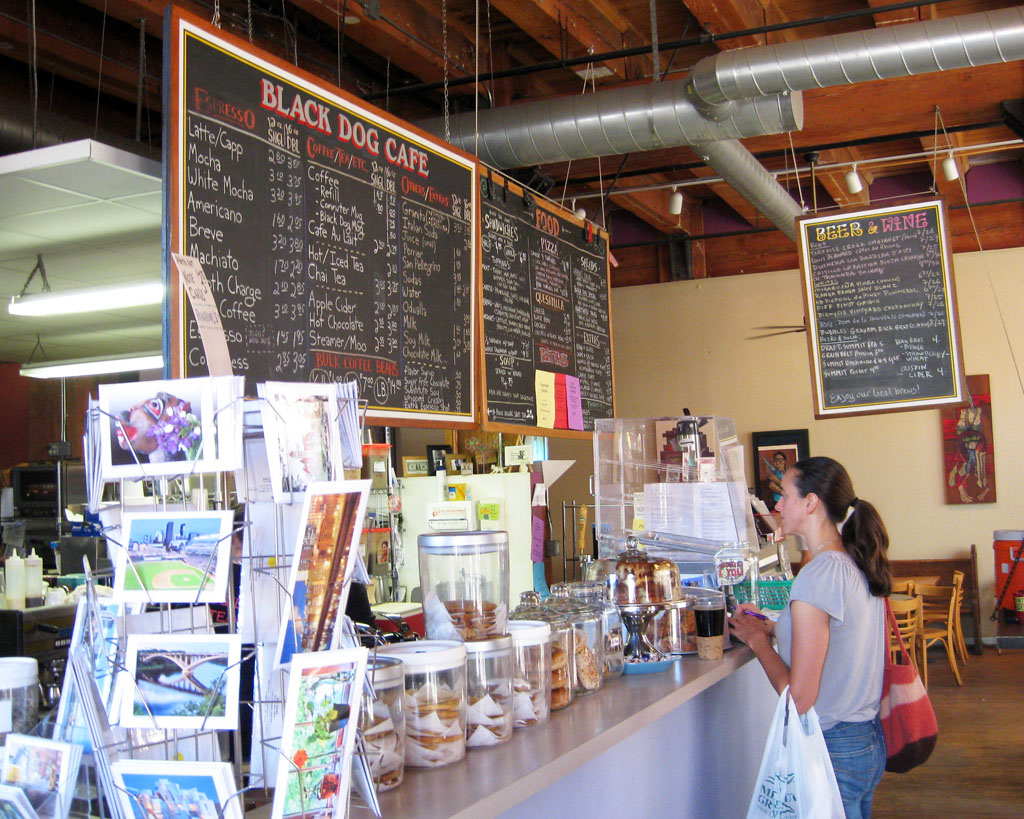
If you need to re-fuel, The Black Dog is the local coffeehouse where the artists hang out. It’s a little bit Seattle grunge, a little bit Greenwich Village, with rotating art exhibits on the walls and live music playing in the corner during the Crawl. The food is local and organic when it can be, and offers selections for meat eaters and vegans. Beer and wine are also available along with juices, smoothies, coffee and tea.

To get an idea of the types of art you can find while Crawling, visit the past Art Crawl competition winners gallery.

What other neighborhood art festivals have you found in your travels? What made them unique? I’m always looking for a new art destination, so let me know!

America’s favorite pastime


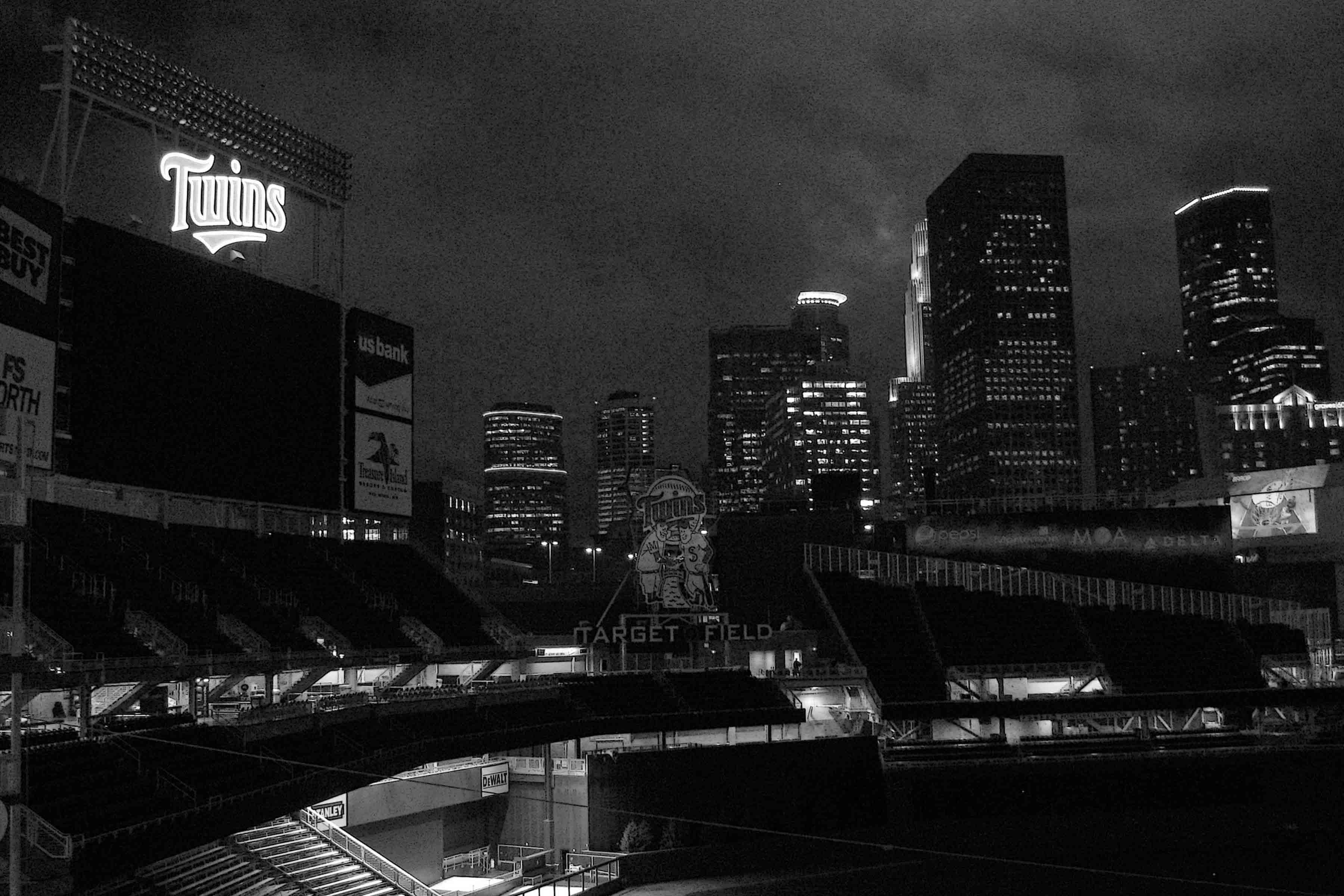
Target Field is the new home of the Minnesota Twins, and Minnesotans have been buzzing about it since opening day on April 12, 2010. The journey to get the new stadium was a 10 year battle in the Minnesota legislature. There were protests and rallies, calls for action and shouts for no action. But in 2006 the stadium legislation was signed into law, and a new era for Minnesota baseball began.

Every stadium battle is probably uniquely personal for any city that goes through the process. For Minnesotans, it was about playing baseball outdoors, among other things. The Twins moved into the Metrodome in 1982, which they shared with the Minnesota Vikings. It made sense to play baseball indoors considering the cool spring weather and chilly fall nights. But playing in a football stadium was like playing in a big enclosed can and watching ants run around on the dirt.

So the Minnesota Twins have a new stadium, and getting a ticket to a game is a feat in and of itself. But once you’re inside, you understand why ESPN Magazine named the Minnesota Twins the number one fan experience among all major league teams.

I arranged to tour Target Field one rainy evening right after the Twins clinched the American League Central Division. The group I was with thought it was very special to get such a behind the scenes glimpse at the stadium, but the reality is, anyone can do it. Target Field offers tours May through September to the general public for $15 on non-game days, and offers private corporate tours as well. It’s well worth the price to see the private clubs and lounges, sit in the dugout and walk on the field. What I discovered was how universal the love of baseball is for people all over the country. My tour group included people from Arizona, Tampa and New York. And mark my words, the New York Yankees fans were the most impressed out of the entire bunch.

A few facts about Target Field

  • Target Field’s footprint is only 8.5 acres large – the smallest in Major League Baseball – but it covers a total of 10.5-acres when looked at from above because portions of it extend over surrounding roadways.
  • Target Field is the first baseball only park for the Twins. Prior to Target Field, the Twins had shared the same sports venue with the Minnesota Vikings (The Metrodome and Metropolitan Stadium).
  • The main scoreboard is the fourth largest in the majors. It measures 57 feet tall by 101 feet wide.
  • The turf is heated to about 40 degrees in the winter to keep it in tip top shape for the next season.
  • Target Field’s facade is built with more than 100,000 square feet of limestone from southwest Minnesota.
  • There are 54 luxury suites that range in price from $90,000-$200,000 per year.
  • Target Field features one of the closest seating bowls to the playing field in all of Major League Baseball. It has approximately 18,500 infield seats.
  • The upper deck is partially protected by a large canopy and has heated concourses, restrooms, concessions and restaurants to help fans deal with bad weather.
  • The U.S. Green Building Council awarded Target Field LEED Silver Certification, only the second MLB ballpark that has attained this standard by April 2010. (Nationals Park in Washington, D.C is the other LEED certified ballpark)
  • For 2010, the team sold a record 24,000 season tickets. The old record was more than 11,000 in 2009.
  • The Legend’s Club includes padded seats along with access to private, climate controlled lounge areas featuring full-service bars, large screen TVs, fireplaces and upscale food options.
  • Target Field has approximately 20,000 fewer upper deck seats than the Metrodome.
  • There are 401 women’s and 266 men’s restroom fixtures at Target Field. In comparison, the Metrodome has 256 women’s and 192 men’s fixtures.

Source: Minnesota Fun Facts

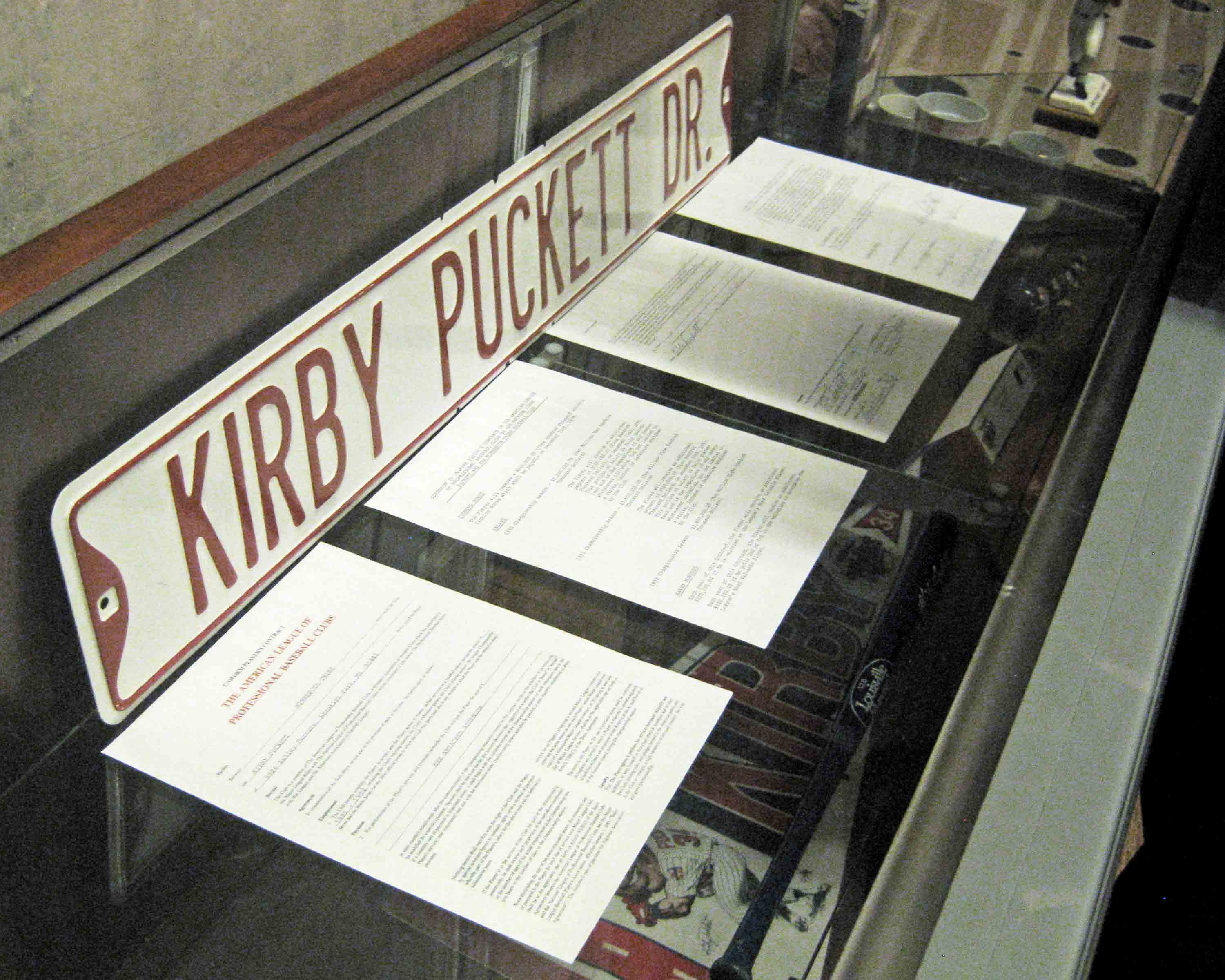
Kirby Puckett’s final contract with the Minnesota Twins

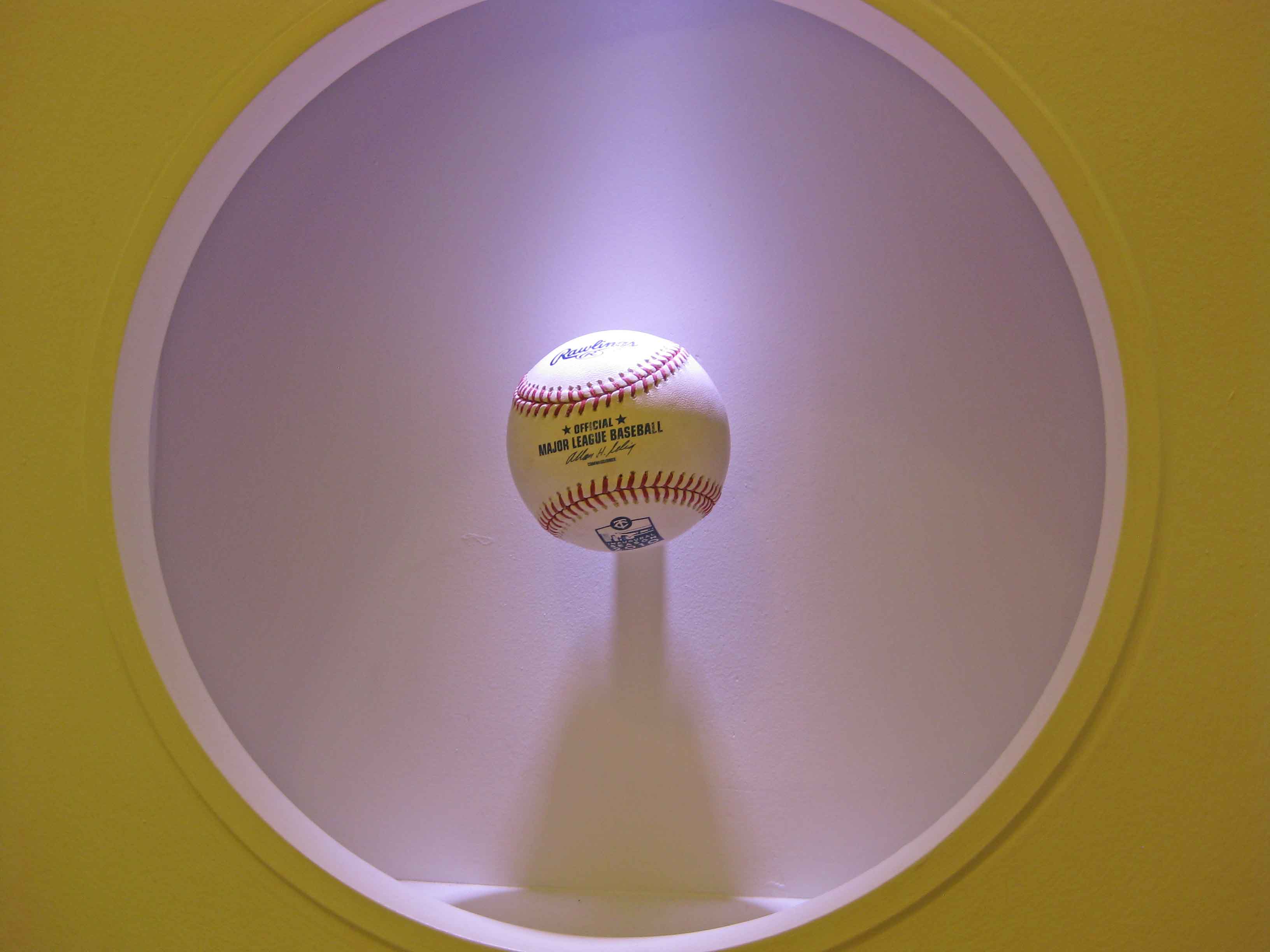
Winning World Series baseball

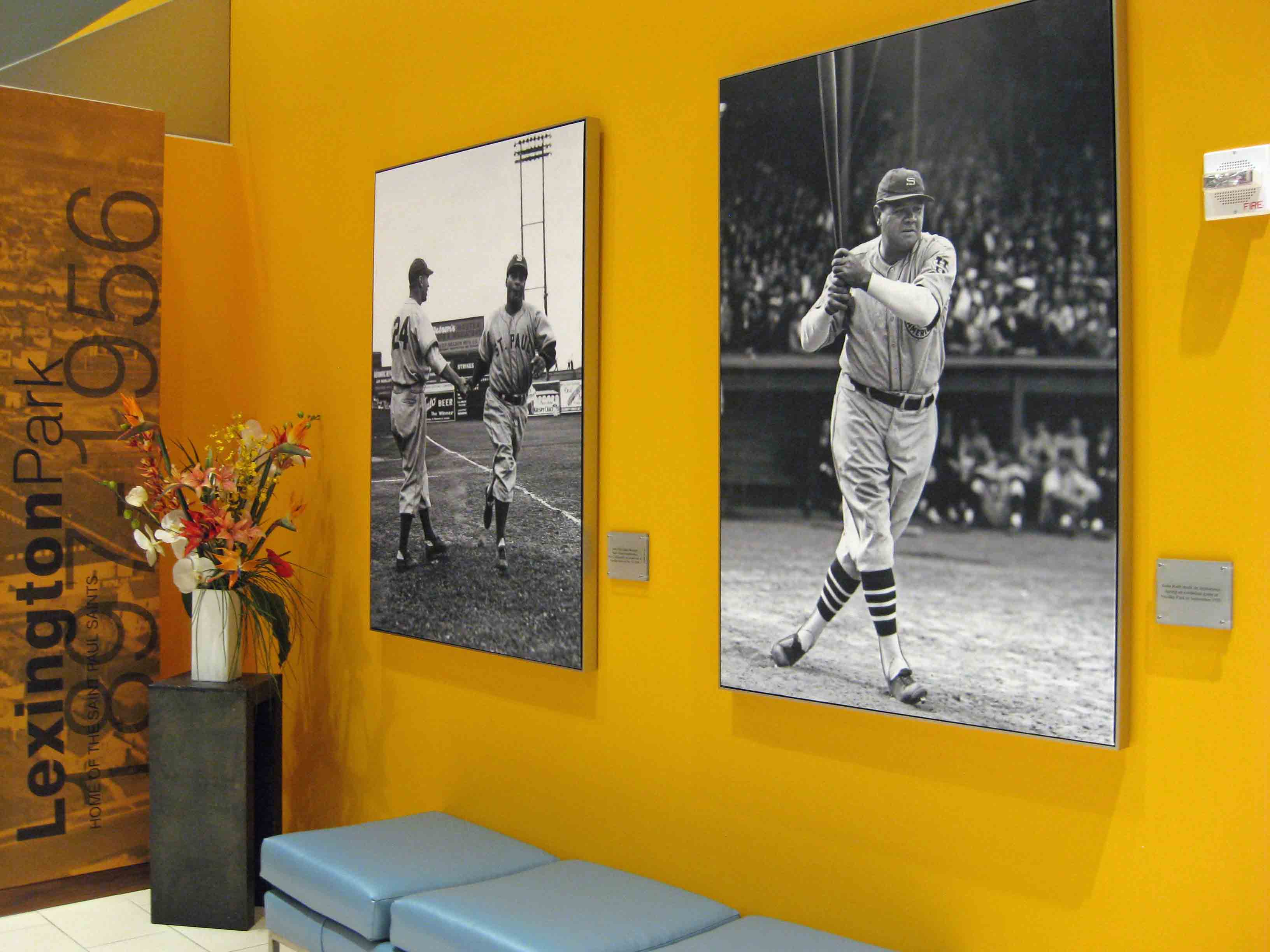
Babe Ruth inside the Metropolitan Club

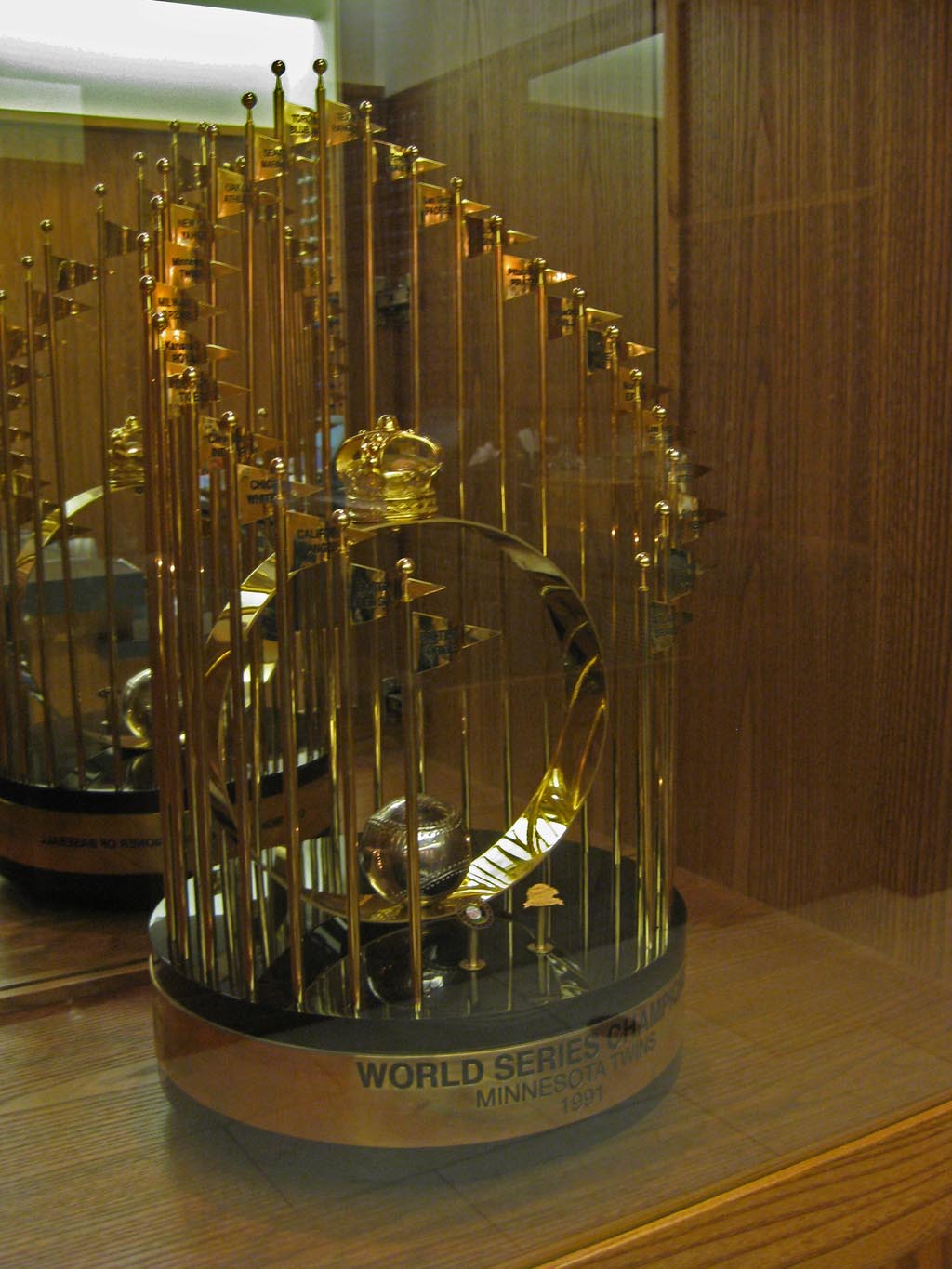
1991 World Series Trophy

For pictures taken during a daytime game, visit All Down the Line.

I’m taking two weeks. Like it or lump it.

Last night I had the opportunity to attend Meet Plan Go in Minneapolis, a movement built on the idea that Americans should embrace what our European counterparts have been doing for years – taking time off from work. Not just a week of vacation, but long-term vacations or sabbaticals. As one of the 50 percent of Americans who do not use all of their vacation days each year, I was intrigued and looking for inspiration.

The Meet Plan Go event consisted of four-time sabbatical taker Kirk Horsted, Lonely Planet writer Leif Pettersen, and financial planner and contributing writer to the Minneapolis Star Tribune, Ross Levin.

Horstead gave an overview of Meet Plan Go and then his personal philosophy of travel. From there he moderated the presenters, allowing Levin to speak first.

Levin grabbed me from the start, explaining that as a financial planner he saw two types of bad behavior – people who spent too much and people who saved too much. He reminded us that we have to have a personal plan, not a business plan when it comes to saving for the future. Levin went on to tell a story of a man he met while vacationing in Colorado. The man would drive Levin’s family from the ski lodge up to the ski hill every day. As the days progressed they began to talk during the drive, and Levin found out the man drove the van in the winter for the ski lodge, and during the summer months he was a park ranger in a nearby state park. He said that he was 40 years old, and loved what he did. But his father was disappointed in him for not taking more initiative with his life.

“I counsel people every day to save enough money to do exactly what you are already doing at age 40, ” Levin said. The man just shook his head in disbelief.

“If you believe you are enough, you will have enough,” Levin told the crowd.

Leif Pettersen nodded in agreement. An accidental tourist, Leif traveled the world, landing in Romania and securing freelance writing status with Lonely Planet. After spending a lot of nights on couches he came back to Minneapolis and bought a condo. But he says he still lives frugally by not owning a car and keeping life modest to maintain his travel writer lifestyle.

When the floor opened for roundtable discussion, the “how” of sabbatical taking was one of the first questions asked. Horstead acknowledged that some companies do not allow sabbaticals. If that’s the case, he advised the audience to take an assessment. If travel, vacation and sabbatical opportunities are a goal, work for companies who support those philosophies. If you’re in a company that might be flexible, do the footwork for them. Offer unpaid leave, line up co-workers to absorb your duties, and be willing to come back to a different job in order to keep your job.

Walking away from the meet-up my initial reaction was, “yeah, right.” Easier to say than do. But over the last 24-hours I have found my inspiration from Meet Plan Go.

I am 37 years old and have never taken two weeks of vacation in my adult life. Because I won’t use up all of my vacation this year, I’m rolling the maximum days allowed over to the next calendar year. That means I will have 20 days of paid vacation on the books in 2011 – technically a month. Will my employer tolerate my absence for a month? I don’t think so. But, I can take a minor (monumental) first step.

I hereby declare that I’m officially taking two weeks of vacation off in 2011. Not two weeks sprinkled over three months of summer. Two solid weeks away from the office. The time is blocked. The trip is planned. I’m going to do it. It’s not a complete unplug for a month, but it’s a start. Baby steps.

Do you take all of your vacation time each year? I would love to hear your story of why  – or why not.

Day tripping through Puget Sound

Thirty-five miles north of Seattle is Mukilteo, a classic coastal town where you can get a latte and buy fish bait in the same cafe. Add a small lighthouse, a decent seafood restaurant called Arnies and the ability to ferry over to Whidbey Island, and you realize you’re at the golden crossroads of Washington State and Puget Sound.

After getting a look at the lighthouse, walking the rocky beach and stopping at Mukilteo Landing for fish and chips, prawns and chips or halibut and chips, go back up the hill to wait in line for the ferry. The line will feel like it’s 10 miles long, but be patient. The line goes quickly and you usually sit in your car no more than 15 minutes.

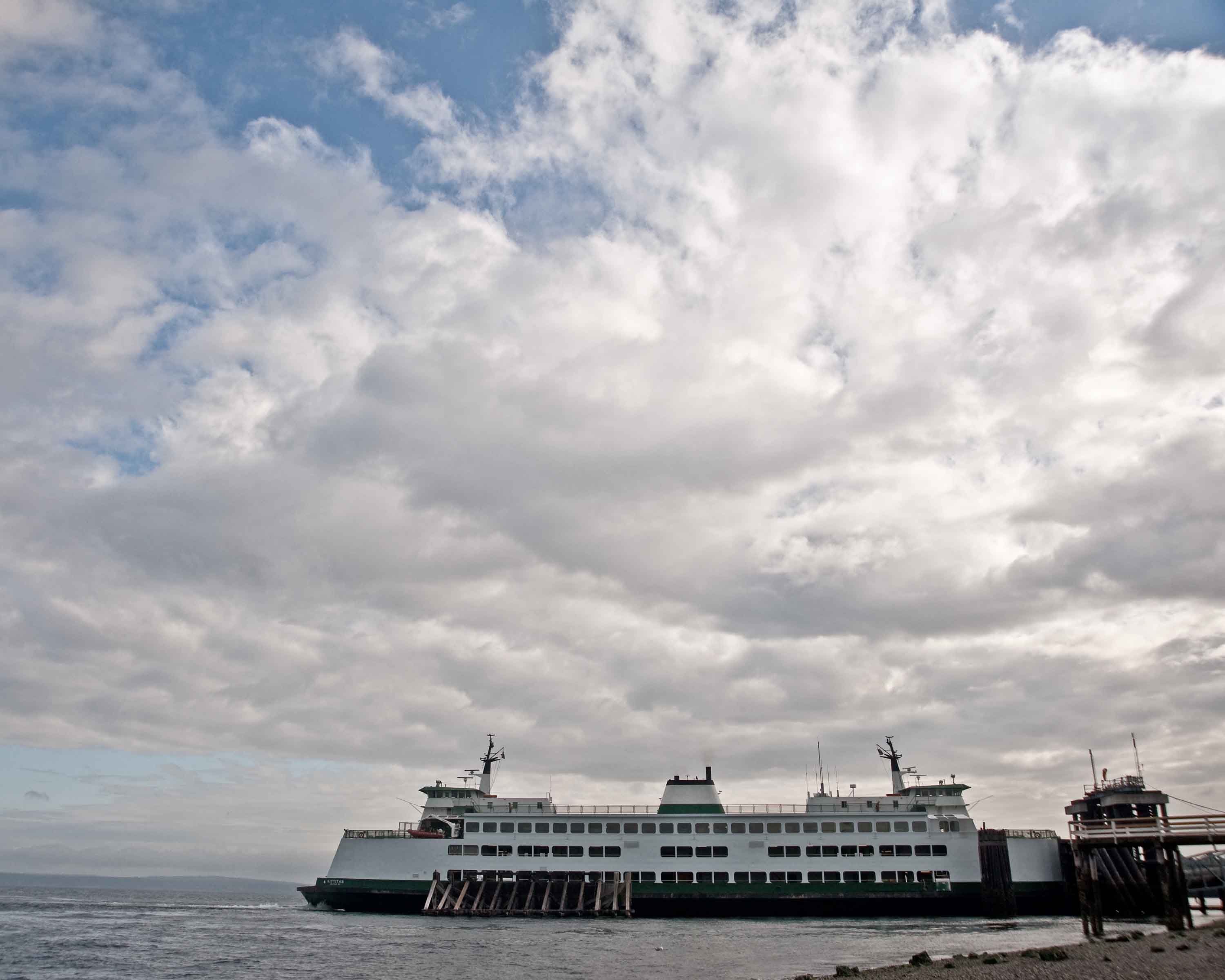
Once aboard the ferry, go up top for a view of Clinton, the town just three miles across the harbor where you will set foot on Whidbey Island from the ship. You can even grab another latte in the coffee shop onboard if you need a pick-me-up for the drive north. Just don’t expect to linger long. The mother whale ship moves faster than you would think, putting you on land in less than 10 minutes.

When we hit Whidbey Island we cruised through several towns with the destination of Greenbank Farm on our radar. The brochure promised dark red fields of loganberrys and old barns from 1904. What we found were fields out of season and a parking lot full of tourists visiting the wine and cheese shop, and having a piece of pie at the on site cafe. If you need a place to tire your children out, Greenbank has acres of open paths where kids can run. If you are looking for the quiet, natural side of the Pacific Northwest, keep moving.

Driving past yellow hay fields and only-one-stoplight towns, Whidbey Island suddenly felt familiar. While not exact, the landscape had the look and feel of Prince Edward Island, especially from a peak when you could spot the sea in the distance. I wanted to see more.

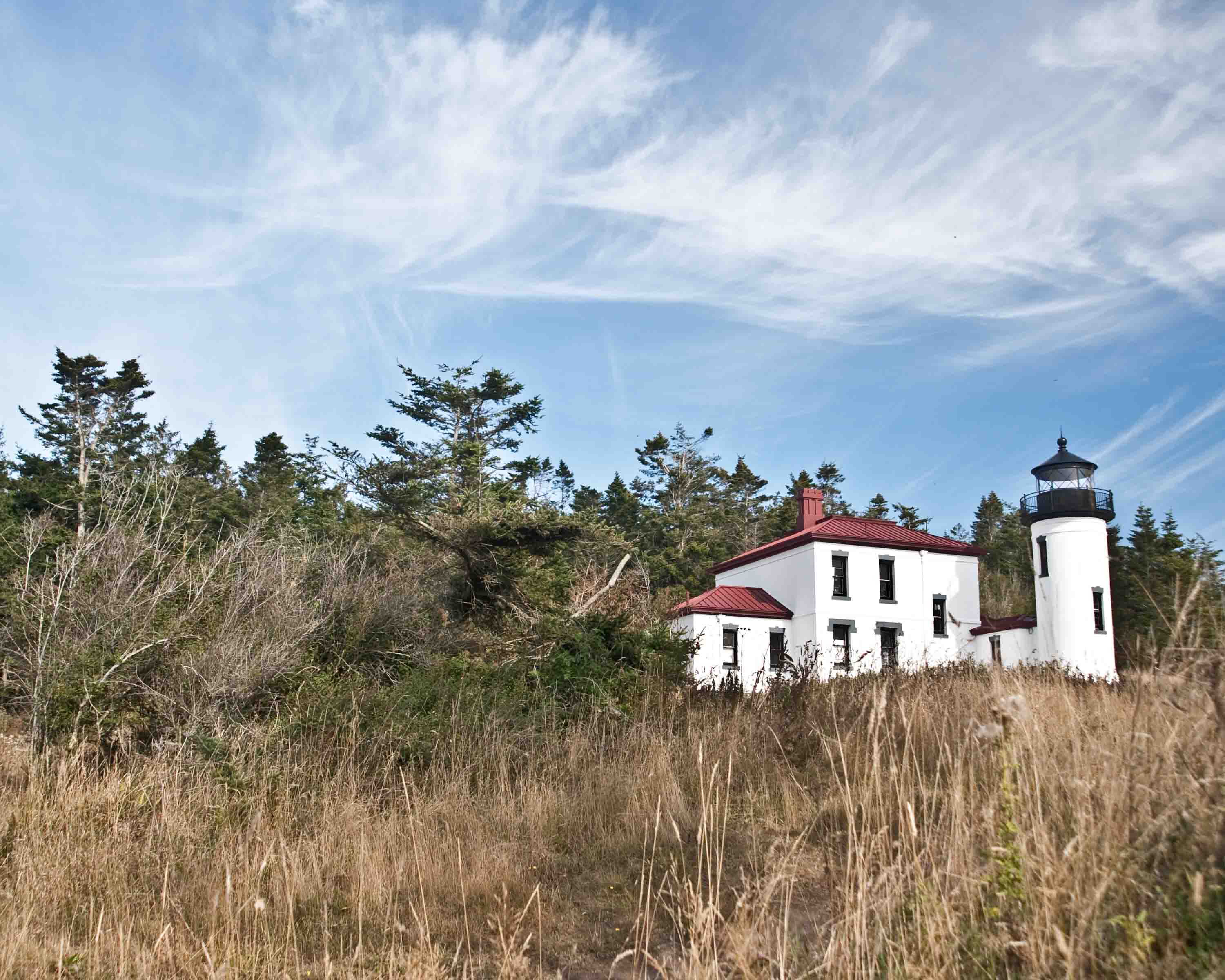
Past the halfway point of the island we came upon Fort Casey or Camp Casey as it is commonly known today, a restored Army camp built in 1890 to protect the entrance to Puget Sound. Each year Camp Casey hosts a kite flying festival on its expansive grounds, which is now part of Fort Casey State park. In addition to World War II canons and bunkers, Admiralty Head Lighthouse is a sparkling white structure that graces the grounds, guiding ships nearly 20 years prior to Fort Casey’s development.

While Camp Casey and the lighthouse grounds were perfectly lovely on the warm 72 degree day we were there, I couldn’t wait for the Big Kahuna – the place that I wanted to visit the most during this day trip. And we had to get moving because the sun was starting to dip. Car packed back up, windows down, we drove toward Deception Pass.

If you are driving north from Whidbey Island to Fidalgo Island and want to see the Deception Pass Bridge, I’ll save you a little pain. Take a left into Deception Pass State Park. We weren’t sure where we would have the best view and got lucky by guessing. Drive down to the beach parking lot, grab your camera and anything else you want to take because once you see this, you won’t want to return for awhile.

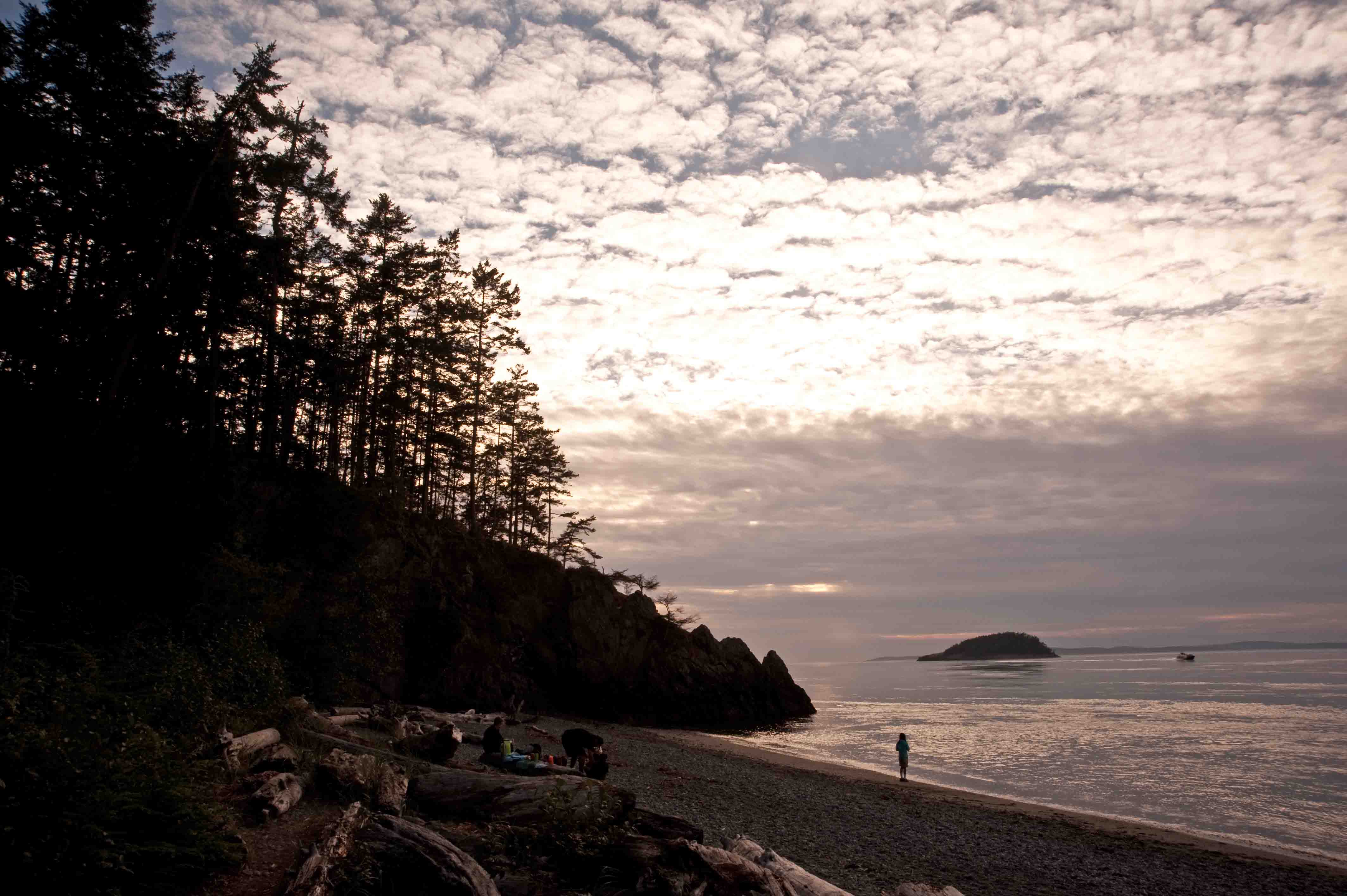
Kind of takes your breath away, doesn’t it? I just stood on the beach for about 30 minutes, watching children play and old men fish. The photograph at the top of this post is also from Deception Pass, snapped as the sun was setting. More than a quarter of a mile long, the bridge is even more thrilling once you are driving over it.

Our day was ending and we wound up blowing through Fidalgo Island much too quickly. I can actually see this being a better day trip entrance, driving from Seattle to Fidalgo Island first, and then passing south into Whidbey, strictly for the views of Fidalgo alone.

But this was our day trip, and there were definite missteps. You have to take it as it comes. I’m always looking for the “untouched” in my travels, but I’ve come to realize that is hard to find. There is a gift shop attached to pretty much anything remotely interesting along the way. I have to remind myself of the old adage that it’s about the journey, not the destination. Do I think travelers should see Puget Sound if they have the chance? You betcha. Even with the gift shops and tourists, it’s still a beautiful place, with raw and wonderful views. Make it your own journey.


Sleepy in Seattle

Maybe it was the cool, misty air. Maybe it was a full day spent outdoors at a music festival. Or maybe it was the lunch burrito the size of a newborn baby. Whatever it was, I slept like a rock every night I was in Seattle. For a person who finds slumber in strange beds difficult, it was just one of many, many good things about the Pacific Northwest city.

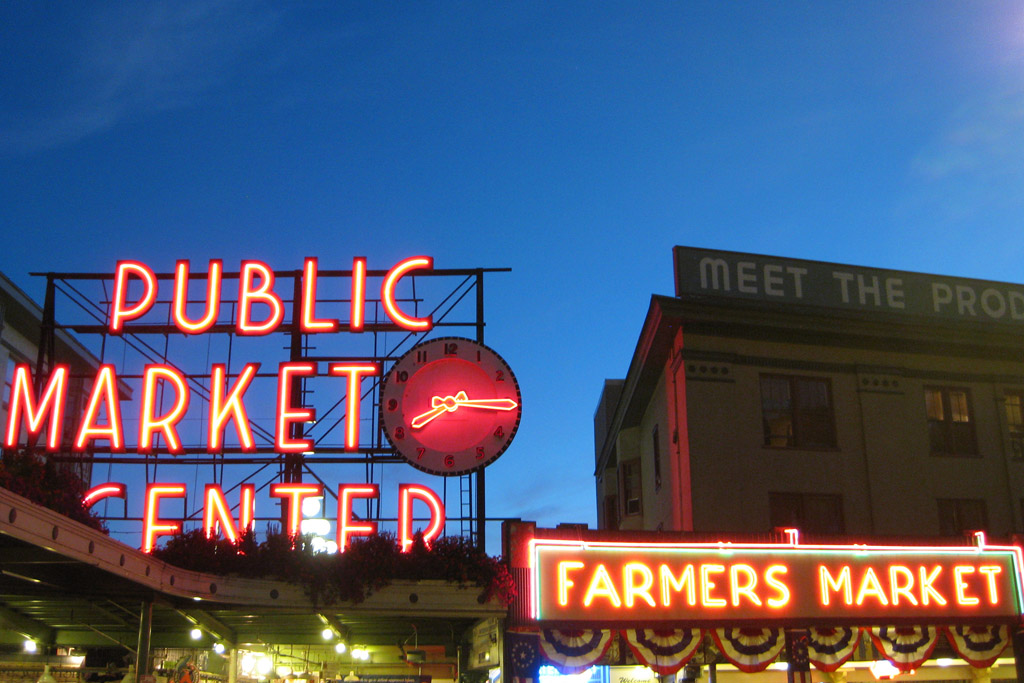
This was the second trip to Seattle in two years. Husband and I didn’t want to do anything that we had done in the past. We walked right past Pike Place Market down to the piers on the shoreline. We were here to see something new.

For someone who likes an authentic experience, the piers below Pike Place Market are the last place you get authenticity. Swimming with tourists, there are enough souvenir and fish shops for everyone. But we were hungry and needed dinner. Stat.

The restaurant we focused on had a great, pre-World War II sign. There were black and white photos in the windows of waiters circa 1946. What we later discovered was the McDonald’s of seafood, the place won us over with proof that it had been around a long time. Plus, how can you not be won over by a place called Ivar’s Acres of Clams?

Ivar’s walk-up windows and sit-down restaurants are sprinkled throughout Seattle. We were at the original, on pier 54. Dark wood and a sizable menu impressed from the start. But what won us over was happy hour. Served every day from 3:00 p.m. until close, you can eat and drink from a special discounted menu in the large bar. Between the two of us we had a strawberry spinach salad, Ivar’s famous clam chowder, six oyster shots and a olive and veggie hummus plate, plus drinks from local breweries and wineries for about $20. Solid food with ambiance on a budget gets a thumbs up, no matter how touristy the locale.

With a reported 114 microbreweries in Washington state, it’s tough to find a really bad beer, even at a franchise like Ivar’s. If you are looking to experience a really good beer unknown outside of the tri-state area, sample Mac & Jacks. Located in the northeast suburb of Redmond, brewery tours in the strip-mall-office-park are Sundays at 3:00 p.m. Unfortunately our arrival on a Friday meant we were left with looking over t-shirts and beer glasses in the tiny retail store. However, Mac & Jacks was a recommendation from a trusted beer connoisseur, and husband was able to enjoy a pint later that evening. His review? Two thumbs up. Way up.

Day two in Seattle consisted of an early morning photo shoot, which didn’t produce much due to clouds, wind and mist. But it was fun to explore those unknown parts of the city, including Gas Works Park and the University of Washington.

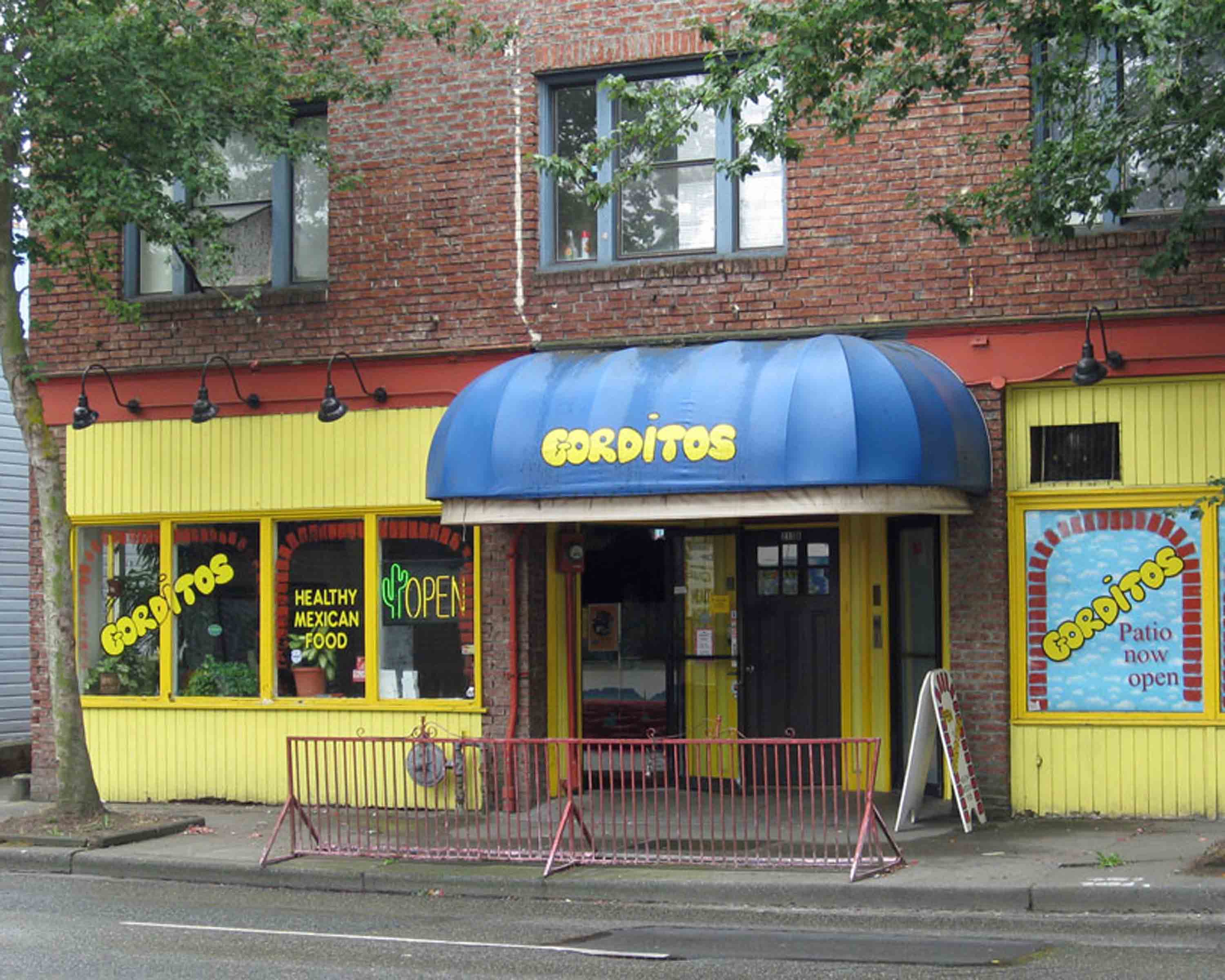
Our beer connoisseur friend had come through with Mac & Jacks, so we decided to indulge on his second recommendation – Gorditos – a Mexican restaurant on North 85th Street in the Greenwood neighborhood. Advertised as a healthy, all natural Mexican restaurant, Gorditos is about burritos. They have dry and wet burritos, the wet being a sauce of salsa, melted cheese and sour cream poured over the top and browned until bubbling. They also provide fresh chips and homemade salsa with every order, and even have a salsa bar. Its house salsa is medium, with a delicious smoky spice and chunks of green onion.

You can order your burrtio’s heat as well, so I stuck with a veggie, veggie burrtio, medium, with no cheese or sour cream, and husband ordered the famous burrito grande mild.

The pictures hanging on the wall of newborn babies lying next to plates of Gorditos burritos should have been a warning, but we were willing to take the plunge. The burritos did not disappoint. My burrito was the size of two Chipotle burritos and husband’s grande burrito was the size of – you guessed it – a baby. I suddenly felt like Adam Richman from Man vs. Food. We ate to our fill and grabbed a takeaway box for the road.

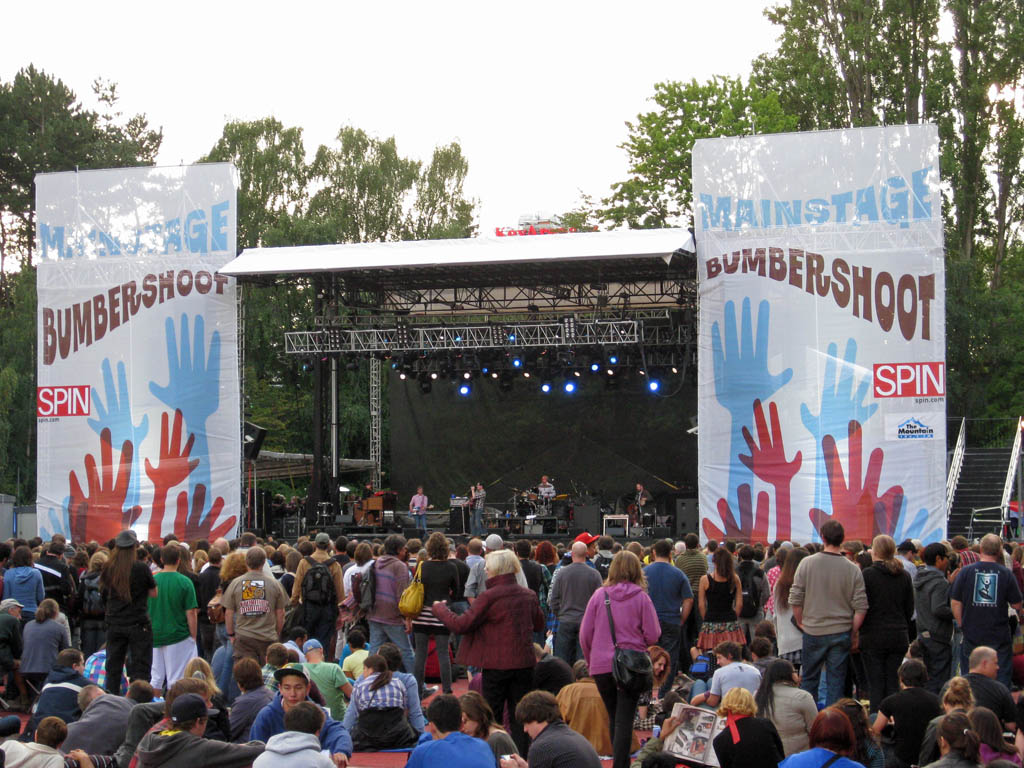
Next stop on our Seattle tour de force? Bumbershoot Music & Arts Festival. In addition to seeing family and friends, our trip to Seattle was part of a larger plan to visit one of the nation’s premier festivals, and Bumbershoot didn’t disappoint. The big acts of the night were all good – The Decemberists, Neko Case and Bob Dylan all flexed their musical muscle for thousands at the main stage. But the little finds were groups like The Constellations that proved to be a band to reckon with, and Justin Townes Earle, the son of legendary Steve Earle.

Looking back, it was an exhausting 48-hours, but memorable since everything we saw was new to our eyes. I didn’t want to sleep just because there was so much to do. So, I got myself another large latte with soy.

The Great Minnesota Get Together

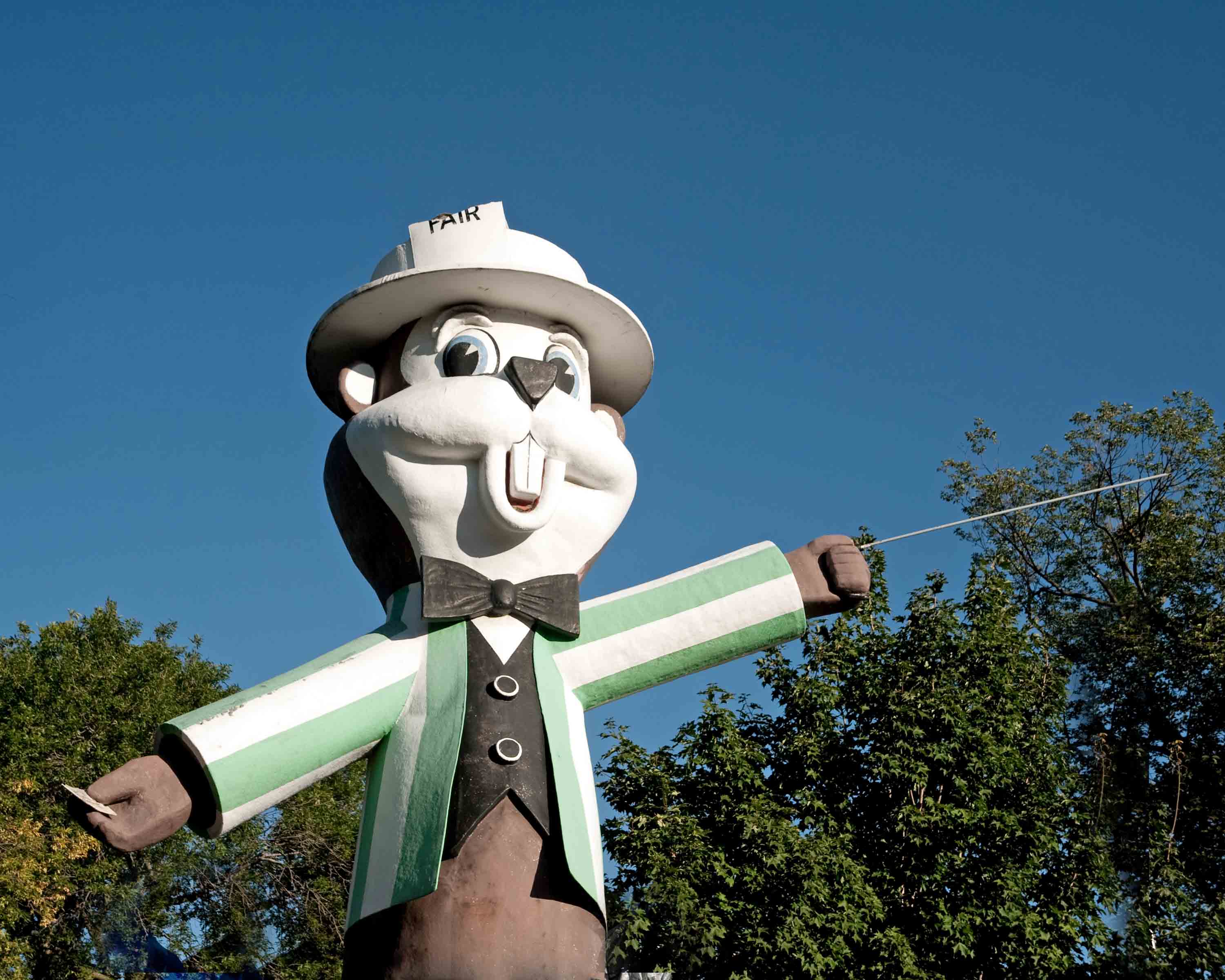
I have lived in Minnesota for 16 years and consider it home. But I spent the first 18 years of my life in Kansas. There were obvious differences when I moved north. Kids in Minnesota typically learn to ice skate first, not dribble a basketball. The fresh catch of the day is walleye, not catfish. And Minnesota has a state fair that rivals not only the Kansas State Fair, but any other state fair in America.

This isn’t about why I think the Minnesota State Fair is the best. This is about the differences that make what is fondly known as the The Great Minnesota Get Together unique to a non-native.

The food

Nearly 2 million people visit the state fair to look at the animals and perhaps stop by the Education Building, but they GO to the state fair to eat the food. It’s the first thing on everyone’s mind. Stand on a corner for a few minutes and you hear the same phrase again and again. “Where do you want to eat?” There are the staples: corn dog, cheese curds, Sweet Martha’s cookies. There are slightly more interesting items like alligator on a stick, deep fried bacon mashed potatoes, and SPAM curds.

But there is another aspect of state fair eats that harkens back  to the day when fair-goers needed a cheap hearty meal – the dining halls. Hamline Dining Hall is the oldest hall at the Minnesota State Fair, serving a whopping plate of food for 113 years. To me, one of the most notable is Salem Lutheran Dining Hall, which has been serving meals for 61 years. Every breakfast, lunch and dinner served is made from scratch, and the hall is known for its Swedish Egg Coffee. The most striking aspect of this dining hall to a Kansas girl is how regional it is. The Lutheran denomination as a whole runs in the majority compared to other religious branches in much of the Upper Midwest. A dining hall run by a Lutheran church might just be another feature to most Minnesotans, but is truly one of the unique few left in the nation.

The grocery store

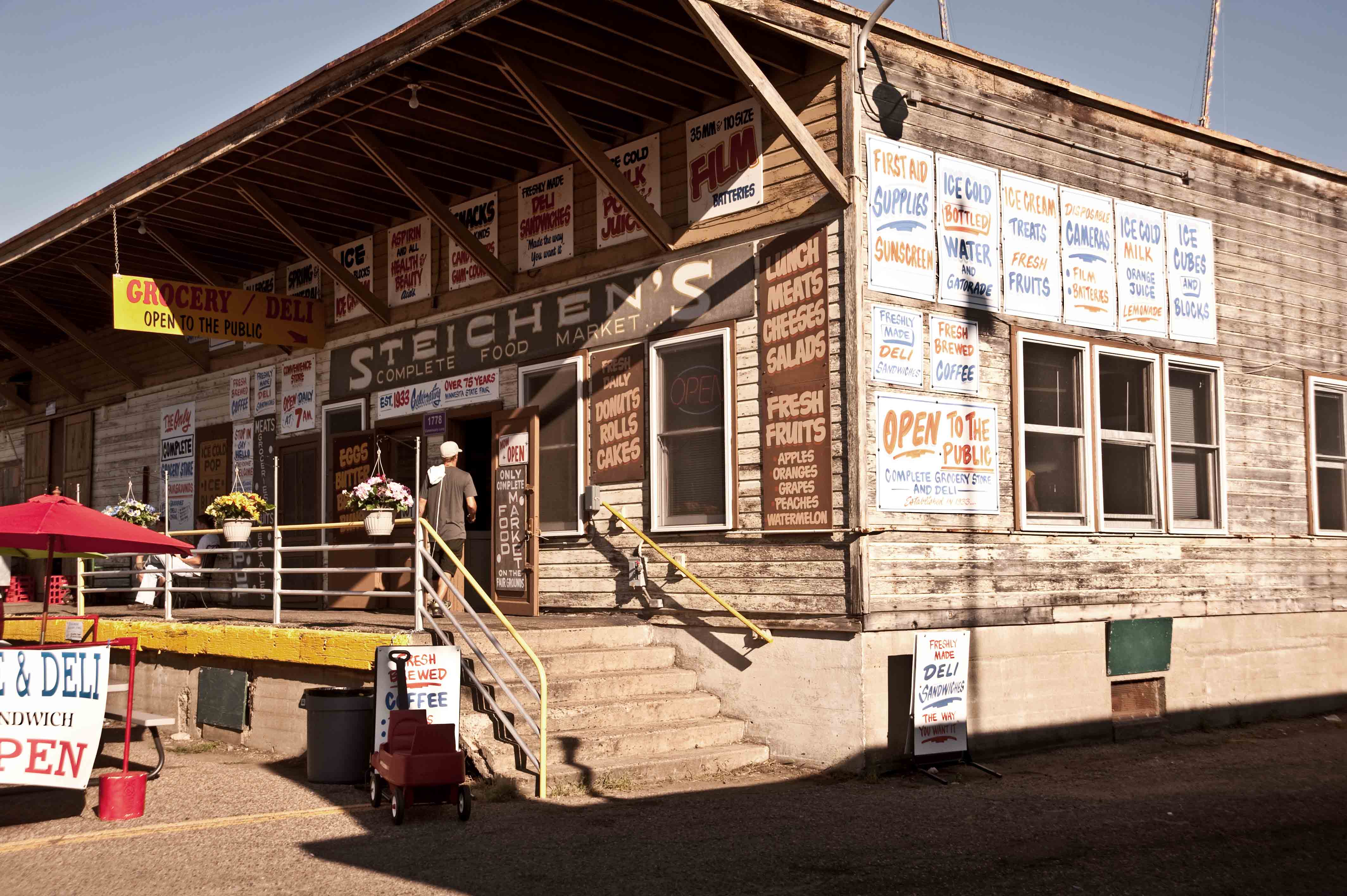
Wedged on a quiet street next to the Poultry Building is Steichen’s Grocery Store and Deli. A grocery store? At the fair? Yes. For many families who exhibit or show their animals, this is 12-days away from home. You can only eat so many deep-fried-whatever-on-a-stick. Steichen’s provides fresh breakfast and made-to-order deli sandwiches, beverages and other away-from-home staples like batteries and mouthwash. This marks the 78th year for Steichen’s at the fair, and while they installed a modern patio this year, the rest of the grocery store still has the original 1932 facade. The permanency of something like a grocery store on the grounds is a reminder that the Minnesota State Fair has been a very big deal for a very long time.

The crop art

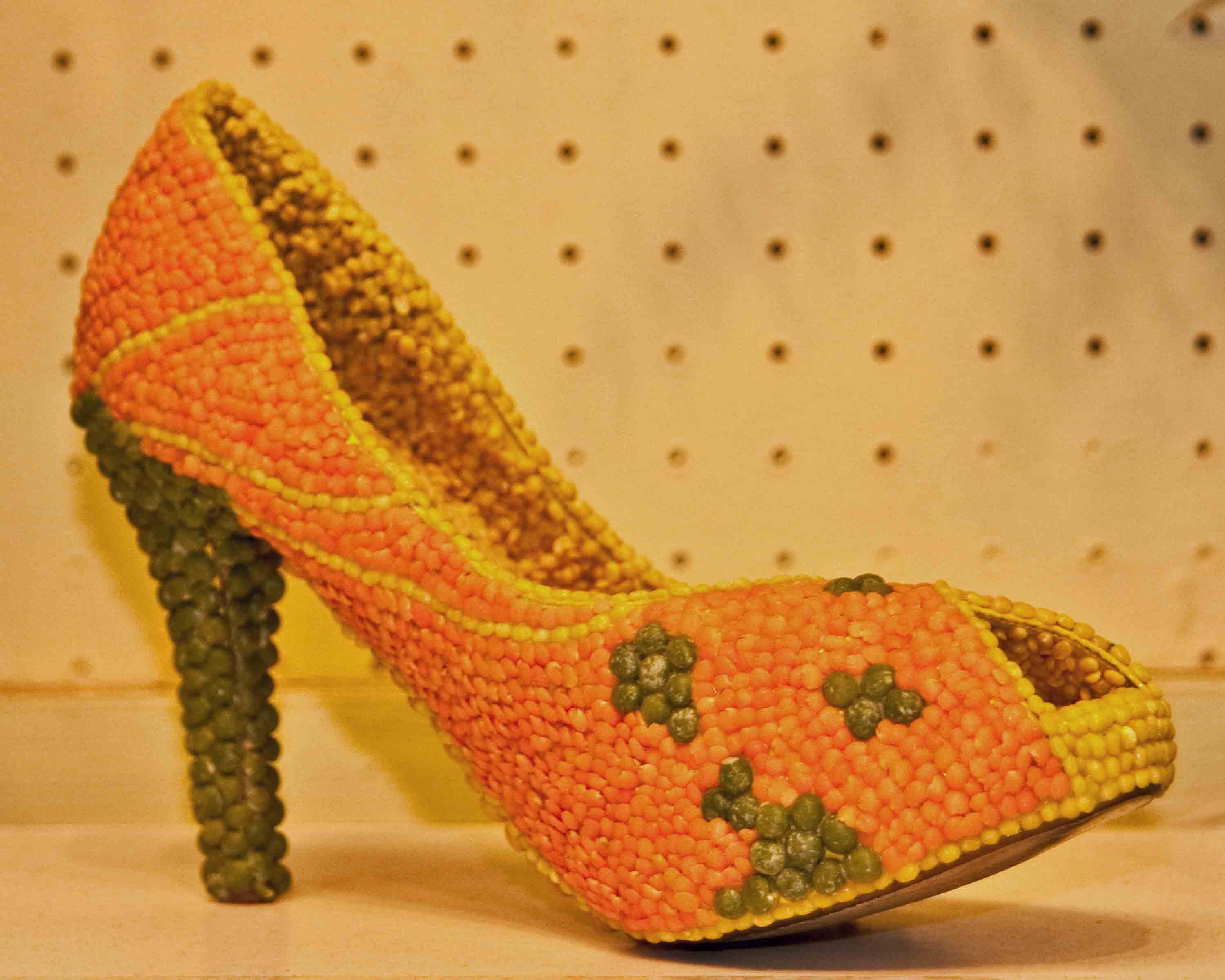
One of the more unusual competition categories at the fair is crop art, located in the Agriculture-Horticultural Building. Art must be made using seeds that are suitable for growing in Minnesota. Over the years the artwork has gotten more elaborate and many times very political, marking the varied history of Minnesota politics. From Hubert Humphrey to Jesse Ventura to Al Franken, Minnesotans take great pride not fitting into the status quo of the political arena, and they show that pride with some glue and soybeans.

The butter heads

Since 1954 the Midwest Dairy Association has awarded a young woman from Minnesota a scholarship and the coveted title of Princess Kay of the Milky Way. For the next year she represents Minnesota dairy farmers as a goodwill ambassador. The best part about becoming Princess Kay? Getting your likeness carved into a 90 lbs. block of butter. The butter heads, located in the Dairy Building, have been carved each year since 1965, one day at a time, while fair-goers watch. The process takes six to eight hours, and the same woman has been carving the heads for over 40 years. While this isn’t strictly a Minnesota tradition, the pride people take in being part of a once heavily farmed state is still evident.

The radio show

Texas might have the biggest state fair attendance (its 24 days, not 12) and Ohio might have the same Midway carnival with corn dogs, but no other state fair has the man in red Kangaroos. Every summer Garrison Keillor, typically dressed in a white linen suit and red Kangaroo tennis shoes, brings A Prairie Home Companion to the state fair. Broadcast on nearly 600 public radio stations each week, A Prairie Home Companion hosts its annual state fair show in the Grandstand, and is heard by millions of listeners. The state fair is a culmination of the kitsch Keillor jokes about every week on his show. Lutheran coffee? Check. Farmers and dairy cows? Check. Characters of every creed? Check.

Whether it be one day or all twelve days, I believe the Minnesota State Fair encompasses what Keillor’s fictional Lake Wobegone is really like. The fair is a mass of people tied together by class and genetics, similar, yet distinctively different. All looking forward to the future, yet not afraid to look back, cherish what was, and take home a slice of Minnesota goodness.

What do you think is really unique about the Minnesota State Fair, or any state fair you’ve visited? Would love to hear your commentary.

Read a New York Times reporter’s tale of state fair, homespun pleasure.

Top 5 things to do in Munich

Munich is very much the modern city you would expect. Yet the German metropolis does an excellent job of mixing old tradition with new style; qualities which comprise my top five list of things to do while in Munich.

If you’re planning a visit to Munich, go in late September to experience Oktoberfest. The city lives and breathes for the annual event, and it puts you in direct contact with locals. You will run into plenty of Australians and Irish, but the German people take several days of vacation during the 16-day festival to celebrate their heritage. Read more about my Oktoberfest experience in a previous blog post.

The night before Oktoberfest, have dinner at Spatenhaus. The classic Bavarian food is some of the best, and the traditional setting gets you in the mood for beer slinging the next day. It is also located in the center of where old town meets high-end shopping in Munich, so the people watching is top rate.

After a day or several days at Oktoberfest, you might not want to leave the party cold turkey. Enter Hofbrauhaus. Located in the building where Hofbrauhaus beer was originally brewed, the beer hall now holds up to 1,300 people, and there is additional space in a lovely beer garden behind the building. Touristy? Yes. But the live music and spontaneous dancing are a sight for anyone who wants to do Oktoberfest on a smaller scale.

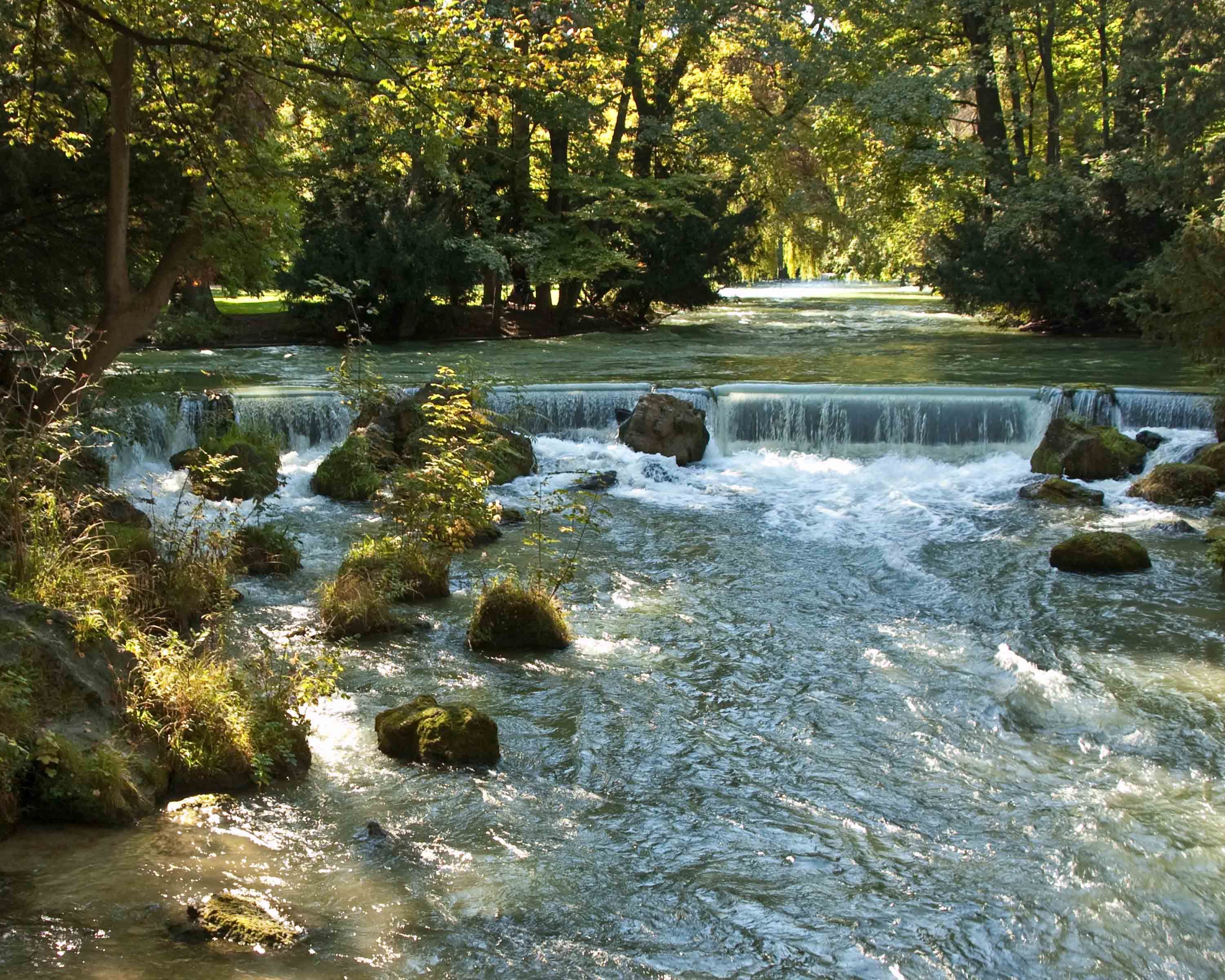
If you are searching for Munich’s more refined side for some quiet time, look no further than the city park. Englisher Garten or “English Garden” is a large park located near the center of Munich. In fact, it is larger than New York City’s Central Park, spanning just under 1.5 miles. The park has much to see, including a waterfall, Japanese garden, over 100 bridges, an open-air theater and stone structures. Be aware that nude sunbathing is permitted between the Japanese garden and the stone structures of Monopteros if you are strolling through the grounds. I was not visually prepared to see two men playing naked frisbee early one Sunday morning.

The hidden gem in Englisher Garten is, you guessed it, a beer garden. Regularly voted one of the best in the city, Seehaus Beer Garden is a terrific spot to watch the old men of Munich play chess, bantering back and forth. If you place the city park on your “must see” list, visit on Sunday. Live bands play throughout the day from the 82-foot Chinese pagoda that watches over patrons.

Pinakothek der Moderne is everything old Munich is not. After beer and dancing, it’s nice to step into a contemporary world of art, architecture and design from the 20th and 21st centuries. The modern art museum is a fascinating look at German artwork, and its contribution to cars, furniture and even computers. There is a rotating gallery as well as an active schedule of cultural events held at the museum each week.

There is enough sightseeing, shopping and “festing” in Munich to occupy yourself for many days, but I do recommend you take time for a variety of things to get the best sense of the people and culture of Munich.

What do you recommend?

Not your mother’s Oktoberfest

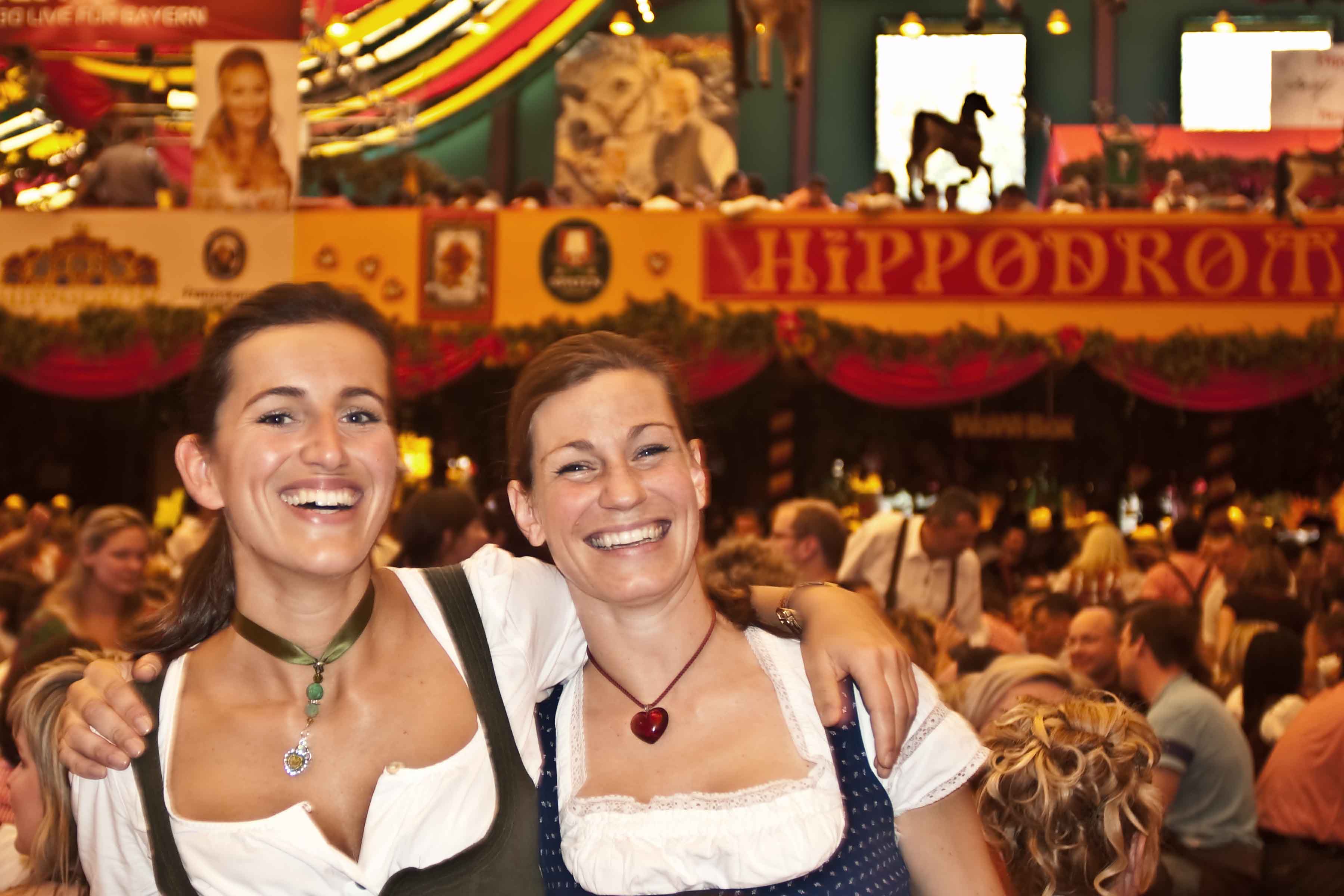
When I bite into a salted radish, I am instantly transported to the Hippodrome tent at Oktoberfest.

Advertised as the world’s largest fair, Oktoberfest in Munich, Germany draws more than six million people from mid-September to early October every year. This year is the 200th anniversary of Oktoberfest, and I suspect there could be record-breaking crowds.

Several years ago husband and I journeyed to Munich with friends, but you certainly don’t need to be with a group to enjoy Oktoberfest. The picnic-style tables in each tent hold 20-30 people, so you’re likely to make quick friends with the person in lederhosen sitting next to you.

The benefit of being female in an Oktoberfest-going group is simple. Ladies can send the men to the fairgrounds early in the morning, which is what our group did. While reservations are preferred for groups, it’s still best to stand in line as the sun is rising to ensure you get the choice table once doors open to the tent. It’s the perfect job for men dreaming about their first liter, right? The men took an early morning train to the fairgrounds, but the ladies and I hailed a taxi to the site. The cheaper option is certainly public transportation, and you can check out this link for Oktoberfest-specific routes.

But back to those radishes …

When the ladies and I arrived on the grounds mid-morning, we headed to the Hippodrom tent where the men had claimed seats for us several hours before. It was opening day of Oktoberfest and there was a buzz in the air. The keg was scheduled to be tapped at noon, so a snacking smorgasboard of meats, cheeses and tiny radishes had been brought out on wood boards by our beer maidens. I had never eaten a radish dipped in salt, but the crunch, sting and fresh salt forever converted me.

At 12:00 p.m. the ceremonies began. There were a few words spoken, singing, and then a famous German actor (we were told) tapped the keg in the Hippodrom. Oktoberfest was on. Prost!

First, the liters of beer. Our beer maidens fit the stereotype. Young blonde women carried six to eight full liters of Spaten to each table. Not a serious beer drinker, I opted for a glass of sparking wine and sat back to watch the scene unfold. Prost! Clinking glasses. Laughter. The Germans knew how to throw a party.

Not wanting to lose beer-sloshed patrons after one liter, our maidens immediately brought food to the table as soon as drinks were served. Pork knuckle was a favorite, along with roasted chicken, sausages and sauerkraut. Our table devoured every morsel.

After many hours of beer, dancing, singing and a Boris Becker celebrity spotting, we moved on to the Kafer’s Wies’n-Schanke tent, one of the smaller tents on the fairgrounds known for its roasted duck and chicken. That’s right, more food. And singing. And a little dancing. Kafer’s is also known for celebrity sightings, but we did not spot anyone recognizable.

When our group left Kafer’s later that evening it had grown dark and the grounds were aglow in amusement park lights. A large hill at the exit was sprinkled with lovers and men holding their heads. It had been a spectacular day. I chose not to drink more than a few glasses of wine and it never felt like I wasn’t part of the Oktoberfest experience. I hope to go back some day.

Tips:

If you are attending Oktoberfest with friends, download the Wiesn app. It allows you to text, chat and find your friends on the fairgrounds via GPS!

If you want to buy a traditional Bavarian costume for Oktoberfest, don’t be shy. A majority of people do wear a costume, especially the locals.

Try your darnest to find a spot at the end of a table. It’s hard to move around when you are between eight people on your left, and eight people on your right. After that much food and beer, you will need to walk and use the toilet. It’s also an excuse to meet people sitting across from you.

Treat your beer maidens well. They will withhold drink from anyone who is rude.

The enchantment of Prince Edward Island

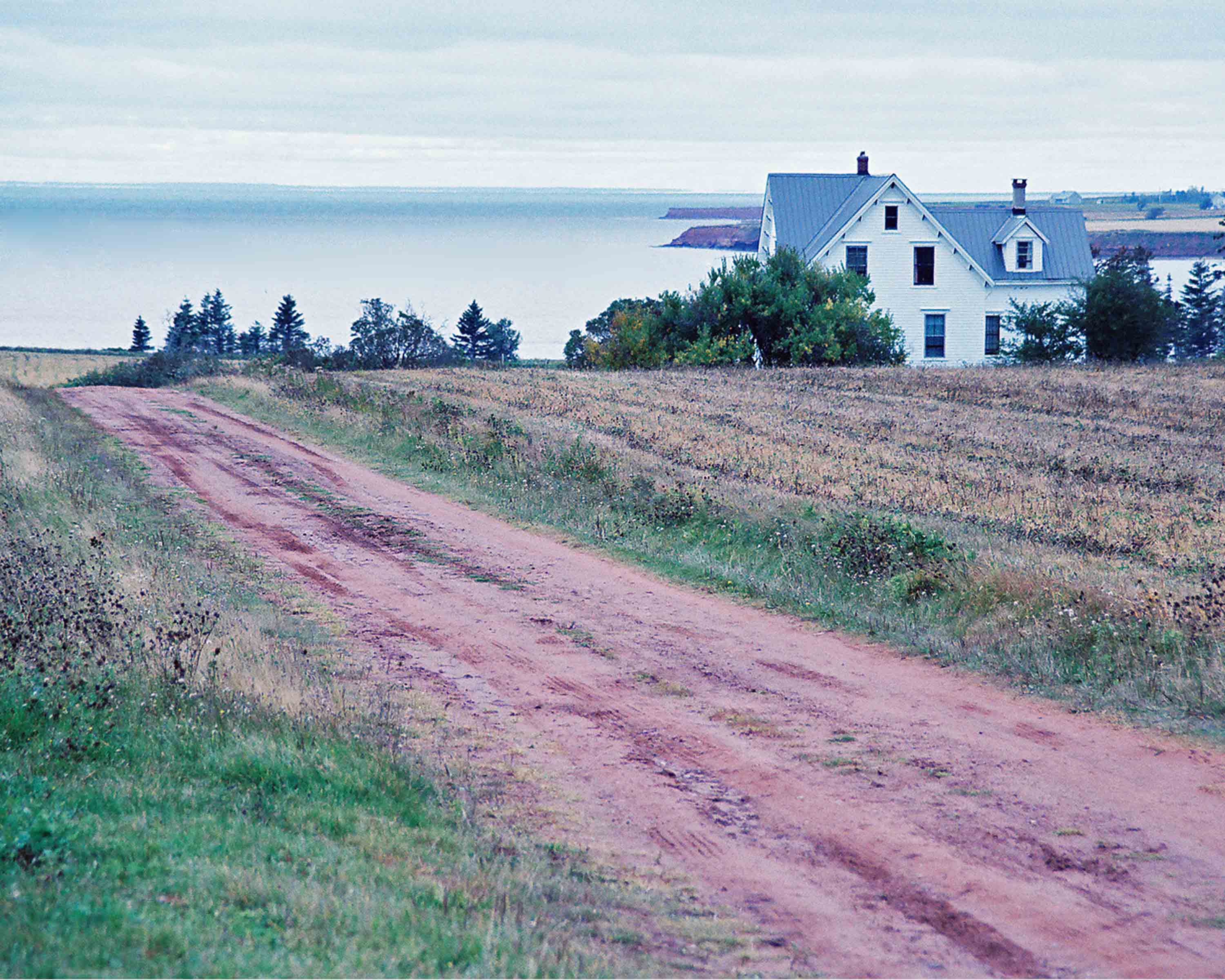
North of Nova Scotia is the enchanted land of Prince Edward Island (PEI), a maritime province of eastern Canada.

I consider PEI enchanting because it’s 114,000 residents are 85 percent Scottish and Irish, most of which still have a distinct brogue. In fact, the sea-kissed hills are almost as green as Ireland. And the undisturbed fishing villages take you back more than 50 years in time.

The inspiration of Lucy Montgomery’s novel series, Anne of Green Gables, is found here on the island. While Anne was a part of Montgomery’s imagination, the house Anne lived in was actually the home of Montgomery’s cousins who lived in Cavendish. Today the home is part of Prince Edward Island National Park, and you can tour the grounds seasonally.

PEI is so narrow, you are never more than 10 minutes from the ocean, even from the center of the island. However, if you are driving to the sea, do not expect signs to help map your route. PEI has the worst road signage I’ve ever encountered, and a co-pilot to navigate the roadways is a must. Review a map to determine which towns you will travel through and even make a checklist, if you can. Road signs only designate what town is ahead. Your map might state you’re on Hwy. 2, but you’ll never see a sign indicating the roadway.

Some other observations of PEI:

  • Do not panic if you come upon a full-service gas station. PEI does not have self-service stations.
  • Expect people to smile the first time they hear you speak. I was told I had an accent – a “TV voice.”
  • Do not expect to find a Starbucks or any coffee shop on the island. If you do find a cafe that serves coffee, skip it. These people are known for their tea, so enjoy as the locals do.

You can cover PEI in a few days, then ferry over to Nova Scotia or drive to New Brunswick. But the enchantment of the land, the sea and the people of PEI stays with you.