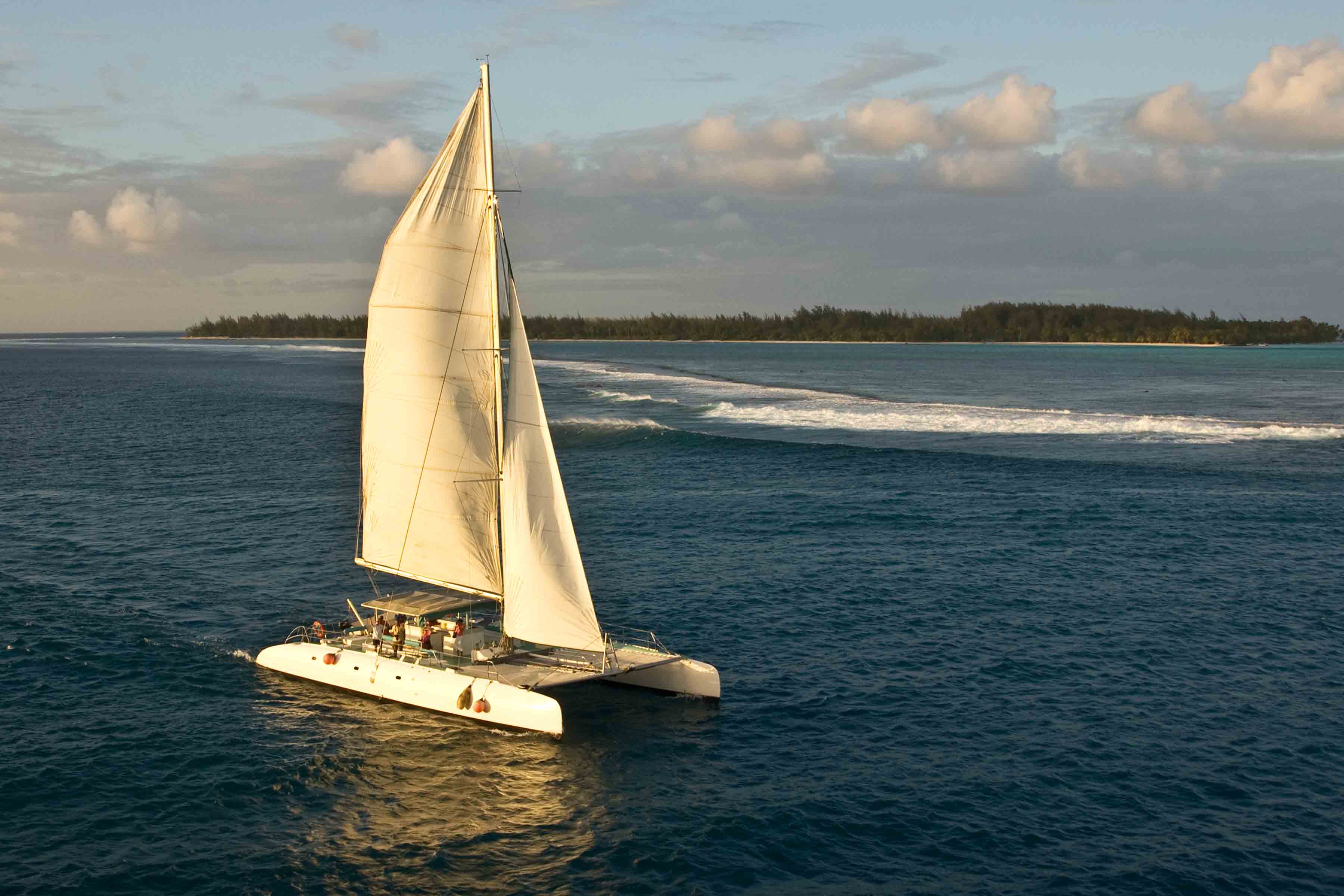
 The two words “exotic” and “cruise” are typically not in the same sentence together. “Exotic” on many cruises is just dress-up night by the wait staff. But in Tahiti, everything is exotic, even on a cruise ship.
The m/s Paul Gauguin of the Regent Seven Seas Cruises fleet was designed specifically to sail the shallow seas of Tahiti and French Polynesia, visiting small ports that larger ships can’t reach. This is my field journal about my experience on the Society Islands of the South Pacific.
Arrival – Papeete
The warm breeze is the first thing I notice when I disembark from the plane in Papeete (pronounced pa-pee-eh-tae). The second thing I notice is the smell. Tahiti’s national flower is Tiare, a heavily scented gardenia, and it’s tucked behind the ear of most of the ladies greeting me at the gate.
Prior to arrival I fill out the necessary paperwork given to me by my flight attendant. Not knowing what Tahitian officials want as my official address while visiting, I leave the space blank. When I go through immigration I’m instructed to place the m/s Paul Gauguin as my residence for the next week.
And I’m off to the ship!
Raiatea
Tahiti can feel like the Caribbean – until a local fisherman pulls up to the boardwalk, whips a freshly caught swordfish onto the dock and proceeds to filet his catch right there in the marina while friends driving by honk their horns in happy congratulations for a fine day at sea.
Welcome to Raiatea. (re-eh-tah)
I decide to take an easy day of it after seeing the fishing spectacle on the docks. I sign up for a general island tour overview that will take me through the tropical forests of the island and up into the hills. My guide is an American who came to Raiatea to surf 12 years prior, and wound up meeting her Tahitian husband and staying to raise a family. She gives us a nice overview of the regional landscape and flora, and takes us to meet a family that serves juice and fruit known in the region. Back to the boat in just a few hours, I have the afternoon to explore the ship and meet my fellow passengers. In an hour, I’m having tea with an Australian couple on their honeymoon and a woman from Vienna who decided she wanted to see the sunset in Tahiti before she was “too old to care about such things.” Once again, travel brings the beauty of life to the forefront.
 Taha’a
Day two gives me time to explore a pearl farm on Taha’a and then snorkel in a crystal blue lagoon. I swim with fish that have previously been just an image from a televised National Geographic special.
After snorkeling for an hour, I’m taken to Motu Mahana, a private island specially reserved for guests of the Regent Seven Seas. I sink into a shaded lounge chair and examine my once-fair skin. I have quickly discovered my sun block is no match for the Tahitian sun. SPF 30 did not work, and I had bumped up to SPF 50 after getting a mild sunburn on Raiatea. This change will be helpful, but I recommend even SPF 60 for the fair-skinned. This trip will prove the Tahitian sun is merciless.
Bora Bora, Day 1
Rumbling full-speed up the rugged cliffs of Bora Bora in an open Land Rover is my expedition highlight thus far. Songs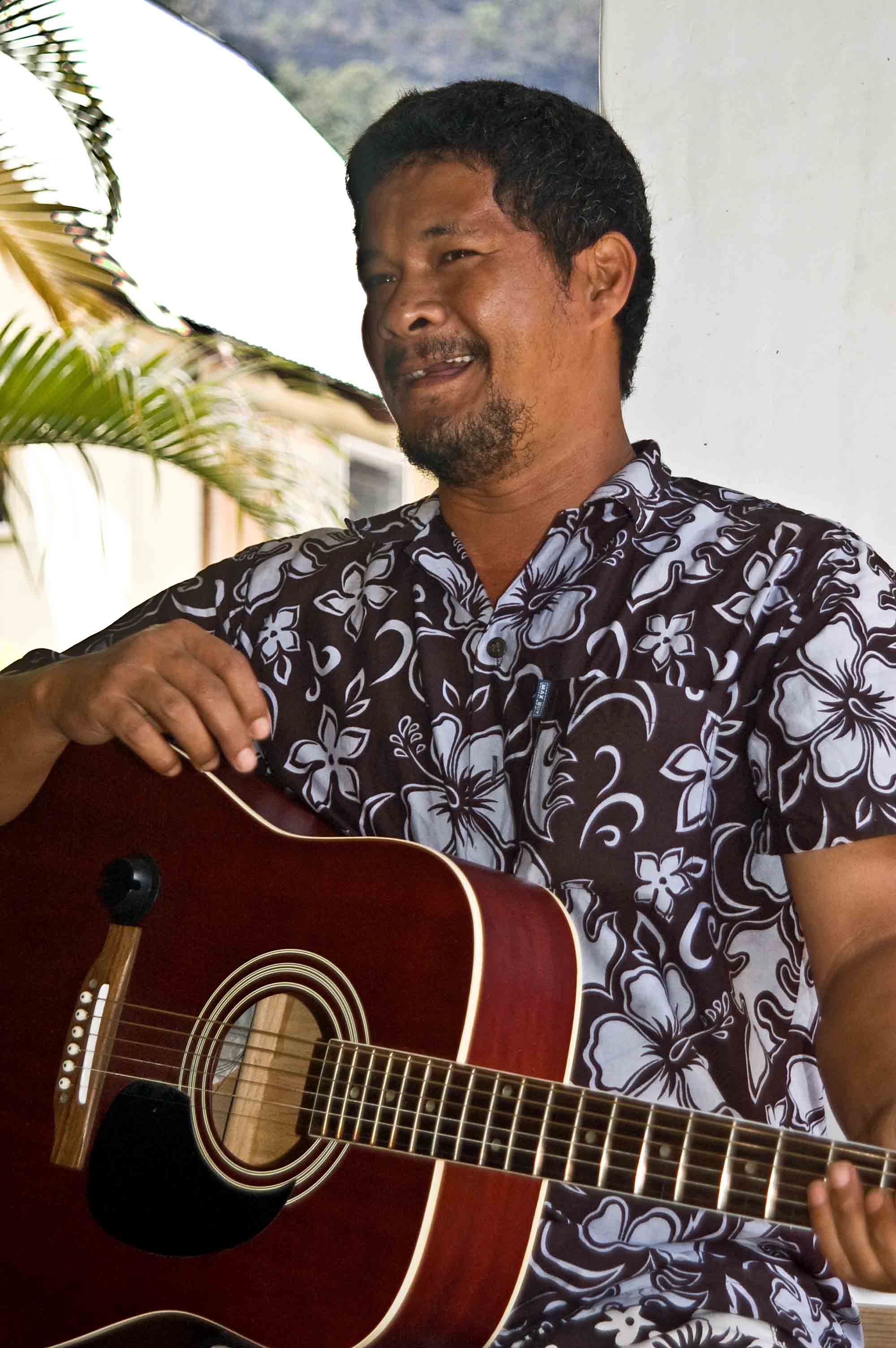 from “South Pacific” play through my head as the tour guide explains the basis of United States occupation on Bora Bora during World War II. There is a little magic in the air, along with those gardenias. By the end of the tour, my appendix is still vibrating but it is well worth the jiggle. The vistas are breathtaking and the jungle can be exciting for botanists and birdwatchers. There is even a stop at a native gallery for fresh fruit, music and hand painted fabrics – which equates to stopping at another home of a local who entertains visitors for tips. There is no pressure to buy though, and we just sit back and listen to the music being played on the porch until it’s time to leave.
Bora Bora, Day 2
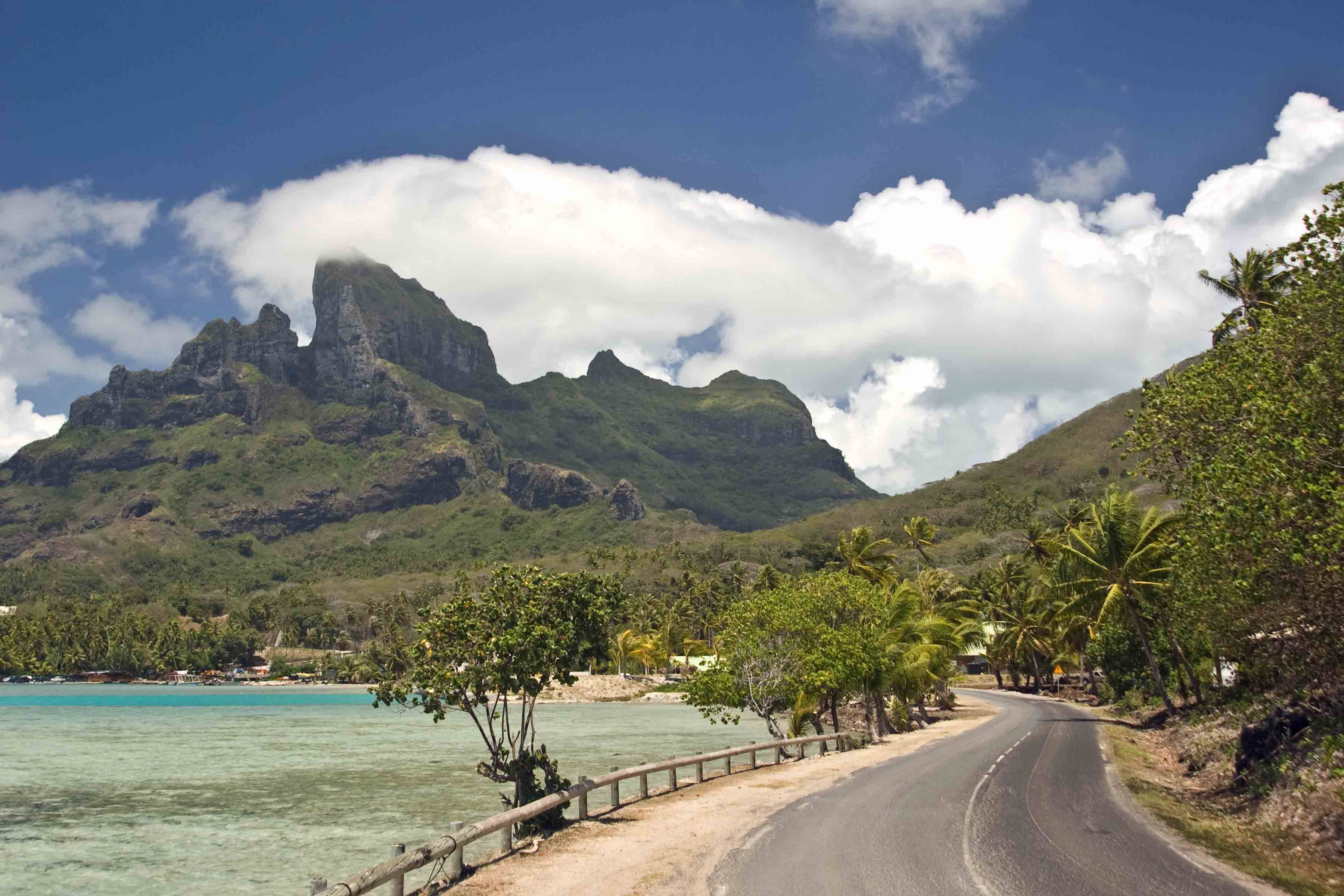 A tender boat from the cruise ship drops me off at the main dock of Bora Bora. Tourist information is located there, as well as a few shops and a free shuttle to a nearby pearl farm. Weighing my options, I decide to explore Bora Bora on foot.
Taking a quick walk around I quickly realize the people of Bora Bora have never stopped to adjust their lives for tourists. While there are some shops and boutiques available, the offerings are few. I decide to take a dive into the culture by stopping into a grocery store to check out the French bread sitting in shopping carts right at the front door. I also stroll down the cereal aisle to find out what unusual combinations Kellogg sells to the islands. I’ve found that cereals differ country to country, wherever I go. And there it is – chocolate infused cereal pieces in the shape of croissants. Only in French Polynesia!
Moorea, Day 1
If Bora Bora is magical, Moorea (pronounced Moe-oh-ray-ah) is mystical. Throwing open the shade on day five of my cruise reveals a jagged and mountainous place. I can almost hear drums beating in the hillside. Or is that my stomach asking for breakfast?
This being my fourth cruise, I know to expect an ongoing parade of gastronomic delights. That said, I had no idea to expect THIS. Every day the restaurants provide gorgeously presented five-star quality food. Breakfast is a never-ending buffet of breads, fruit, nuts, meat selections, tuna and lox, omelets, pancakes, cereal and oatmeal, plus exotic fruit juices. Lunches have a different theme everyday, and the German and TexMex buffets are well received. Dinners are the crème-de-la-crème of six-course French and Polynesian fare. In between, there are light snacks and fresh appetizers delivered to your room by 5:00 p.m. each day. Regent Seven Seas is known for their all-inclusive cruising style, and it doesn’t disappoint.
Moorea, Day 2
AM
Moorea’s rugged beauty is the perfect place to delve into the ancient aspects of Tahiti. There are several good excursions tochoose from on this stop, including an archeological tour. If you want to explore on your own, cars and scooters can be  rented right at the dock. A small market is also open at the tender boat’s landing sight, where necklaces and redwood carvings are available for sale. Beyond that, Moorea is just a lightly populated place with nothing more than one road wrapping island. Perhaps day two is best spent on the ship.
Tahiti is known for its water sports, and the marina off the back deck of the ship compliments this feature beautifully. A quick walk down to Deck 3 puts me in the ocean within minutes. Cook’s Bay in Moorea is calm and a perfect place to enjoy a quiet kayaking adventure. I can’t stay out for long though. The ship sails at 5:00 p.m. for Papeete.
PM
Pulling back in to civilization just a few short hours after leaving Moorea is bittersweet. I’m sad to be thinking about going home. Then I see “Le Truck” in the Papeete port below. We are free to disembark once in port, so I head down to the plank to check out the scene.
Steak and frites, crepes and pizza, Asian bowls and suckling pig – “Le Truck” is an outdoor gathering of locals who come together for dinner on the dock every night. Small trucks roll out their awnings and the smell of food coming from the tiny kitchens inside makes my mouth water, even though I’ve just had a gargantuan dinner. While children play European football on a nearby field, adults greet each other and catch up on the week’s events. This is Papeete, the city in action.
Papeete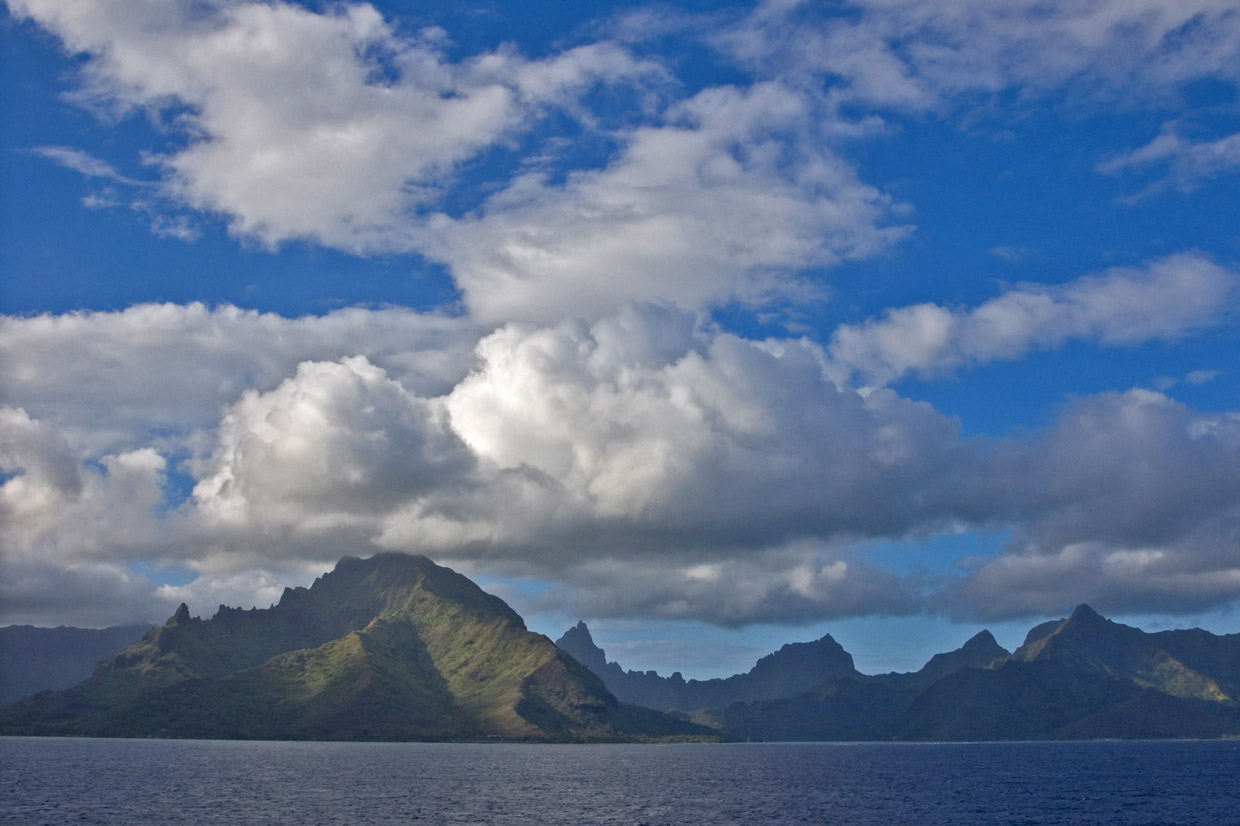
I’m able to stay on the ship overnight and disembark in the morning. After saying goodbye to many new friends, I head into downtown Papeetee. With time to kill before my flight, I make the Public Market my first stop of the day.
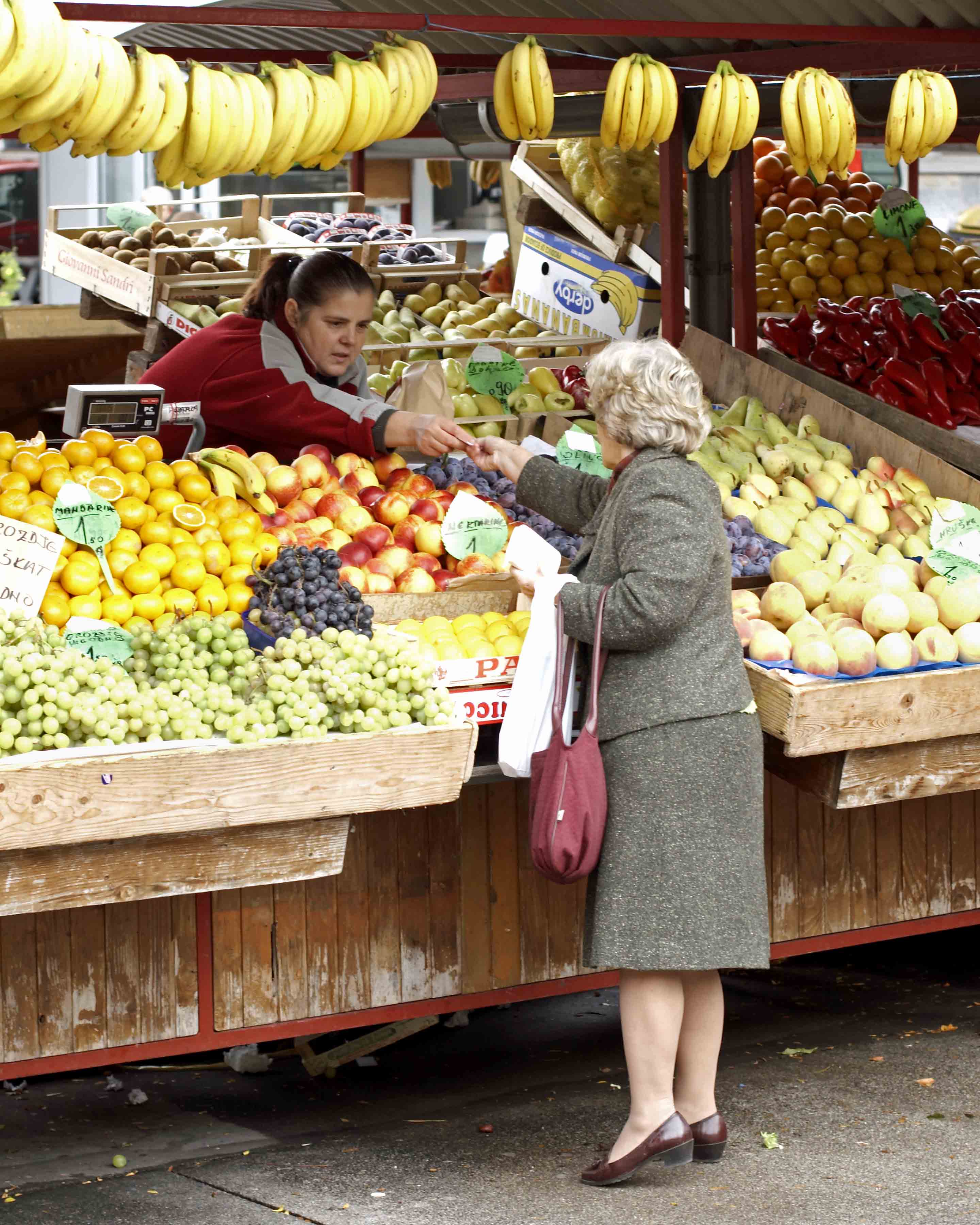
The sights and smells of the market are almost more than I can handle. If the coffee from breakfast hasn’t woken me up, this does. Fabrics, baskets, flowers, fish, fruit, jewelry! You name it, it is here and the locals are buying.
From the market, I tool around downtown, checking out churches and bookstores. Close to 1:00 p.m. I’m hot and ready for a shower. I hail a taxi right outside the Public Market for the airport not more than a mile away.
As I sit in the airport waiting to board my plane back to the U.S., a quote from Paul Gauguin comes to mind. “Life is hardly more than a fraction of a second. Such little time to prepare oneself for eternity!”








 Travel Snapshots